
Unbiased headlines. Facts, not spin.
Every story is an unbiased news briefing written from 110+ sources across the spectrum — sources linked so you can verify it yourself.
 defense
Low Interest (4/10)
June 19, 2026 at 02:02 PM
defense
Low Interest (4/10)
June 19, 2026 at 02:02 PM
Russia Still Deploying Post-WWII Tanks in Ukraine, Western Officials Said in 2023
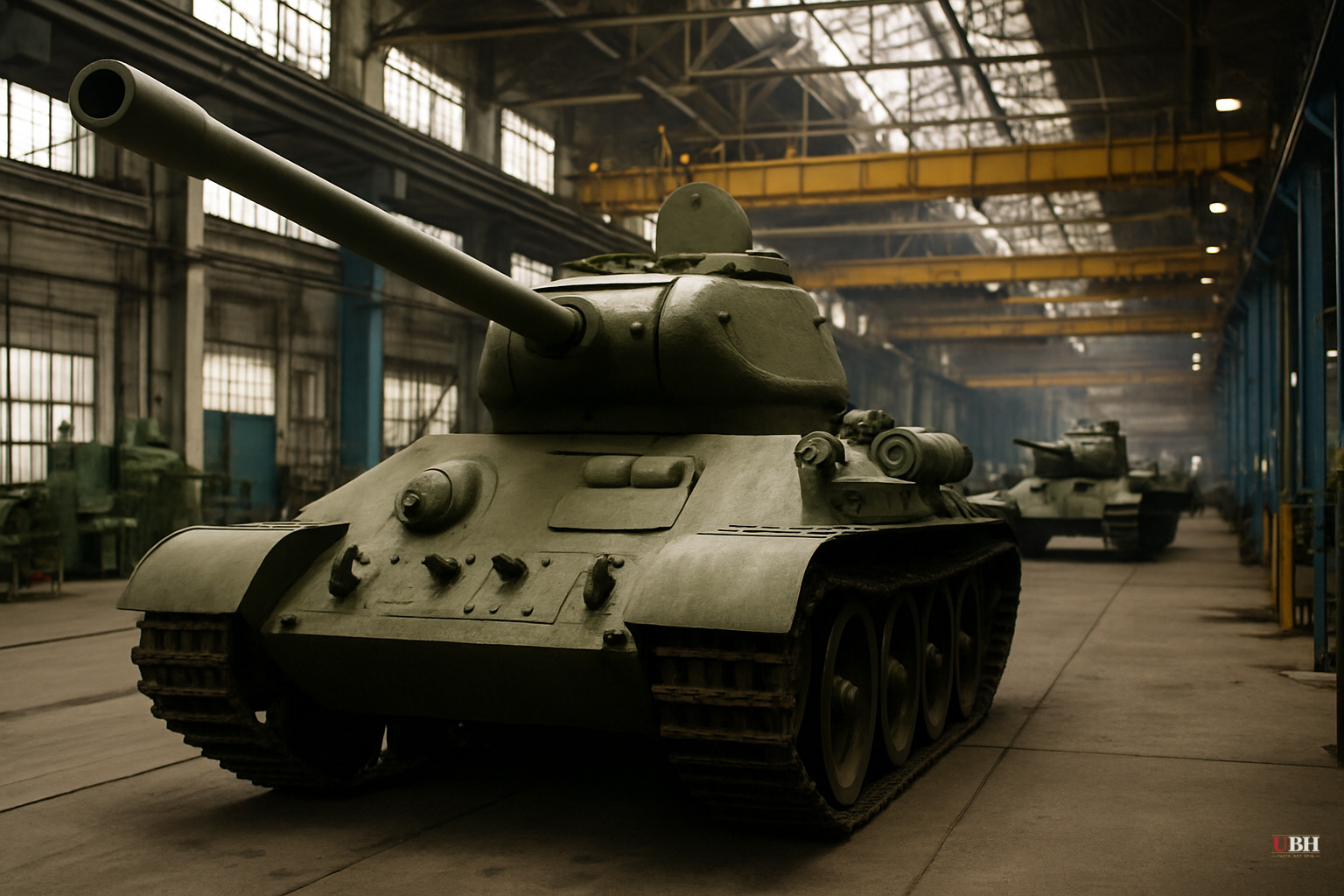
The war in Ukraine has entered a phase defined less by dramatic territorial swings and more by the grinding arithmetic of equipment and manpower. Russia's position in that arithmetic has drawn scrutiny from Western officials for years.
The CNN source available for this article is a live-blog entry dated April 18, 2023, which cited Western officials describing Russia as "going backwards" in equipment quality and deploying tanks from the post-WWII era. That assessment is now more than two years old.
What the 2023 Intelligence Picture Said
According to CNN's April 2023 reporting, Western officials characterized Russia's armor situation as one of accelerating degradation. The appearance of T-54/55-era tanks — designed in the late 1940s — on Ukrainian battlefields was described as evidence that Moscow had exhausted more modern stocks faster than its defense industry could replenish them.
The same CNN live-blog reported four Ukrainian civilians killed and nearly 30 injured in Russian attacks along the front lines. It also reported that Wagner Group chief Yevgeny Prigozhin threatened retribution against former fighters who claimed they were ordered to commit atrocities against civilians, including children, in Ukraine. The U.S. was also warning Russia not to interfere with sensitive nuclear technology at a Ukrainian nuclear facility. The broader picture from that period was one of sustained Russian operational pressure despite deteriorating hardware.
CNN's framing in that period was generally sympathetic to Ukraine and skeptical of Russian capability claims, which may have amplified the "going backwards" narrative. Russian state media, predictably, presented the opposite picture throughout. Independent military analysts at the time — including at the Oryx open-source tracking project and the Royal United Services Institute — corroborated that Russia was pulling older armor from long-term storage, which gives the Western-official assessment some cross-source credibility even if the CNN framing carries its own slant.
The Strongest Case for Russian Resilience
The argument that skeptics of Ukraine's position have made consistently is that Russia has a vast storage inventory, a defense industry operating under wartime conditions, and a demonstrated willingness to absorb casualties and equipment losses that would be politically unsurvivable in a Western democracy. Analysts at Russia's state-aligned think tanks, and some Western realists including John Mearsheimer at the University of Chicago, have argued that NATO's equipment transfers have prolonged the war without decisively changing the outcome. That view holds that older Russian tanks, however degraded, are still functional enough to hold contested terrain and that Russia's manpower pool remains deep.
That argument has not been proven wrong by the sources available here and deserves honest engagement rather than dismissal.
What the Attrition Picture Actually Shows
Russia pulling T-54/55s from storage is not a sign of strength. It is a sign that the pipeline of modern systems is constrained. That was the Western official assessment as of April 2023, and it was specific enough — naming the tank type and characterizing the trend as "going backwards" — to carry weight beyond generic skepticism of Russian capability.
What Remains Genuinely Unresolved
The single question the available evidence does not answer: at what point, if any, does Russia's equipment degradation translate into an inability to sustain offensive operations rather than just a decline in hardware quality? Russia has been fielding visibly inferior armor for years and has not collapsed. Whether that reflects genuine strategic depth or a hollow resilience that could crack under sustained pressure is something Western intelligence agencies are almost certainly debating — and none of them are publishing their answer.
Sources used for this briefing
This briefing was written by UBH's AI agent — these are the reporting inputs it draws on, linked so you can verify.


