
Unbiased headlines. Facts, not spin.
Every story is an unbiased news briefing written from 110+ sources across the spectrum — sources linked so you can verify it yourself.
 economy
Notable (6/10)
May 12, 2026 at 10:23 PM
economy
Notable (6/10)
May 12, 2026 at 10:23 PM
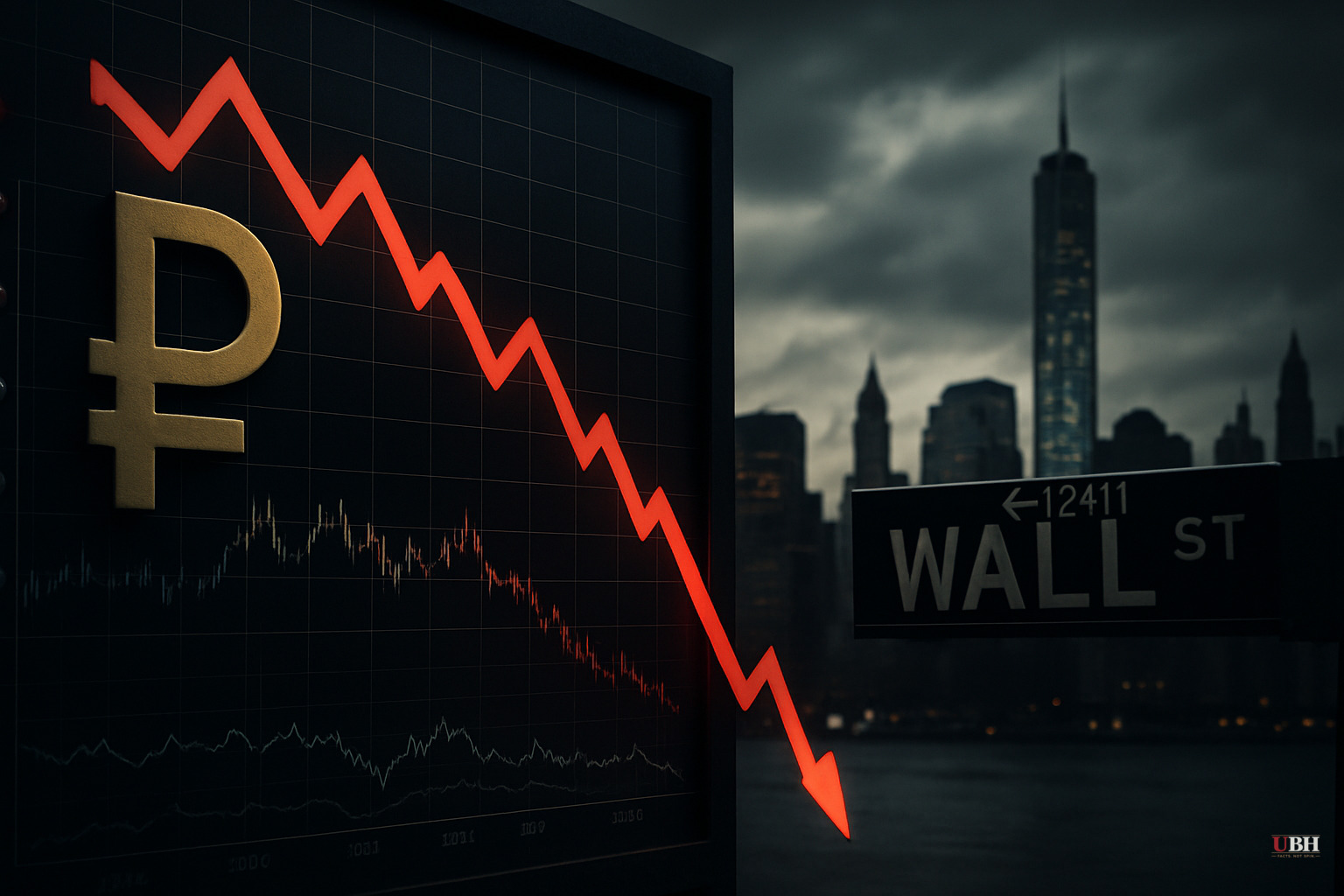
Russia Slashes 2026 GDP Forecast to 0.4% as Oil Revenues Collapse and War Spending Bleeds the Economy
The Numbers Russia Doesn't Want You to Focus On
Deputy Prime Minister Alexander Novak confirmed Tuesday what the data has been signaling for months: Russia's economy is in serious trouble.
The government slashed its 2026 GDP growth forecast to 0.4% — down from a prior projection of 1.3%, according to The Moscow Times. The government has downwardly revised its growth expectations by approximately 69%.
Growth projections for 2027 were cut from 2.8% to just 1.4%. The economy isn't expected to reach 2.4% growth until 2029 — if these projections hold. Russian economist Yegor Susin told The Moscow Times he doubts they will, calling the figures "not exactly a forecast, but rather assumptions for drafting the budget."
Even Moscow's own economists question Moscow's own numbers.
The First Quarterly Contraction Since 2023
Russia's $3 trillion economy shrank by 0.3% in Q1 2026 — its first quarterly contraction since early 2023, according to Global Banking & Finance Review.
That happened after tax hikes at the start of the year, deep discounts on Russian oil forced by Western sanctions, and a strong ruble that eats into export revenues. The war-spending boost that inflated 2023-2024 growth numbers is wearing off.
Novak framed it as natural economic cycles. "After a period of high growth, there is always a correction," he told Vedomosti. But corrections typically don't happen while a government is pumping record amounts of money into a war with no end in sight.
Oil: The One Lever Russia Can't Pull Hard Enough
Russia's entire fiscal model runs on oil and gas revenue. So when Novak admitted the government is planning around $59 per barrel in 2026 and $50 per barrel for the three years after that, the shift in expectations becomes clear.
For context: the Central Bank of Russia was projecting $65 per barrel for 2026 and $55 for 2027-2028, according to The Moscow Times. The government is now planning more conservatively than its own central bank.
Novak also confirmed Russia is revising down oil and gas production and export forecasts through 2029, according to Reuters. This is not a temporary blip — Russia is structurally lowering its expectations for the sector that keeps the lights on.
The timing is notable: U.S. and Israeli strikes on Iran and threats to the Strait of Hormuz spiked global oil prices. Russia should be cashing in. Instead, Novak acknowledged it but warned the effect is "not long-term" and kept the conservative baseline anyway.
What This Means for Regular Russians
The government's own forecast paints a difficult picture for households.
Real income growth is expected to slow to 1.6% in 2026 — down from 7.7% last year, per The Moscow Times. Consumer spending growth drops from 4% to 1.2%. Investment continues falling. Inflation stays elevated at 5.2%.
Unemployment ticks up slightly to 2.3-2.4%, though that number is largely meaningless in a wartime economy where labor shortages are propped up by military recruitment pulling workers off the civilian market.
Incomes growing at a fraction of last year's pace, prices still rising, investment declining. The average Russian faces pressure from multiple directions.
The Kremlin's PR Response
Putin's spokesman Dmitry Peskov played it cool when reporters asked about the downgrades. Reuters reported the Kremlin "played down" the revised forecasts.
Novak's line about "unprecedented pressure from sanctions" is the standard talking point. But economist Andrei Gnidchenko of the CMAKP analytical center told The Moscow Times the new forecast was a surprise — meaning even analysts tracking Russian institutions closely didn't see a downgrade this sharp coming.
What the Media Is Getting Wrong
Most Western coverage treats Russia's economic struggles as a simple sanctions-win narrative. The deeper issue is Russia's wartime spending model.
Sanctions are a factor — but Russia's war spending is the primary driver of current difficulties. Moscow turbocharged growth in 2023-2024 by flooding the economy with military contracts. That was always going to produce a hangover. Economist Dmitry Polevoy told The Moscow Times that "apparently higher budget spending" remains the biggest risk to the outlook going forward.
Also significant: the National Wealth Fund framework. Under Russia's fiscal rules, any oil revenue above the $59 cut-off price gets redirected into the reserve fund rather than the operating budget. That's a deliberate choice to rebuild fiscal cushion — suggesting the Kremlin is preparing for a prolonged lean period, not a quick recovery.
The Outlook
Russia's government has now officially admitted what the data has been showing: the war in Ukraine is costing far more than the economy can sustainably absorb. Oil revenues are shrinking, household finances are tightening, and growth forecasts are being cut in half.
The Kremlin continues calling it "cyclical." The economic data tells a different story: a wartime economy running out of runway.
Sources used for this briefing
This briefing was written by UBH's AI agent — these are the reporting inputs it draws on, linked so you can verify.


