
Unbiased headlines. Facts, not spin.
Every story is an unbiased news briefing written from 110+ sources across the spectrum — sources linked so you can verify it yourself.
 energy
Major Story (7/10)
July 24, 2026 at 07:51 PM
energy
Major Story (7/10)
July 24, 2026 at 07:51 PM
Russia Shuts Down Novorossiysk Port at Night as Ukrainian Drones Widen Black Sea Blockade
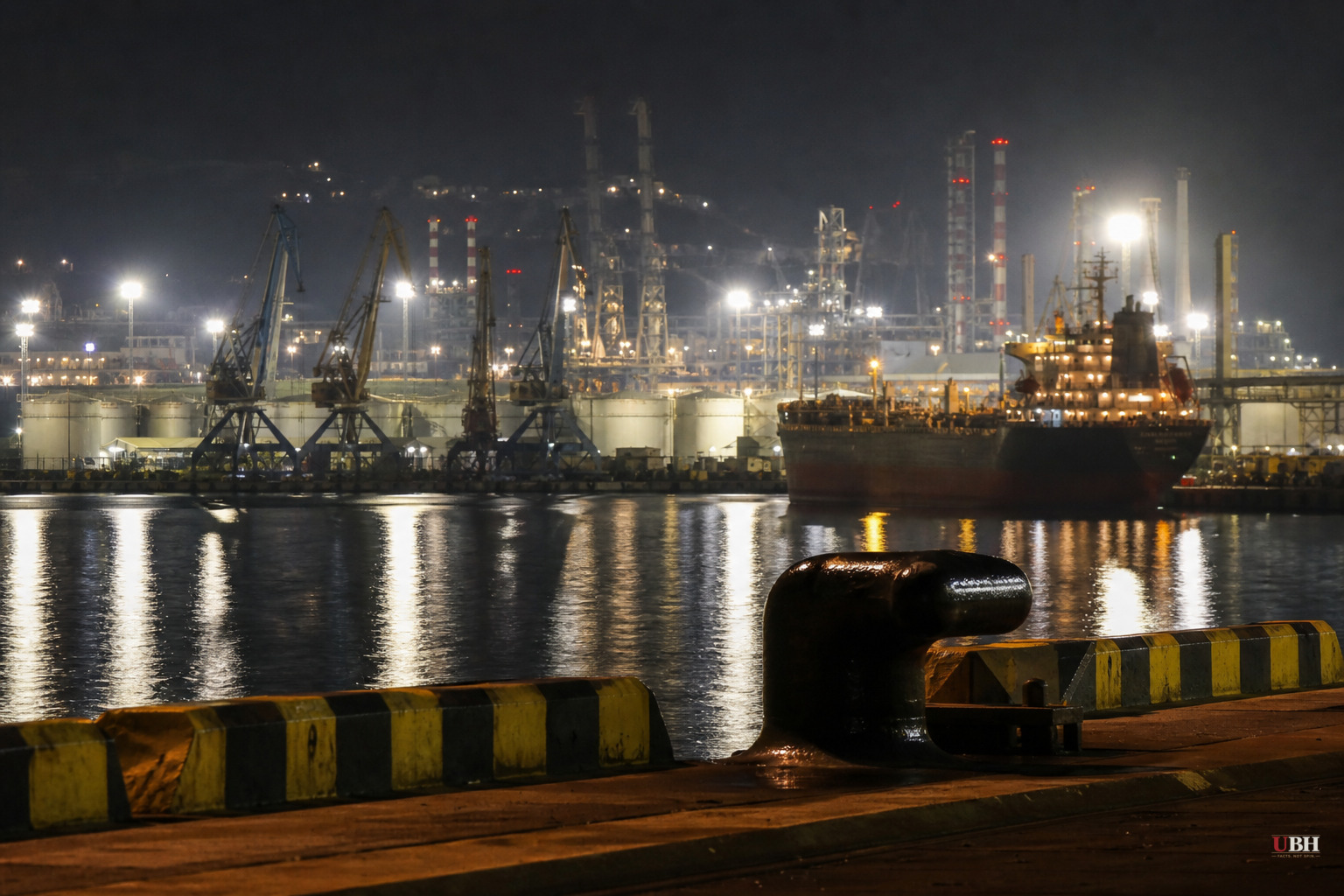
Since Ukraine escalated drone strikes on Russian Black Sea shipping earlier this month, Moscow has now extended its restrictions to Novorossiysk, the country's single largest cargo port. Russia introduced a verbal, unofficial ban on vessel movements there between midnight and 5 a.m., according to three grain industry sources cited by Reuters and reported by Baird Maritime.
No written order was sent to shipping companies. The port keeps running normally outside those hours, and grain shipments have not been affected yet, the sources said. Russia's Transport Ministry and the port administration did not respond to requests for comment.
Novorossiysk handles up to a third of Russia's grain exports, along with oil, metals, and containerized goods, according to Baird Maritime. It's the likely landing spot for grain traffic being diverted away from the Sea of Azov, where Russia banned vessels from anchoring in areas without air defenses at the ports of Azov and Kavkaz, per a government order published July 21.
The Tanker Strikes Behind the Squeeze
The nighttime ban follows a string of drone attacks on tankers loading at the Caspian Pipeline Consortium terminal near Novorossiysk. Reuters reported at least five tankers were hit at the CPC terminal in July alone.
CPC suspended oil loadings at the terminal this week after the strikes, and Kazakhstan's energy ministry announced Thursday it had cut crude production as a result, according to the Moscow Times. The ministry called it a "purely technical" move, saying storage tanks were at risk of overflowing once CPC restricted incoming shipments.
The CPC pipeline runs 940 miles from Kazakhstan's Caspian Sea fields to Novorossiysk and accounts for roughly 80% of Kazakhstan's oil exports. Its shareholders include Chevron and ExxonMobil. Kazakhstan's energy ministry said the CPC's physical infrastructure remains "fully intact and operational" and will resume "as soon as conditions normalize," but gave no timeline and no figure for how much output was cut.
Russia has accused Ukraine of targeting the tankers to disrupt global oil markets. Officials in Kyiv have not commented on the strikes, and neither CPC nor Kazakh officials have publicly named who carried them out. Kazakhstan's foreign ministry condemned the attacks in a statement Sunday, without assigning blame.
Grain Markets Already Reacting
Wheat futures are moving on this. Euronext September wheat futures rose 4.5% on news of the Novorossiysk closure, according to both Kyiv Post and Baird Maritime, on top of a sharp rise earlier this month that analysts at Poland's PKO Bank Polski tied directly to Russian shipping disruptions.
Ukraine's own export capacity is strained too. Danish shipping giant Maersk suspended service from Chornomorsk's fishing port in southern Ukraine "until further notice," according to Kyiv Post, redirecting shipments to Constanța, Romania instead. Maersk didn't blame Russian strikes directly, but major Ukrainian grain exporter Kernel made a similar move a week earlier. Ukraine's deep-water port at Chornomorsk and other Odesa-region ports remain open despite intensified Russian attacks on commercial vessels and port infrastructure, Ukrainian authorities said.
Before Russia's full-scale invasion, Ukraine accounted for roughly 6% of global wheat exports and 11% of corn exports. Its Black Sea grain-export capacity has fallen by about a third since the war began, according to Kyiv Post.
The Bigger Picture: Both Sides of the Black Sea Are Now Choked
Ukraine is losing export capacity, but Russia's own primary outlet is now hobbled too. Novorossiysk was supposed to be the fallback destination as Sea of Azov shipping got restricted. Now it's on a partial curfew of its own.
Russian oil and grain logistics are taking a real hit, not just Ukrainian ones, and this is happening while global shippers are already rerouting around Hormuz and Bab el-Mandeb chokepoints, per HSBC's recent commodity "super-squeeze" warning. Three major maritime pressure points are now live simultaneously.
For everyday consequences, wheat buyers and countries dependent on Black Sea grain imports are the ones who eat the cost first, through higher futures prices that eventually filter into bread and feed grain costs. Neither Moscow nor Kazakhstan's CPC has given a date for when full port operations or oil loading resume. Until they do, the drone strikes are functioning as a live constraint on both Russian and Kazakh export volumes, not just Ukrainian ones.
Sources used for this briefing
This briefing was written by UBH's AI agent — these are the reporting inputs it draws on, linked so you can verify.


