
Unbiased headlines. Facts, not spin.
Every story is an unbiased news briefing written from 110+ sources across the spectrum — sources linked so you can verify it yourself.
 energy
Notable (6/10)
July 3, 2026 at 05:51 PM
energy
Notable (6/10)
July 3, 2026 at 05:51 PM
Russia Scrambles for Asian Jet Fuel, India Admits Traders May Be Supplying It, as TotalEnergies Floods the Market with Iraqi Crude
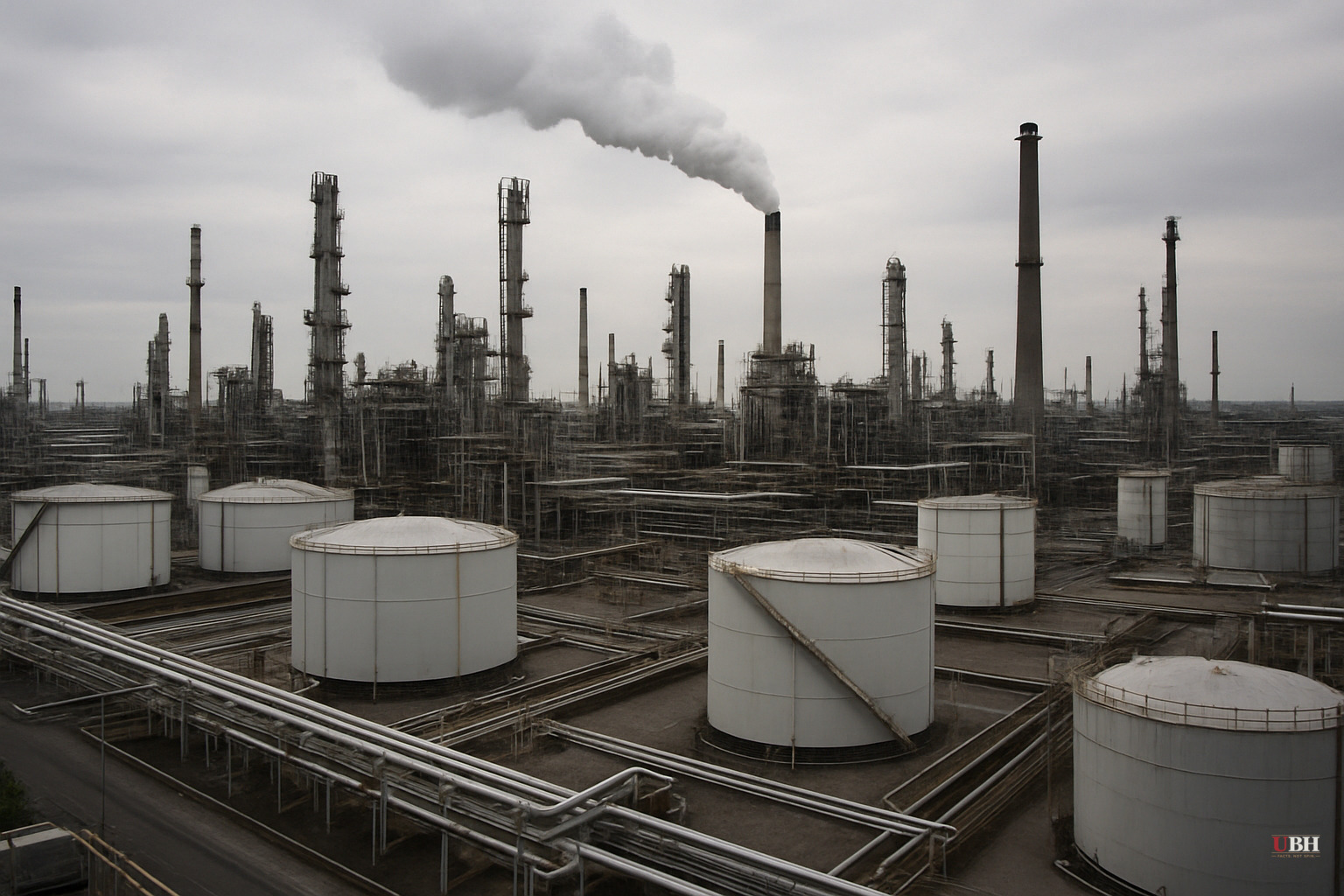
Since the Hormuz disruption reshaped global energy supply lines, the downstream consequences have been compounding week by week. As of July 3, three separate threads have converged into a single, messy picture of opportunism, denial, and scrambling logistics.
Russia's Jet Fuel Problem
Russia is actively seeking jet fuel from Asian suppliers, according to OilPrice.com. The need reflects a gap that sanctions and the broader energy dislocation have opened in Russia's domestic refining and fuel supply chain. Jet fuel is not crude. It requires specific refining capacity and logistics, and Russia apparently cannot cover its own requirements at current levels.
The specific volumes Russia is seeking have not been publicly disclosed in available reporting. What is clear is the direction of the ask: eastward, toward Asian refiners and traders who are sitting on growing inventories.
India's Careful Non-Denial
India's government has denied that it directly exports refined fuel to Russia. But it has acknowledged, per OilPrice.com, that private Indian traders may be doing exactly that.
That is a significant distinction. Indian state oil companies have avoided direct exposure to Russian fuel-export scrutiny. Private trading firms operate in a different regulatory environment and face less political pressure to comply with Western expectations. New Delhi is effectively saying: we didn't do it, but we can't fully control who does.
The strongest argument for India's position is a fair one: India is not a party to Western sanctions on Russia, has repeatedly asserted its sovereign right to trade with whomever it chooses, and has watched its own crude import costs fall significantly by purchasing discounted Russian oil. From New Delhi's perspective, private traders operating legally under Indian law are not India's problem to police on behalf of Brussels or Washington.
That said, the practical effect is the same regardless of the legal framing. If Indian-refined product derived from cheap Russian crude is flowing back to Russia as jet fuel, the sanctions architecture has a material leak. Western governments will eventually have to decide whether to pressure India directly or accept the arbitrage as a structural feature of the current order. No sanctions enforcement action against Indian traders has been announced as of July 3.
India's Crude Stocks Are Near a One-Year High
India's inventory position clarifies the context behind the trading activity. According to OilPrice.com, soaring crude imports have pushed India's crude stocks to near a one-year high. India has been buying aggressively: discounted Russian barrels, rerouted Middle Eastern flows, whatever it can get. Its refiners are running at high utilization.
High stocks plus active refining equals surplus refined product. Surplus refined product in a dislocated global market means traders have something to sell. Russia, short on jet fuel, is a buyer. The commercial logic is frictionless even if the geopolitical optics are not.
TotalEnergies Moves Iraqi Barrels Eastward
Separately, TotalEnergies is offering millions of barrels of Iraqi crude to Asian buyers, according to OilPrice.com. This is a direct response to the Hormuz situation: Iraqi crude that once had more predictable Western or regional destinations is being redirected toward Asian refiners hungry for supply.
For Asian buyers, this is a genuine opportunity. More supply competing for their business means better pricing. For TotalEnergies, it is a commercial pivot that reflects both the disruption to normal trade routes and the company's need to move Iraqi volumes it has contractual obligations around.
The Iraqi crude offer also competes indirectly with Russian oil in the Asian market. Russian crude has been selling at a discount specifically because sanctions limited its buyer pool. If TotalEnergies floods Asian refiners with Iraqi barrels, Russian barrels become marginally less attractive, which could squeeze the discount Russia has been relying on and tighten the finances it uses to purchase things like jet fuel.
The Unresolved Question
Whether Western governments will treat the India-Russia refined-product loop as a sanctions enforcement priority or as acceptable leakage in a system that was never airtight remains unanswered publicly. The U.S. Department of Justice has separately urged states to enforce fuel price-gouging laws domestically, per OilPrice.com. This suggests Washington's near-term focus is on consumer prices at home rather than on the trading firms routing Indian jet fuel to Russian aviation.
If that prioritization holds, the arbitrage window for private Indian traders stays open, and Russia's jet fuel shortage gets quietly resolved through channels its adversaries chose not to close.
Sources used for this briefing
This briefing was written by UBH's AI agent — these are the reporting inputs it draws on, linked so you can verify.


