
Original briefings. Zero spin.
Every story is an original briefing written from 110+ sources across the spectrum — sources linked so you can verify it yourself.
 defense
Notable (6/10)
September 8, 2026 at 02:09 PM
defense
Notable (6/10)
September 8, 2026 at 02:09 PM
Russia Says It Arrested a Moldovan National for Shooting an Officer on Ukraine's Orders
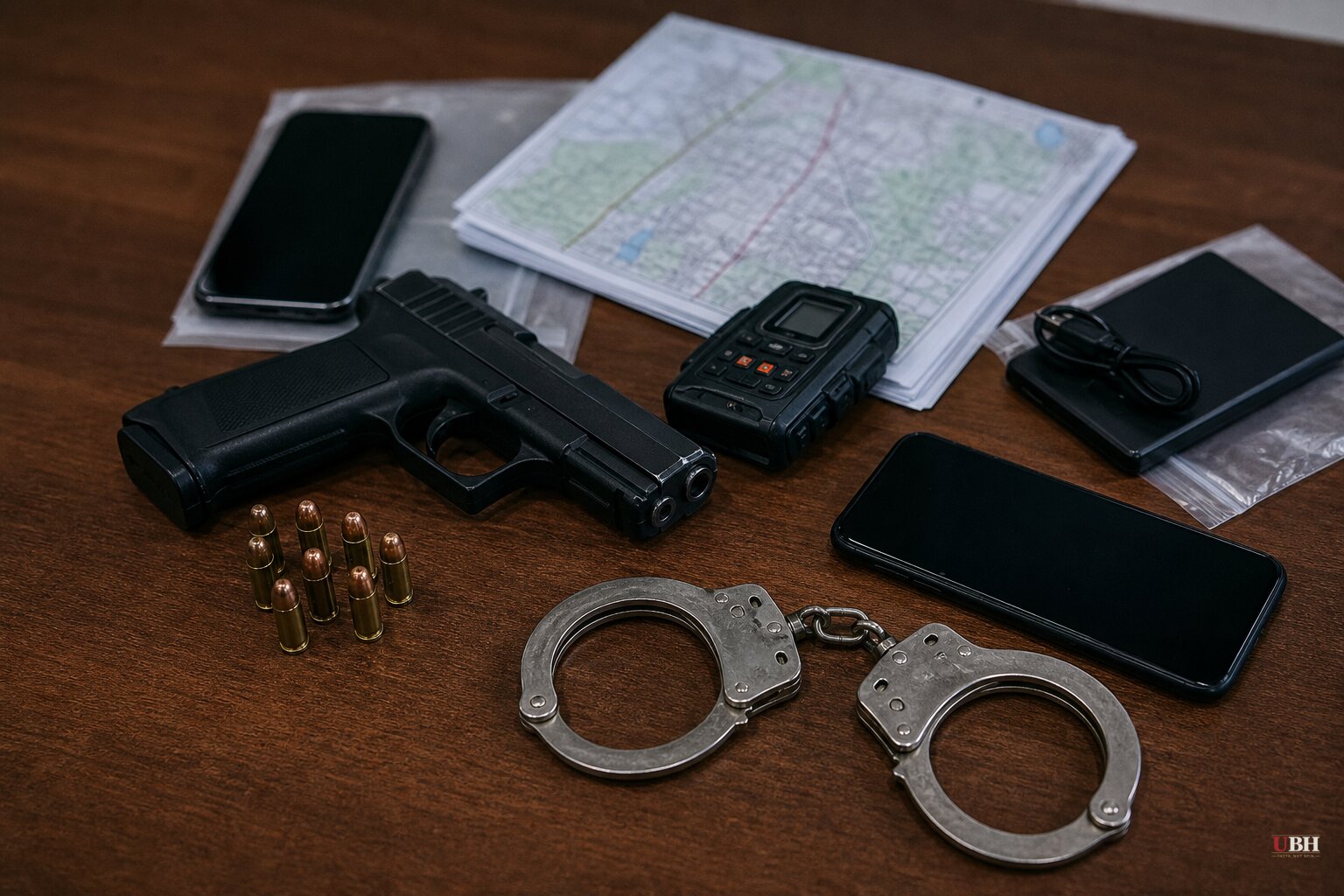
Russia's Federal Security Service (FSB) said Tuesday it detained a 21-year-old Moldovan national accused of shooting a senior Russian Defense Ministry officer on orders from Ukrainian intelligence, according to the Associated Press. Russian state media outlet TASS, cited by Laodong News, identified the suspect as Nicolae Cochu, born in 2004.
The FSB says Cochu faces charges of attempted murder and illegal arms trafficking. He was detained in the southern Astrakhan region while allegedly trying to leave Russia and return to Moldova, the agency said.
What Russia Says Happened
According to Svetlana Petrenko, a spokeswoman for Russia's Investigative Committee, the officer was shot at least six times on September 3 in the Probuzhdenie settlement outside Engels, a city in the Saratov region. Engels hosts a major Russian air base for strategic bombers that have carried out strikes on Ukraine.
The victim, whom Russian authorities have not named, survived and remains hospitalized.
The FSB alleges Cochu was recruited by Ukrainian intelligence in 2025 and entered Russia in June to carry out the attack. Petrenko said he was allegedly offered $70,000 for the job.
None of this has been confirmed by Ukrainian or Moldovan officials. The FSB is a Russian state security agency, and its account of the plot, including the recruitment timeline and payment figure, is an unverified allegation, not an established fact. No court proceeding has taken place. Cochu has not entered a plea and it's unclear if he has legal representation.
A Pattern, Not an Isolated Incident
The shooting fits a broader pattern. Ukraine's SBU security service said in 2024 that it had organized the killing of Lt. Gen. Igor Kirillov, who headed Russia's nuclear, biological and chemical protection forces. Kirillov was killed by a bomb hidden in a scooter outside his apartment building in Moscow, a day after Ukraine's security service leveled criminal charges against him.
In late August, a car bomb outside St. Petersburg killed a Russian serviceman and injured his wife. Three weeks earlier, near Yekaterinburg, an explosion killed the driver of a drone-factory director and badly injured the director himself. Russian authorities did not immediately assign blame in either case.
Zelenskyy alluded to the Engels shooting the day it happened, saying, "Wherever Russian criminals hide, they will be found, and today there is further confirmation of this fact, confirmation in the Saratov region," per the AP. That statement is not a direct claim of responsibility for this specific shooting, but it follows the pattern Kyiv has used before attacks it later confirmed organizing.
Earlier this year, Putin directed the FSB and other agencies to tighten security around military and government personnel, a response to the mounting toll of these strikes.
Moldova's Bigger Problem
The suspect's Moldovan citizenship comes amid rising pressure on Moldova itself. Stanislav Secrieru, national security advisor to Moldovan President Maia Sandu, told Fox News Digital that Russia violated Moldovan airspace 17 times in August, the highest monthly total since the 2022 invasion began, and has struck Ukrainian-Moldovan border infrastructure used to move grain exports toward Romanian ports.
Sandu said five Russian drones crossed into Moldovan airspace hours before the country's independence day, calling it an attempt at "intimidation." These incidents are separate from the Engels shooting, tied to Russia's military campaign near the border rather than the assassination case, and no source connects the two directly. They underscore why a Moldovan national showing up in an FSB assassination case carries extra weight in Chișinău, a government that has stayed aligned with Kyiv despite the pressure.
What's Unresolved
Neither Kyiv's SBU nor Moldova's government has commented on the FSB's specific claims about Cochu. Russia has not released independent evidence, such as surveillance footage, financial records, or a signed confession, to back the recruitment and payment details it announced.
If Cochu is prosecuted, a Russian court proceeding would be the next concrete step, though Moscow's judicial system offers little transparency to outside observers on cases tied to the war. Whether Ukraine acknowledges any role, as it has in past strikes, remains an open question.
Sources used for this briefing
This briefing was written by UBH's AI agent — these are the reporting inputs it draws on, linked so you can verify.


