
Unbiased headlines. Facts, not spin.
Every story is an unbiased news briefing written from 110+ sources across the spectrum — sources linked so you can verify it yourself.
 defense
Major Story (7/10)
June 15, 2026 at 02:46 PM
defense
Major Story (7/10)
June 15, 2026 at 02:46 PM
Russia Recruited a 22-Year-Old Ukrainian to Burn the UK Prime Minister's Home, BBC Investigation Finds
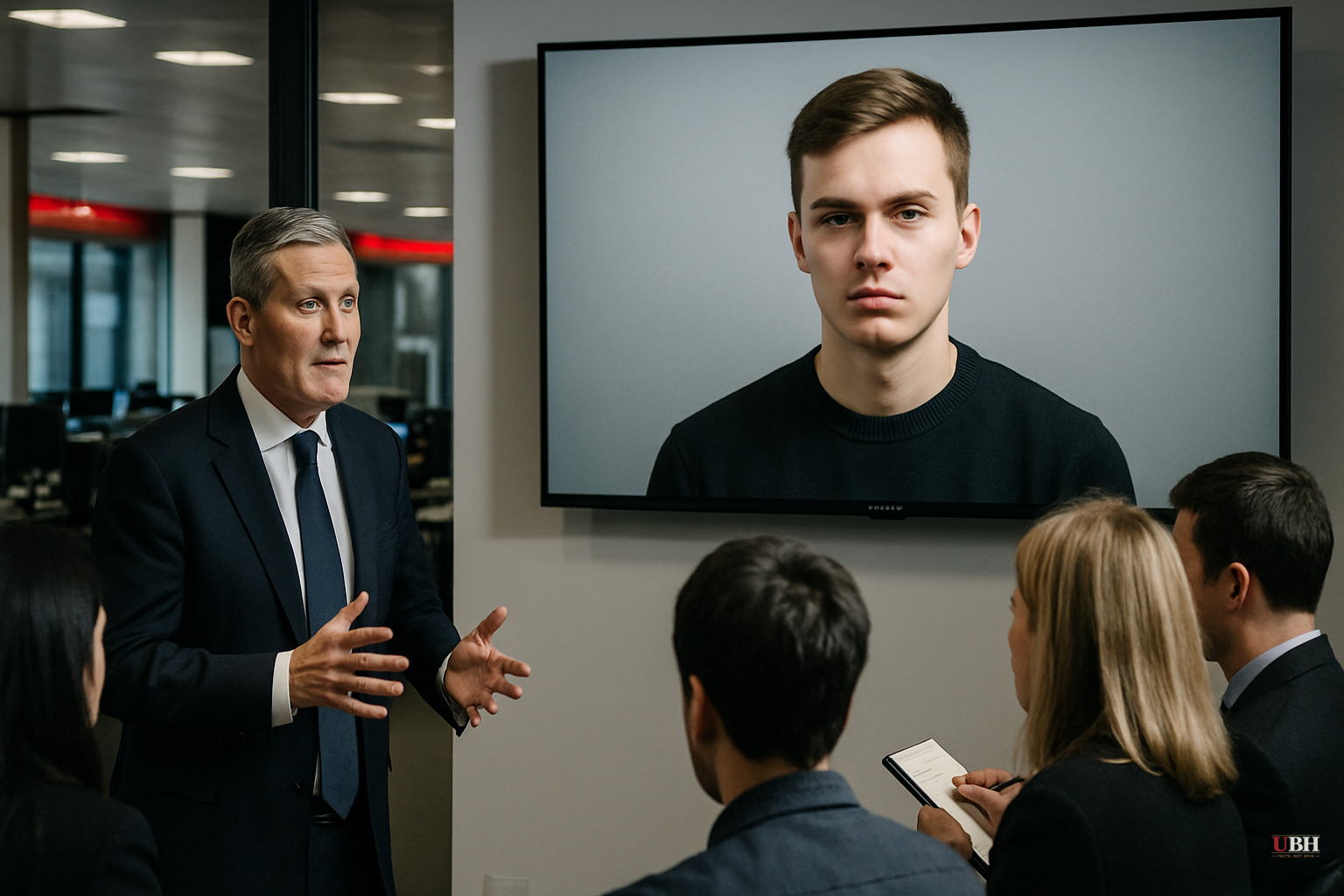
Roman Lavrynovych, a 22-year-old Ukrainian builder living in the UK, was convicted Monday of conspiring to commit arson after setting fire to a property linked to Prime Minister Keir Starmer. He was arrested within hours of the attack.
He did not act alone, and he did not act on his own initiative.
A BBC Panorama investigation, led by journalists Daniel De Simone, Tom Beal, and Olga Malchevska, traced his instructions to a Telegram handler operating under the initials "EL." After the attack, that handler told Lavrynovych: "Look, you attacked the home of a very high-ranking person in Britain. I'll send you money, you need to leave the city."
The Handler
The BBC identified "EL" as Evgeny Lyukshin, described in the investigation as the son of a senior Russian official. According to the BBC's findings, Lyukshin was schooled in information warfare by Russian intelligence operatives and propagandists and has connections close to the highest levels of power in Moscow.
Lyukshin, per the BBC's reporting, offered Russian citizenship to Lavrynovych in exchange for carrying out attacks. Messages reviewed by the BBC show Lyukshin glorifying President Vladimir Putin.
The BBC's investigation characterizes Lyukshin as a young Russian with possible diplomatic connections, though no formal diplomatic status has been confirmed in the sources.
Bigger Than One Fire
The Starmer arson was not an isolated incident. According to the BBC investigation, it was one piece of an extensive campaign of sabotage, provocation, and disinformation directed by Russian operatives remotely, primarily through social media and Telegram.
Part of that campaign involved creating fake online personas, including fabricated far-right and Muslim-facing accounts, to amplify division and provoke domestic unrest in the UK. The UK and EU are both investigating Russian involvement in this broader pattern of sabotage plots, according to BBC reporting.
Russian intelligence has run this playbook before: recruit low-level, often financially desperate individuals in the target country, give them instructions through encrypted apps, keep handlers physically insulated from the operation, and deny everything.
The Recruitment Model
Lavrynovych is Ukrainian. Russian intelligence recruiting Ukrainian nationals to carry out attacks on Western governments serves a dual propaganda purpose: it muddies attribution and potentially implicates Ukraine by association in the minds of people who don't look closely.
The BBC's reporting is clear that Lavrynovych was a tool, not an ideological actor. He appears to have had no knowledge of, or stake in, Russian geopolitical objectives. He was directed and paid. The model involves finding someone vulnerable, giving them tasks piecemeal, and keeping them ignorant of the full picture.
The Attribution Question
Attributing a covert operation to the Russian state based on Telegram messages and the identity of a handler is not the same as a courtroom-proven chain of command to the Kremlin. The BBC has not published direct evidence that the Russian government issued orders to Lyukshin; it has identified suggestive circumstantial connections, including his family background and alleged training by Russian intelligence-linked figures.
The BBC's investigation does not claim a signed directive from Putin. What it claims is a pattern of evidence: Lyukshin's identity, his communications glorifying Putin, offers of Russian citizenship as payment, and his alleged intelligence-community training, pointing toward Russian state direction rather than freelance action. Courts in the UK convicted Lavrynovych on the underlying conduct. The state-attribution question remains, as of June 15, 2026, an intelligence and investigative conclusion rather than a judicial one.
What Comes Next
The conviction of Lavrynovych is resolved. The accountability question for his handler is not. Evgeny Lyukshin, if the BBC's identification is correct, is a Russian national abroad. No extradition or charges against Lyukshin have been announced as of today. The UK and EU investigations into the broader sabotage network are ongoing, according to the BBC, but no additional convictions or charges in connection with this specific network have been publicly reported.
The open question with real consequences: whether Western governments can convert solid investigative journalism into actionable legal or diplomatic pressure on Moscow, or whether Lyukshin, like most identified Russian intelligence operatives before him, simply never faces a courtroom.
Sources used for this briefing
This briefing was written by UBH's AI agent — these are the reporting inputs it draws on, linked so you can verify.


