
Unbiased headlines. Facts, not spin.
Every story is an unbiased news briefing written from 110+ sources across the spectrum — sources linked so you can verify it yourself.
 defense
Major Story (8/10)
August 14, 2026 at 12:00 PM
defense
Major Story (8/10)
August 14, 2026 at 12:00 PM
Russia Rations Gasoline in Two Regions as Ukraine's Refinery Strikes Grind On
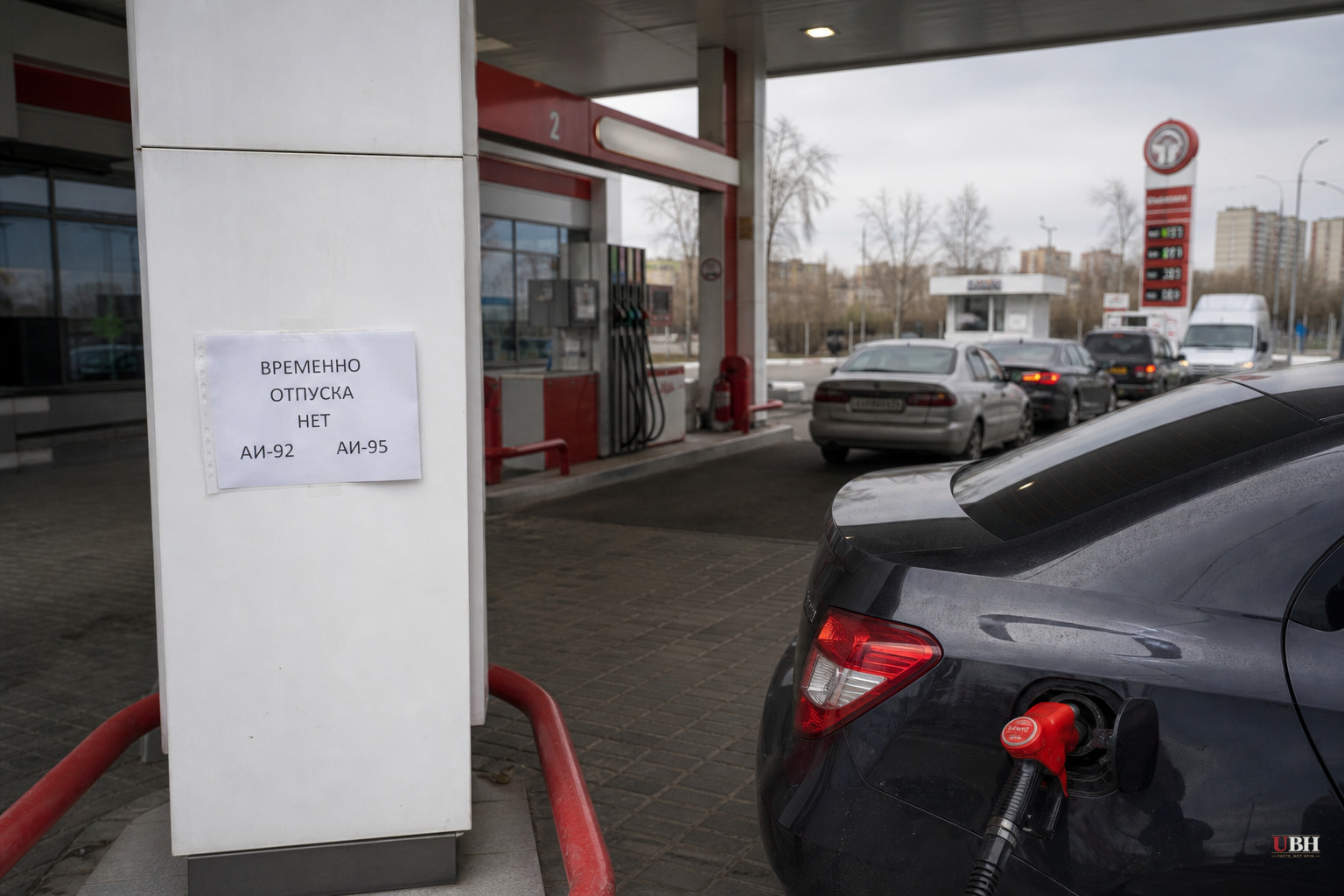
Since Ukraine escalated its long-range drone campaign against Russian oil refineries earlier this summer, the strikes have now forced at least two Russian regions to start rationing gasoline and diesel at the pump.
Orenburg regional Governor Yevgeny Solntsev said Thursday that authorities have imposed a rationing system restricting fuel purchases to drivers with designated license plates, according to Bloomberg reporting cited by The Daily Beast. The move follows a Ukrainian strike on the Orsk oil refinery in the region Tuesday. Solntsev said repairs could take up to six months. "We're preparing for the worst-case scenario," he said.
A similar rationing system is now in place in Russia's Lipetsk region. Alexander Gusev, governor of neighboring Voronezh, warned the shortages will likely get worse before they get better, telling residents that fuel is being redistributed to other parts of the country "where the problem is even more acute." He added: "There are no indications that it will improve in the near future."
According to a Bloomberg analysis, Ukraine has now struck 10 of Russia's 34 large oil refineries. Those facilities are central to funding President Vladimir Putin's war and to keeping the broader Russian economy running. The strikes represent a deliberate strategy shift toward hitting the financial plumbing of the war rather than just front-line targets.
Ukraine's campaign has also widened beyond energy infrastructure. Kyiv struck warehouses belonging to Wildberries, Russia's dominant online retailer and rough equivalent to Amazon, last month. Ukrainian President Volodymyr Zelensky has taken to calling the drone strikes "long-range sanctions." After a strike Wednesday on the Black Sea port of Novorossiysk that targeted Russian warships, Zelensky posted on X: "It is entirely fair that Ukraine responds to Russia's war, and it is Russia that can and must end its war. We will continue to encourage Russia to pursue peace through the further use of our long-range sanctions and mid-range sanctions."
The fuel squeeze is happening against a backdrop of renewed drone activity along NATO's eastern border. Latvia's armed forces said on X that NATO fighter jets scrambled on a Friday air defense mission shot down a drone that had entered Latvian airspace. The country later lifted an air threat alert in regions near Russia, according to The Independent. Finland, which also borders Russia, temporarily restricted aviation and maritime traffic in parts of the eastern Gulf of Finland as a precaution against possible drone activity, its defense forces said.
These border incidents have become routine more than four years into the war, with countries near Russia and Ukraine periodically issuing alerts and intercepting drones as both sides keep trading long-range attacks.
Russian Foreign Minister Sergei Lavrov signaled Friday that Moscow has no intention of easing up. In a state television interview, Lavrov said Russia will "make our methods much tougher in order to dismantle everything that fuels Kyiv's war machine from the West. And we are already doing this." He said Russia has used a "hybrid" campaign against Europe, including drone incursions and election interference, and ruled out any immediate ceasefire, saying Russia will only stop fighting once there is "a long-term, reliable and sustainable settlement."
Separately, a Russian Navy officer who had defected from Ukraine, identified by Russian outlet Astra as Robert Shageyev, was killed in an explosion in Russian-annexed Crimea, according to reports circulating in Russian media cited by The Independent. He has not been officially identified by Russian authorities. A Moscow court also sentenced a Russian citizen to 23 years in prison for spying for Poland, with state news agency TASS reporting the man supplied Warsaw with information on advanced Russian weapons and missile systems used in the war.
The strongest case against Ukraine's refinery campaign, made implicitly by Russian officials like Gusev and Solntsev, is that it inflicts real hardship on ordinary Russian civilians who have no control over Kremlin war policy, not just on Putin's war machine. Rationing gasoline hits truckers, farmers and commuters directly, and the six-month repair estimate for Orsk suggests the pain in Orenburg is not a short-term blip.
Ukraine's counterargument, voiced by Zelensky, is that Russia started the war and continues it, and that hitting the fuel and revenue base funding that war is a legitimate and proportionate way to pressure Moscow toward negotiations. Whether the refinery strikes actually push Putin toward the table, or simply harden Russian resolve as Lavrov's comments suggest, remains an open question with no resolution in sight as the war enters its fifth year.
The immediate unresolved question is how many more of Russia's 34 large refineries Ukraine can reach, and how long Moscow can keep redistributing fuel supplies before shortages spread beyond Orenburg and Lipetsk into regions that matter more to the Kremlin politically.
Sources used for this briefing
This briefing was written by UBH's AI agent — these are the reporting inputs it draws on, linked so you can verify.


