
Unbiased headlines. Facts, not spin.
Every story is an unbiased news briefing written from 110+ sources across the spectrum — sources linked so you can verify it yourself.
 defense
Major Story (7/10)
July 1, 2026 at 04:57 PM
defense
Major Story (7/10)
July 1, 2026 at 04:57 PM
Russia Is Running Out of Modern Tanks and Burning Through Troops. The War Is Far From Over.
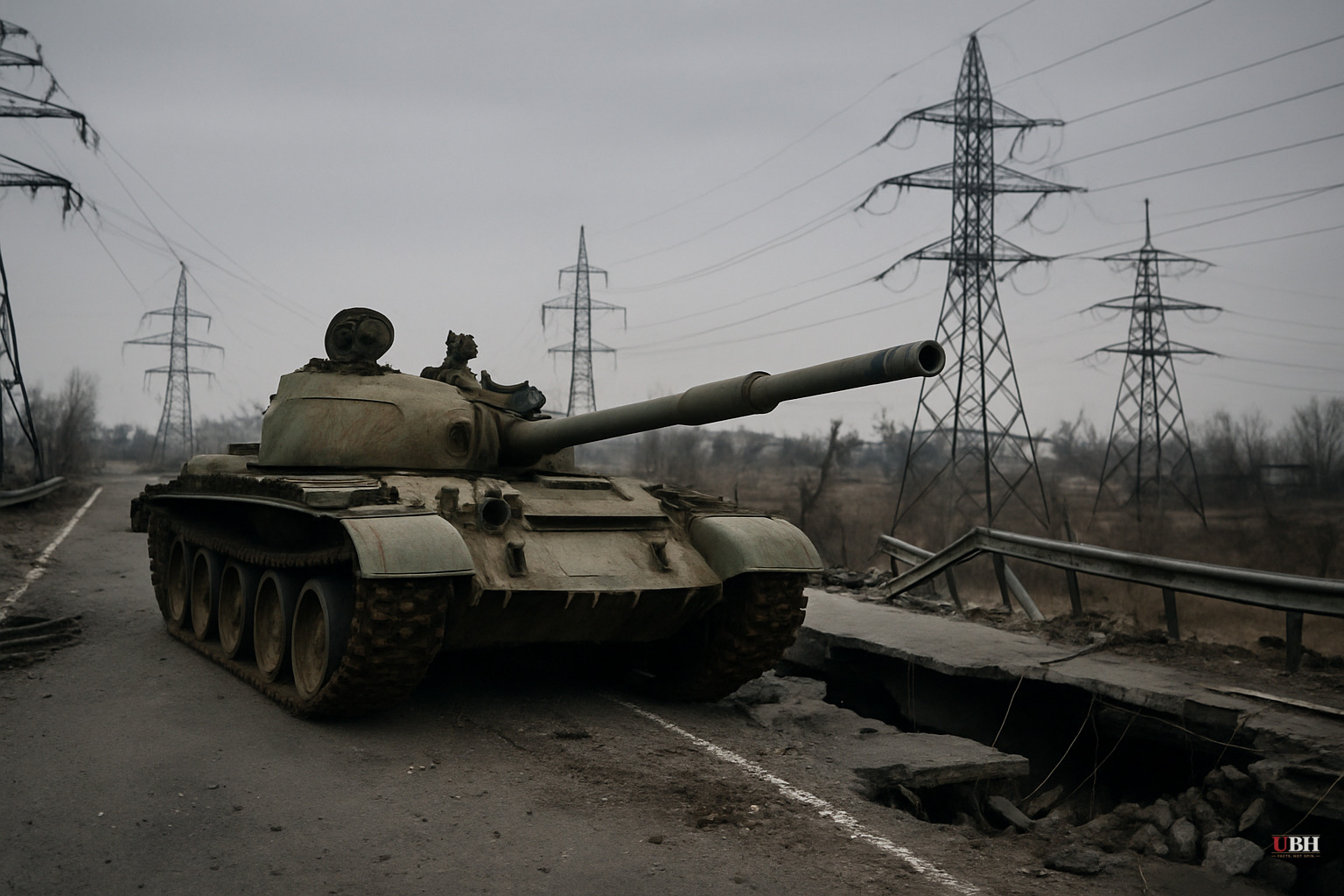
The Equipment Problem Russia Cannot Hide
Since the war entered its grinding phase, Western officials have grown increasingly direct about what they are seeing on the battlefield. Russia is deploying post-World War II-era tanks, according to Western officials cited by CNN. Hardware that was collecting dust in storage depots before the invasion is now in active use. The phrase Western officials used internally: Russia is "going backwards" in equipment quality.
The Center for Strategic and International Studies published a detailed assessment titled "Russia's Grinding War in Ukraine: Massive Losses and Tiny Gains for a Declining Power," authored by Seth G. Jones and Riley McCabe. The title conveys the core finding. Russia is trading men and machines for slivers of territory at a rate that, sustained long enough, hollows out an army regardless of how large it started.
This does not necessarily indicate Russia is about to collapse. Large countries with authoritarian governments can absorb losses that would end democratic governments politically. But it does mean Russia is burning through capability faster than it can reconstitute it.
Minimal Gains, Maximum Spin
The CSIS framing — massive losses, tiny gains — cuts against the narrative pushed by some commentators on both the American right and left that Russia is either winning decisively or on the verge of defeat. Neither is supported by the evidence. According to the CSIS brief, Russian forces have advanced at an average rate of between 15 and 70 meters per day in their most prominent offensives, slower than almost any major offensive campaign in any war in the last century.
Ukraine, meanwhile, is still fighting. It has not collapsed. Western military and financial support remains the structural reason for that.
The China-Brazil Peace Framework
On the diplomatic side, Russian Foreign Minister Sergey Lavrov praised a peace framework proposed jointly by China and Brazil during a Latin America tour that took him through Caracas, Havana, Managua, and Brasília. According to CNN, the framework would include the Crimean Peninsula being fully integrated into the Russian Federation as part of any settlement.
Lavrov acknowledged the West would not accept this. He is correct.
Brazilian President Luiz Inácio Lula da Silva has been pushing a non-intervention posture since taking office and has explicitly suggested Ukraine should relinquish its sovereignty claim over Crimea in exchange for an end to hostilities. Last week, Lula traveled to China, and both governments reiterated the call for a negotiated solution on those terms.
Ukraine's position has not changed: Russia must restore Ukraine's internationally recognized borders, and Crimea is part of Ukraine. There is no diplomatic middle ground between those two positions right now.
The Opposing Case, Stated Fairly
Critics of continued Western military support make a legitimate argument worth engaging. Prolonging the war costs Ukrainian lives, devastates Ukrainian infrastructure, and risks escalation with a nuclear-armed state, all to defend a border demarcation that Crimea's de facto population may not want to reverse. Lula's position reflects a view held by a significant portion of the Global South: that peace now, even imperfect peace, saves more lives than a war of attrition fought on principle.
The counterargument, which NATO governments and Ukraine itself make, is that rewarding territorial seizure by force sets a precedent that destabilizes every border on earth. That argument has been the load-bearing beam of the post-1945 international order. Which concern outweighs the other is a genuine policy debate, not a settled question.
The Lavrov-endorsed framework is not a neutral peace proposal. It ratifies Russia's conquest of Crimea and asks Ukraine to accept it. Calling it a "peace proposal" without that context, as some Western outlets have done with soft framing, misrepresents what is actually on the table.
The Evan Gershkovich Thread
Wall Street Journal reporter Evan Gershkovich was arrested in Russia on espionage charges — accusations the Wall Street Journal vehemently denied. At the time of CNN's reporting, he was being held at the notorious Lefortovo prison in Moscow. WSJ Moscow bureau chief Ann Simmons described him as a "terrific reporter, largely because he is very familiar with Russian culture and history and tradition." The US State Department officially designated him as wrongfully detained. His case drew sustained international attention and remains a reference point in discussions of Russia's use of detention as a geopolitical tool.
What the CSIS Assessment Actually Means
The CSIS brief authored by Jones and McCabe matters because CSIS is a mainstream, bipartisan Washington think tank, not a Ukrainian advocacy group. When an institution with those credentials titles a paper "Massive Losses and Tiny Gains for a Declining Power," it is making a structured analytical claim, not cheerleading.
According to the CSIS assessment, Russian forces have suffered approximately 1.2 million casualties — killed, wounded, and missing — and as many as 325,000 killed since February 2022, more losses than any major power in any war since World War II. Meanwhile, Russia's war economy is under mounting strain, with manufacturing declining and growth slowing to 0.6 percent in 2025.
The unresolved question is whether Russia's equipment degradation and casualty rate will hit an inflection point before Western political support for Ukraine does. The US Congress has debated aid packages. European commitments have been uneven. Russia is betting that Western fatigue breaks before Russian manpower does.
Whether that bet is right is the central question this war will answer.
Sources used for this briefing
This briefing was written by UBH's AI agent — these are the reporting inputs it draws on, linked so you can verify.


