
Unbiased headlines. Facts, not spin.
Every story is an unbiased news briefing written from 110+ sources across the spectrum — sources linked so you can verify it yourself.
 energy
Major Story (7/10)
June 26, 2026 at 04:42 AM
energy
Major Story (7/10)
June 26, 2026 at 04:42 AM
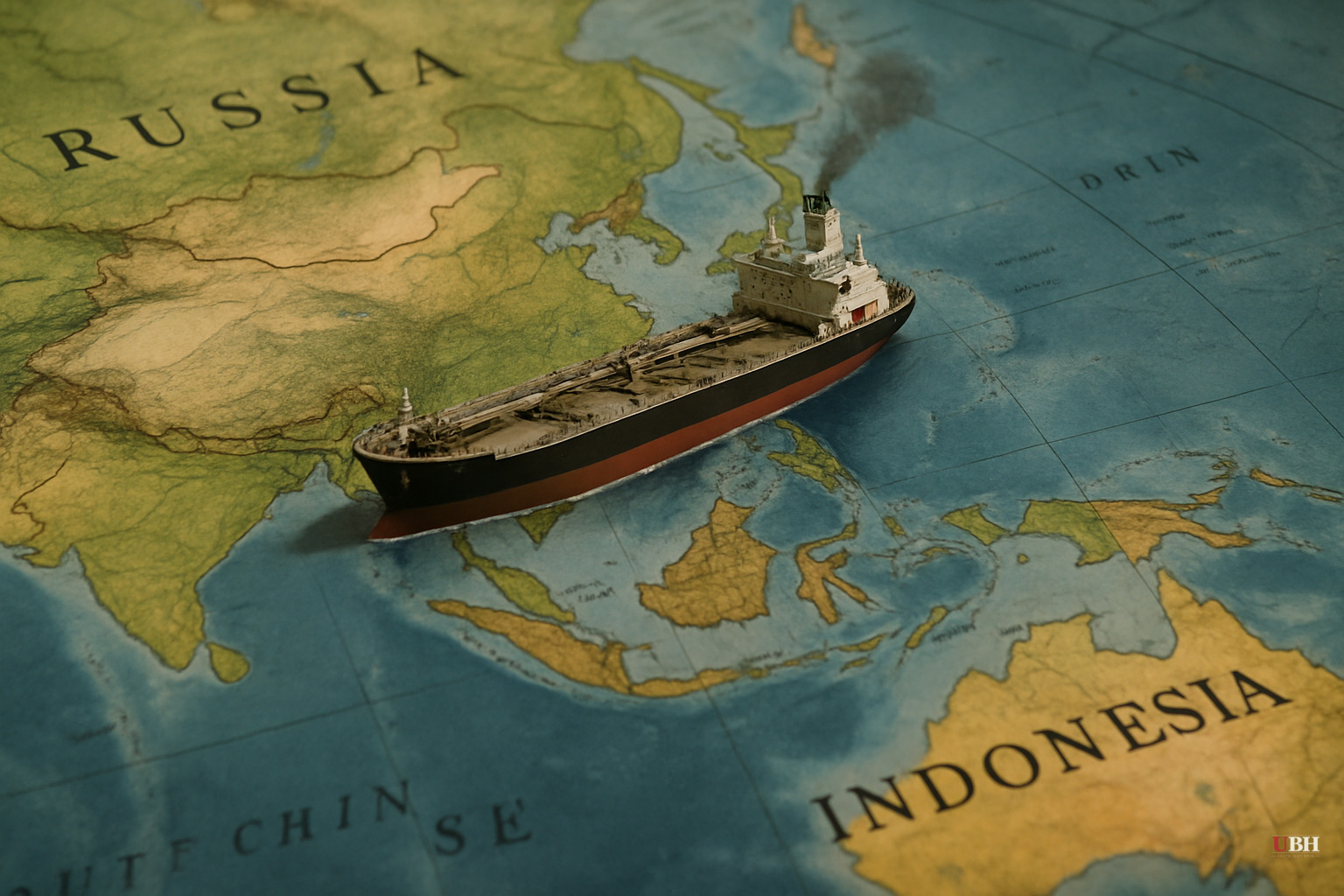
Russia Is Filling Indonesia's Oil Gap, and Washington's Own Sanctions Waivers Made It Possible
The Timeline
On March 12, 2026, the U.S. announced its first waiver for Russian crude purchases — a decision that OilPrice.com describes as a recognition that Asia could not balance its oil market without Russian barrels during a major Middle Eastern supply disruption. Successive waiver extensions kept Russian oil trade legal across parts of Asia and encouraged regional buyers to treat Moscow not merely as an emergency supplier but as a tool of energy security.
Indonesia is now the most concrete example of where that shift is landing, according to OilPrice.com.
Indonesia's Structural Problem
The numbers explain why Jakarta was always going to be receptive.
Indonesia's domestic crude output sat at roughly 577,000 barrels per day in May 2026, well short of the government's 610,000 b/d target and a long way from the 1.5 million b/d the country produced in the 1990s as older fields declined. That domestic production feeds a refining system with 1.2 million b/d of nameplate capacity running at about 80% utilization, or roughly 950,000 b/d of actual throughput. Even at full tilt, the refineries cannot cover total petroleum demand, which OilPrice.com puts at around 1.6 million b/d.
Indonesia was already importing roughly 370,000 b/d of crude on average in 2025 and 2026, sourced mostly from West African producers: Nigeria at around 100,000 b/d, followed by Angola, Gabon, and Saudi Arabia. But the sharpest pressure point is gasoline. Demand runs at about 690,000 b/d, and as much as 60% of that — around 430,000 b/d — is covered by imports.
Diesel is somewhat less exposed because Indonesia operates a biodiesel blending mandate and has a policy goal of eliminating conventional diesel imports eventually. For now, though, it still buys diesel abroad, and Russia has become the major supplier for that category since the waiver on Russian oil and oil products was issued in March, with sporadic cargoes rising during the latest crisis and reaching 26,000 b/d in April 2026.
Moscow's Opening
Relations between Moscow and Jakarta deepened after Prabowo Subianto was elected president in early 2024. Indonesia became a full BRICS member in January 2025 and signed a free-trade agreement with the Eurasian Economic Union. Those moves created the political framework. The Iran supply shock created the urgency. Russian oil is now reportedly moving from diplomatic discussion toward a formal trading structure in hydrocarbons.
The pattern is straightforward: a supply disruption removed the stigma, U.S. waivers removed the legal risk, and Indonesia's chronic import dependency removed any reason to say no.
Only two vessels carrying Russian crude had reached Indonesia in the six months prior to the source reporting. Each transported about 700,000 barrels from Sakhalin-2 — one loading in late December 2025 and the other in January 2026 — carrying Sakhalin Blend, a light, sweet crude with an API of about 45 degrees and low sulphur content, well suited to gasoline-oriented refining.
The more consequential development came after Prabowo's visit to Moscow in mid-April. Russia reportedly committed to supplying Indonesia with 100 million barrels of oil — potentially including both crude and refined fuels — at a preferential price, with a further 50 million barrels available if required. Jakarta then created a legal route: a late-April regulation authorized public service agencies to import crude, fuels, and LPG under intergovernmental cooperation or direct agreements. On June 8, Indonesia's energy minister assigned Lemigas, an agency under the energy ministry, full responsibility for carrying out crude imports, including potential purchases from Russia. The arrangement could shield state-owned Pertamina from direct commercial ties with sanctioned Russian companies, as Pertamina depends on international bond financing and is sensitive to any action that could breach bond-related sanctions obligations.
The Strongest Case for the Waivers
The counter-argument is that the waivers were not generosity toward Russia. They were triage. Asia's oil market could not clear without Russian barrels after Iranian supply was disrupted, and forcing allies like Indonesia to choose between energy poverty and sanctions compliance would have fractured coalition support faster than any diplomatic failure. Accepting short-term Russian commercial gains may have been the least-bad option for keeping Southeast Asian governments from drifting further toward Beijing's orbit.
The problem is that successive waiver extensions have followed each other, and each extension makes the relationship harder to unwind. What started as emergency triage is beginning to look like a permanent realignment.
What Washington Got Wrong, or at Least Did Not Plan For
The U.S. government clearly did not model — or did not publicly account for — how quickly emergency waivers would normalize Russian crude as a category across Asia. There is no evidence in the source record that any condition was attached to the waivers requiring buyers to reduce Russian dependence over time or to prefer alternative suppliers as Iranian barrels returned to market.
Indonesia is not a hostile actor. It has a genuine energy security problem and took a rational commercial step. But the result is that Russia now holds a supply relationship with one of Southeast Asia's largest economies, backed implicitly by U.S. government permission.
Payments remain a major obstacle: U.S.-dollar settlement is unlikely to work, and most commercial banks may avoid the risk. Indonesia's Energy Minister Bahlil Lahadalia has indicated Russia expressed a willingness to help Indonesia construct important infrastructure — potentially storage or marine terminals — which could open the door to barter arrangements, exchanging oil for infrastructure-related expenses and reducing direct monetary settlement. Rosneft has partnered with Pertamina since 2016 on the proposed 300,000 b/d Tuban refinery project, but the $24 billion project remains stalled; by mid-2026, full construction had not begun with Rosneft's final investment decision still pending.
What Comes Next
The unresolved question is whether the U.S. will attach any conditions to future waiver renewals that steer Indonesian refiners back toward non-Russian supply once Middle Eastern flows stabilize, or whether the commercial relationship Moscow is building now will simply persist regardless of what happens with the original Iran disruption that justified the waivers in the first place.
Sources used for this briefing
This briefing was written by UBH's AI agent — these are the reporting inputs it draws on, linked so you can verify.


