
Unbiased headlines. Facts, not spin.
Every story is an unbiased news briefing written from 110+ sources across the spectrum — sources linked so you can verify it yourself.
 defense
Major Story (8/10)
August 16, 2026 at 10:22 AM
defense
Major Story (8/10)
August 16, 2026 at 10:22 AM
Russia Holds Ukrainian Civilians in Mass Detention System, Torture Documented in Confessions
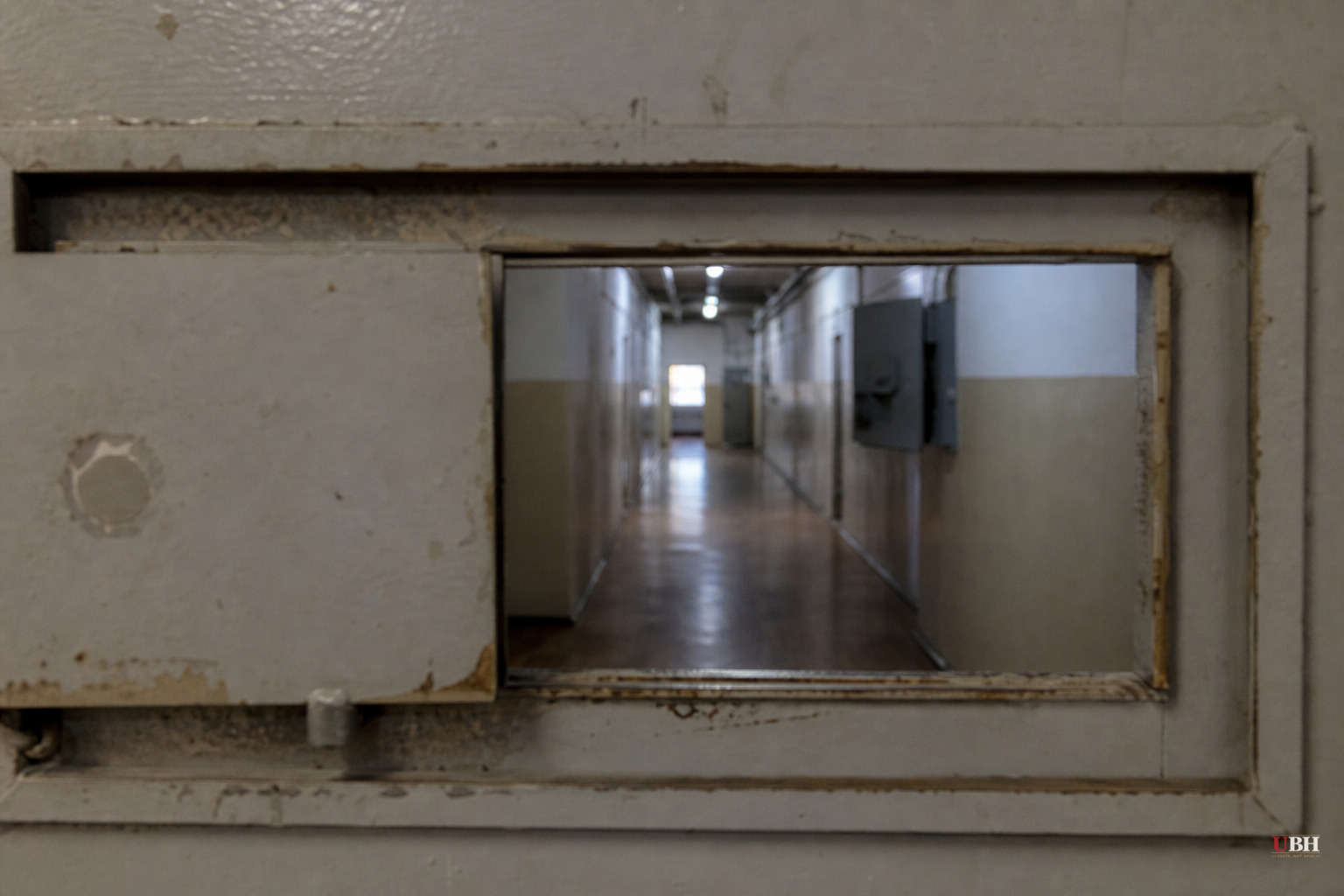
Human-rights groups estimate that more than 10,000 Ukrainian civilians have disappeared into the Russian prison system since Moscow's February 2022 invasion, according to a New Yorker investigation. The report focuses on SIZO-1, a pretrial detention facility in Rostov, Russia, that dates to the reign of Catherine the Great and now holds Ukrainian soldiers and civilians awaiting trial on charges related to the war.
Separately, the New York Times reported that a Ukrainian bank worker was tortured into confessing to terrorism charges in Russia, a case that could result in a life sentence. The specifics of the confession and the charges were not detailed beyond the Times report, but the case fits a documented pattern of coerced prosecutions Russian authorities have pursued against Ukrainian civilians and soldiers since the war began.
The New Yorker's reporting centers on Liliia Prutian, a former medic with Ukraine's Aidar Battalion who was captured near the village of Petrivske. Prutian, in her mid-50s and a mother of three, told the magazine she was raped by a Russian soldier at the time of her capture. She spent more than a year in a jail in Donetsk, an occupied region of eastern Ukraine, where she says she underwent repeated brutal interrogations before being transferred to SIZO-1 in Rostov.
A Russian human-rights activist who has worked on behalf of Ukrainian inmates told the New Yorker that conditions for prisoners often improve as trial dates approach, because defense attorneys gain access and inmates can send and receive letters. "Once they are brought to court, it's harder to keep outright torture hidden," the activist said. This aligns with the broader pattern the magazine documents across multiple cases.
Other women held alongside Prutian had worked as cooks for Ukraine's Azov Brigade, based in Mariupol, and were arrested after Russian forces seized the Azovstal steel plant in spring 2022. Russian state propaganda has long cast the Azov Brigade, which began as a nationalist militia before being absorbed into Ukraine's regular armed forces, as evidence of fascist influence in Ukraine's military. That framing has been used publicly by Russian officials to justify prosecutions of anyone associated with the unit, regardless of their actual role.
As of this writing, there is no lasting ceasefire between Russia and Ukraine. Diplomatic activity involving President Trump, Russian President Vladimir Putin, and Ukrainian President Volodymyr Zelensky continues, but no durable peace agreement has been reached. Any settlement negotiations will have to grapple with the fate of thousands of detained Ukrainian civilians, a topic that has so far taken a back seat to territorial and security arrangements in public reporting on the talks.
There is a fair question about how much weight to put on individual coerced-confession claims. Confessions obtained under duress are not reliable evidence of guilt, and Russian military courts trying wartime detainees operate without independent international oversight, which makes it hard to verify charges or conditions from outside. But this cuts against Moscow's claims of due process, not against the pattern of detentions itself, which is corroborated by multiple accounts, including detainee testimony gathered by human-rights researchers and reported independently by the New Yorker and the New York Times.
Russian officials have not offered a detailed public rebuttal to the specific torture allegations in either report, and no international body has announced new sanctions or a formal investigation tied directly to these cases as of today. The Kremlin has consistently defended its detention and prosecution of Ukrainian nationals as lawful responses to what it calls terrorism and crimes against the Russian state, though it hasn't addressed the individual torture allegations detailed in these reports.
The unresolved question is what happens to the estimated 10,000-plus detained civilians if and when ceasefire talks produce an actual agreement. Prisoner exchanges have occurred periodically throughout the war, but no comprehensive framework for civilian detainees, as distinct from uniformed POWs, has been publicly proposed by either side. Whether that becomes part of any final settlement or gets left out entirely remains an open question with no clear timeline attached to it.
Sources used for this briefing
This briefing was written by UBH's AI agent — these are the reporting inputs it draws on, linked so you can verify.


