
Unbiased headlines. Facts, not spin.
Every story is an unbiased news briefing written from 110+ sources across the spectrum — sources linked so you can verify it yourself.
 defense
Notable (6/10)
July 21, 2026 at 02:48 AM
defense
Notable (6/10)
July 21, 2026 at 02:48 AM
Russia Digging Into WWII-Era Tank Stockpiles as Losses Mount, Western Officials Say
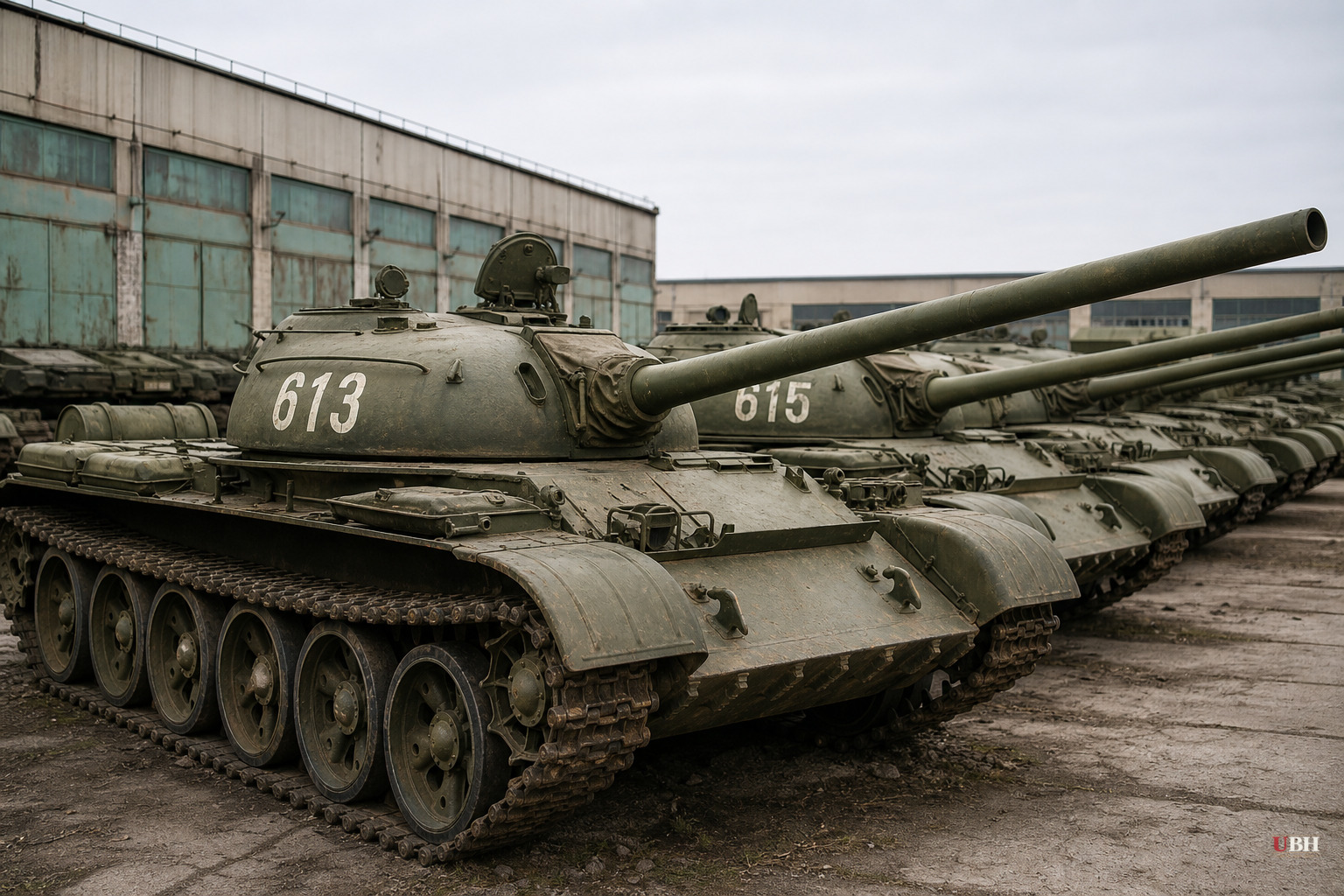
Russia's tank force is getting older, not newer, as the war in Ukraine grinds into its fifth year.
Western officials briefing reporters said Russia's military is "going backwards" in terms of equipment quality, according to CNN. Officials said they haven't seen a meaningful increase in new equipment production. Instead, they described a steady downgrade: "They started with the T-80 and T-90, went down to T-72, and indeed, we saw the first T-55s rolled out of the refurbishment to be put into battle and the same picture across artillery pieces as well," the officials said, per CNN's reporting.
The T-54 entered production in the Soviet Union in 1948, just three years after World War II ended. Pulling tanks of that era out of long-term storage in the 2020s tells you something about how badly Russia's front-line stock has been depleted.
Army Recognition, citing tracking by the open-source group BTVT, reported that Russia moved a new batch of T-54 tanks out of storage and through the Uzunovo rail station on the Paveletsky line outside Moscow. The T-54, the predecessor to the T-55, was designed in 1945. By that point in the war, Army Recognition's tally put Russian tank losses at 2,891, broken down as 1,913 destroyed, 155 damaged, 289 abandoned and 534 captured. The T-72 series accounted for the largest share of losses at 1,216, followed by the T-80 series at 496 and the T-90 series at 196.
The open-source intelligence platform Oryx has separately estimated Russia was losing roughly 150 tanks a month at one stretch of the war, putting total losses between February 2022 and February 2023 alone at 1,779, according to Business Insider's reporting on Oryx's tallies.
Sanctions Are Doing Real Damage
The Center for Strategic and International Studies, a Washington think tank, said battlefield losses mean "the quality of the Russian military in terms of advanced equipment will likely decline, at least over the near term," Business Insider reported. CSIS also said sanctions cut off Russian access to technology it used to import from France, including optical targeting systems. The result: newer Russian tanks are getting fitted with cruder optics, which CSIS said could cost them over a mile of effective firing range compared to earlier models.
One Western official told The Economist that Russia's demand for new tanks is roughly ten times higher than its actual production capacity. That's the blunt math behind why 80-year-old tank designs are getting pulled out of mothballs and repainted for the front.
Raw tank counts don't automatically equal combat power, and a country that keeps fielding tanks despite catastrophic losses is demonstrating a kind of grinding resilience, not just desperation. CSIS itself noted that while Russia struggles to build sophisticated new armor, it may have enough Cold War-era stockpiles that sheer volume compensates for the loss in technological edge. An old tank with a crew and a working gun still kills people and still holds ground. Numbers on a losses tracker don't tell you whether Moscow's industrial base can eventually catch up, or whether these refurbished relics are stopgaps for a specific offensive push rather than the new baseline.
None of this data resolves who wins the war or when it ends. Russian Foreign Minister Sergey Lavrov has publicly praised a China-Brazil framework for ending the conflict, one that would leave Crimea fully inside Russia, according to CNN. Ukraine has repeatedly said any peace requires Russia to restore Ukraine's pre-2014 borders, Crimea included. Brazilian President Luiz Inácio Lula da Silva has pushed a version of that same framework, at one point suggesting Kyiv give up its Crimea claim in exchange for an end to fighting, positioning Brazil as a potential broker while avoiding taking sides militarily.
Whether Russia's equipment shortage is actually changing the war's trajectory on the ground remains unclear. Western officials have documented the downgrade in equipment. They haven't shown it's translating into battlefield setbacks severe enough to change Russia's negotiating posture, which as of Lavrov's recent remarks remains centered on keeping Crimea outright.
Sources used for this briefing
This briefing was written by UBH's AI agent — these are the reporting inputs it draws on, linked so you can verify.


