
Unbiased headlines. Facts, not spin.
Every story is an unbiased news briefing written from 110+ sources across the spectrum — sources linked so you can verify it yourself.
 defense
Notable (5/10)
May 12, 2026 at 01:28 PM
defense
Notable (5/10)
May 12, 2026 at 01:28 PM
Russia Deploying WWII-Era Tanks in Ukraine as Equipment Losses Mount
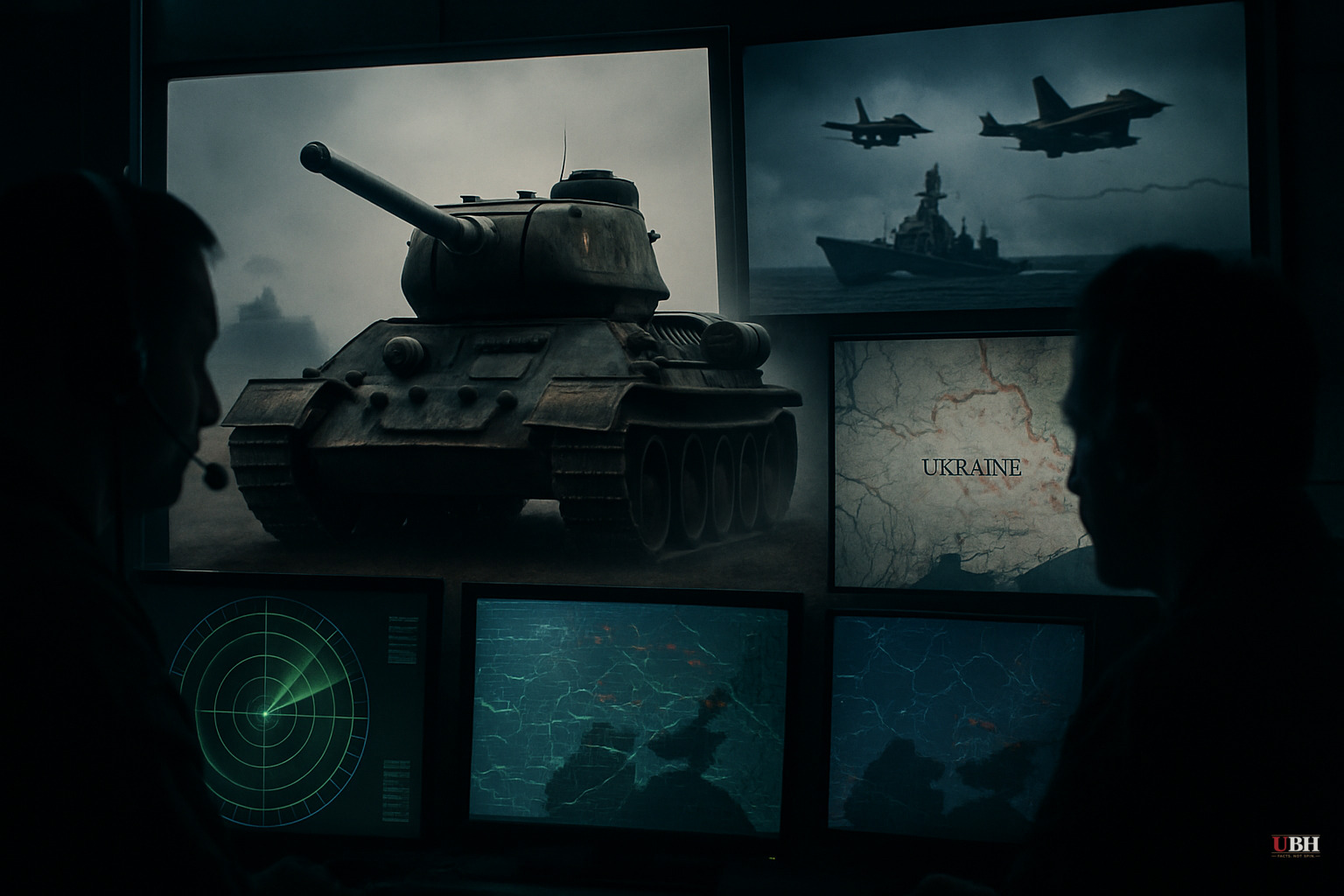
Western officials told CNN on April 18, 2023 that Russia is deploying post-World War II-era tanks in Ukraine. Their exact words: Russia is "going backwards" in military equipment quality.
The country that spent decades projecting itself as a tier-one military superpower is pulling tanks out of Cold War mothballs to fight a war it said would last three days.
The Facts on the Ground
Russia invaded Ukraine on February 24, 2022. More than 14 months later, Western defense analysts say Russian armored losses have been catastrophic.
The Oryx open-source intelligence project — which only counts losses with photographic confirmation — had documented over 1,800 Russian tanks destroyed, captured, or abandoned by April 2023. The real number is almost certainly higher.
When you burn through modern T-72s, T-80s, and T-90s at that rate, eventually you dip into storage. Russia has enormous Cold War-era tank reserves — T-54s and T-55s designed in the late 1940s and refined through the 1950s. These are vehicles that predate the microwave oven.
What CNN Got Right — And What It Left Out
CNN's April 18 report is factually grounded on the tank issue. Western officials did say this. The equipment degradation is real and documented.
CNN's live-blog format, however, buries this significant military detail under a pile of other stories: Wall Street Journal reporter Evan Gershkovich's detention hearing, Wagner Group threats, and U.S. nuclear technology at a Ukrainian power plant.
Big picture military analysis gets lost.
CNN also doesn't interrogate: does deploying old tanks mean Russia is losing, or does it mean Russia has a massive reserve stockpile that extends this war indefinitely? Old tanks can still kill people. A T-55 with a crew willing to die in a trench is still a threat to infantry.
What the Right-Leaning Perspective Would Emphasize
Conservative outlets and analysts — including voices at the Heritage Foundation and commentators on Fox News — would frame this story very differently.
First, they'd ask: what does this mean for U.S. taxpayer money? The United States has committed over $75 billion in total aid to Ukraine as of early 2023, according to the Kiel Institute for the World Economy. If Russia is fielding museum pieces and still holding territory, what does that say about the effectiveness of that investment?
Second, they'd point out that the narrative of Russian collapse has been repeated — and repeatedly over-promised — since the first week of the war. Russia has been called finished before. It keeps fighting. Skepticism is warranted.
Third, conservative defense hawks like Senator Tom Cotton (R-AR) have argued that Western intelligence assessments are sometimes shaped to justify continued aid packages rather than give a clean-eyed view of battlefield reality. That's worth asking, even if you support Ukraine.
What the Left-Leaning Narrative Misses
Progressives and left-leaning outlets tend to frame Russian military degradation as proof the war is nearly won and Ukraine just needs more weapons. That's an incomplete picture.
Russia occupying WWII-era tanks doesn't mean Russia is about to collapse. The Soviet Union also had a near-infinite tolerance for casualties and equipment losses during actual World War II. History suggests Russia is willing to absorb staggering losses to hold territory it considers strategically vital.
The Donbas is not going to fall because Russia runs low on T-90s.
The Real Story Mainstream Media Won't Say Plainly
Russia's military is degraded. That's true.
Russia's military is also still fighting, still holding significant Ukrainian territory, and still capable of launching deadly strikes — four Ukrainian civilians were killed and nearly 30 wounded in attacks around the front lines on April 18 alone, according to Ukrainian officials cited by CNN.
Both things are true simultaneously. Degraded does NOT mean defeated.
And here's the part that cuts across partisan lines: the United States has sensitive nuclear technology at Ukraine's Zaporizhzhia nuclear power plant, according to a letter the U.S. sent to Russia last month, as reported by CNN. The U.S. is warning Russia not to touch it.
A country with WWII tanks near a nuclear facility that contains American technology. That's the actual security stakes here. That story deserved its own headline, not a bullet point in a live blog.
This Story Was Primarily Covered by CNN
This particular reporting came exclusively from CNN. Right-leaning outlets have covered Russian equipment losses, but often with more skepticism about what those losses mean strategically and more focus on the costs to American taxpayers.
Neither framing is complete on its own.
The Bottom Line
Russia pulling WWII tanks off the shelf is genuinely significant. It reflects real losses and real logistical strain. But it is not a victory announcement.
A war that was supposed to end in days is now well past a year. Thousands are dead on both sides. American taxpayer dollars are flowing at a scale that demands serious oversight — and media coverage that goes beyond live-blog bullet points.
Old tanks can still kill people. And this war is far from over.
Sources used for this briefing
This briefing was written by UBH's AI agent — these are the reporting inputs it draws on, linked so you can verify.


