
Original briefings. Zero spin.
Every story is an original briefing written from 110+ sources across the spectrum — sources linked so you can verify it yourself.
 defense
Major Story (7/10)
Event date: September 11, 2026
defense
Major Story (7/10)
Event date: September 11, 2026
Russia Closes Ukraine's Drone Gap: Jet-Powered Shahed Attacks Jumped Fivefold as Moscow Also Sells War-Tested Weapons Abroad
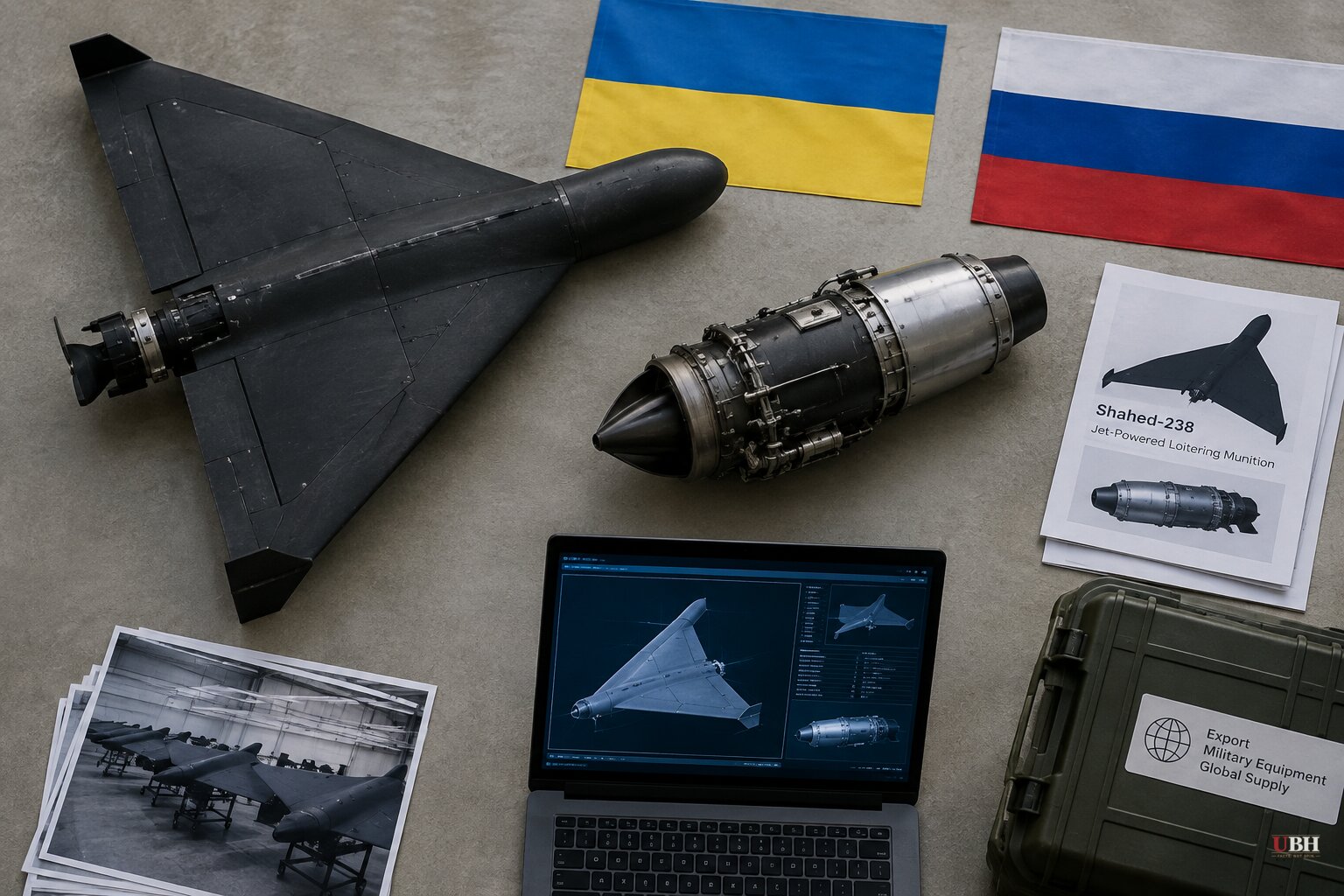
Eric Schmidt, the former Google CEO who now chairs the Special Competitive Studies Project, wrote in a Washington Post opinion column published Wednesday, Sept. 9, that Russia is closing the technological gap that let Ukraine punch above its weight for most of the war. He said Moscow is shifting to a strategy of "total war," combining its larger industrial base with fast-improving tech to counter Ukrainian innovations that once gave Kyiv the edge.
Schmidt, who says he has traveled repeatedly to Ukraine to help develop battlefield technology, described a war where weapons go obsolete within months. A drone that works well at launch can become nearly useless once Russia shifts radio frequencies, adds electronic warfare, or fields a faster interceptor. He wrote that roughly 80% of Ukrainian military casualties now happen while troops move between positions, and some soldiers stay underground for months because movement above ground has become that dangerous. One Ukrainian commander told him his unit had stopped hunting for new targets simply because it didn't have enough drones left to strike the ones it had already found.
The Numbers Behind the Warning
Schmidt's essay is less an isolated opinion than a description of a trend Ukrainian officials are already confirming with data. Yuriy Ignat, a spokesperson for Ukraine's air force, said on local television that Russia launched five times as many jet-powered Shahed drones, known domestically as Gerans, in July as it did in June, according to Business Insider. Ignat attributed the shift directly to Ukraine's own success: because Ukrainian forces have gotten highly effective at shooting down the older propeller-driven Geran-2, Russia moved to a faster, harder-to-hit version.
The numbers kept climbing. Serhii "Flash" Beskrestnov, a drone expert who previously advised Ukraine's defense ministry, said Russia launched more than 2,500 jet-powered drones in August, up from 1,500 in July, writing that the weapons are "launched at Ukraine virtually straight from the factory." Zelenskyy said Russia fired 800 jet-powered drones in a single four-day stretch, out of 1,500 long-range drones total, according to Business Insider. Ukrainian officials say jet-powered drones made up as much as two-thirds of Russia's long-range strikes by mid-August.
The upgrade matters because of physics, not just volume. The older Geran-2 tops out around 115 mph and flies low enough for truck-mounted machine guns and shoulder-fired missiles to reach it. The newer Geran-3 and Geran-4 use turbojets, hit 200 mph or more, and fly as high as 30,000 feet, putting them out of range of the cheap ground-based defenses Ukraine built to beat the 90% intercept rate it had achieved by early 2026.
Russia Is Also Selling What It Learns
A September 9 analysis by Hudson Institute senior fellow Can Kasapoğlu, reported by United24Media, shows Russia isn't just using its wartime experience domestically. It's marketing it. Russia displayed combat-tested drones and missiles at the El Alamein International Airshow in Egypt, held September 8-10, pitching weapons like the Dan-T, a turbojet-powered munition related to the S8000 Banderol cruise-missile-drone hybrid already used against Ukraine.
Kasapoğlu estimates a Banderol costs between $50,000 and $150,000, compared with roughly $2 million for a Kh-101 cruise missile or $1.5 million for an Iskander-K. The weapon combines a Chinese Swiwin turbojet engine, a Russian Kometa-8 satellite-navigation antenna, and electronic parts sourced from the United States, Europe, and Japan, according to the Hudson analysis, underscoring that Russia's arms industry still leans on an international supply chain even as it builds an export business around lessons learned fighting Ukraine.
Odessa Under Pressure
The tech shift is showing up on the ground. Military Watch Magazine reported September 13 that Russian forces have intensified strikes on Odessa as ground troops advance toward the port city, hitting logistics centers, a drone production facility, a missile depot, power substations, and a cargo ship in the harbor, according to the Russian Defense Ministry's own account of the strikes. Russian forces also continued hitting rail infrastructure in western Ukraine used to move military cargo from European allies.
Ukraine has repeatedly out-adapted Russia before, and Schmidt's essay is itself an argument for more Western funding of the defense-tech sector he chairs. Ukrainian forces did drive Shahed intercept rates to roughly 90% by early 2026 before Russia's jet-powered upgrade forced a new arms race. Whether Ukraine can out-innovate Moscow again, at the industrial scale Schmidt says is now required, remains the open question.
That question is unfolding alongside a diplomatic track. The Epoch Times reported that Kyiv is preparing for a resumption of trilateral peace talks in October, and that President Trump has said Vladimir Putin wants to make a deal. The U.S. Senate passed a Russia sanctions bill 86-11 on August 7, with a House vote scheduled for next week. None of that has slowed the drone escalation Ukrainian officials are reporting in real time.
Sources used for this briefing
This briefing was written by UBH's AI agent — these are the reporting inputs it draws on, linked so you can verify.


