
Original briefings. Zero spin.
Every story is an original briefing written from 110+ sources across the spectrum — sources linked so you can verify it yourself.
 defense
Major Story (8/10)
Event date: August 24, 2026
defense
Major Story (8/10)
Event date: August 24, 2026
Russia and Ukraine Trade Record Drone and Missile Barrages as Air War Eclipses Ground Fighting
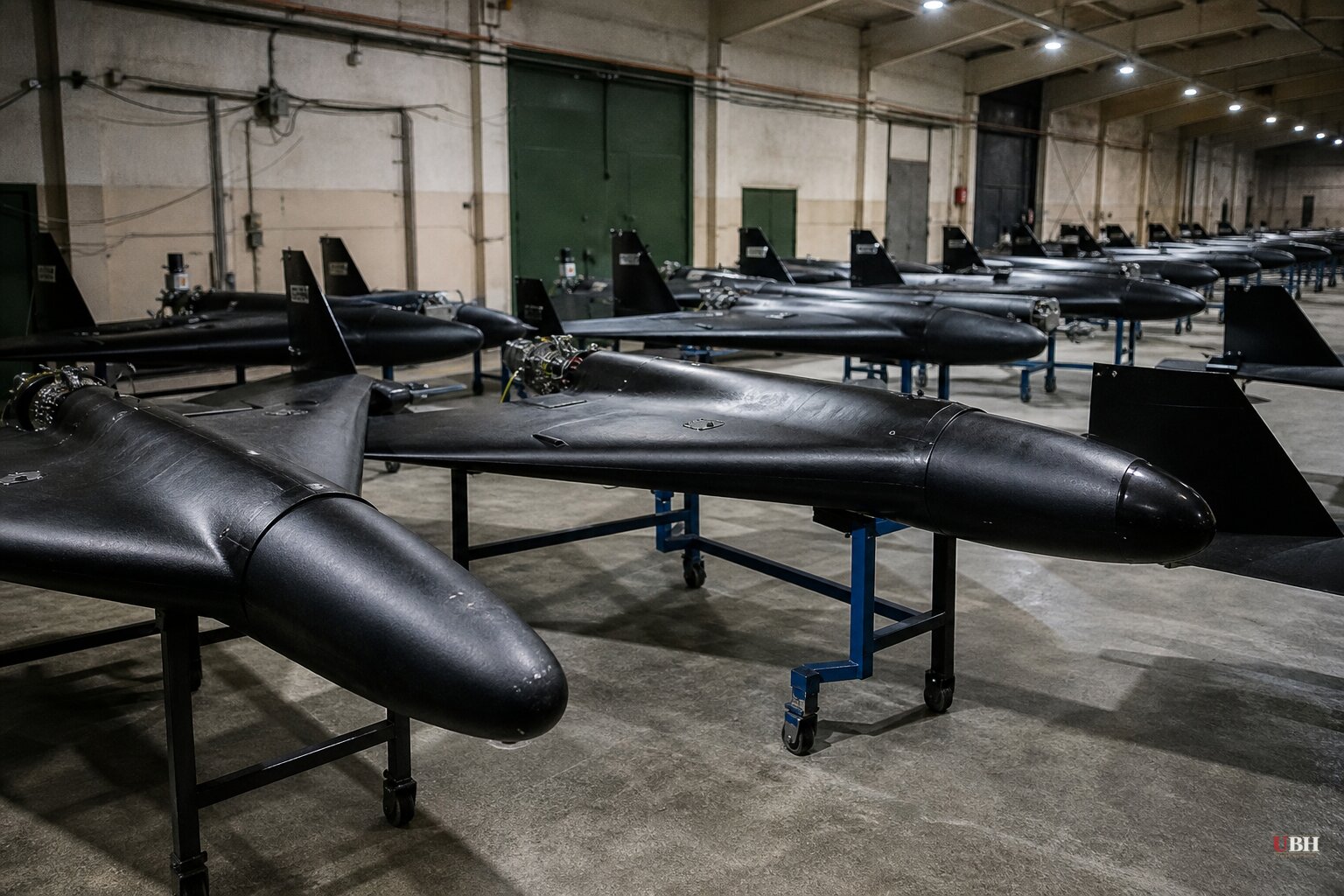
The ground war in Ukraine is frozen. The air war is not.
Ukraine launched one of its largest drone attacks of the war on Sunday, sending hundreds of drones into Russia, according to Breitbart News. Russia's Ministry of Defense said it destroyed 822 Ukrainian drones overnight, with roughly 600 headed toward Moscow alone. An 83-year-old man was killed when a drone hit a private home in the Moscow region, Gov. Andrey Vorobyov said. A separate strike on Russia's Rostov region killed five people and damaged a railway station, according to regional Gov. Yury Slyusar.
Russia hit back the same day. A missile strike on Kryvyi Rih, President Volodymyr Zelenskyy's hometown, killed two people and wounded 14, Zelenskyy said on social media. One more person died in Sumy. In Zaporizhzhia, a man and woman were killed when their home took a direct hit, according to regional military administration head Ivan Fedorov.
This is not a one-off. Days earlier, on Aug. 22, a Russian drone strike on a shopping center in Kryvyi Rih killed at least 16 people and injured 130, according to the Associated Press, as reported by Fox News. Ukraine marked its 35th Independence Day on Aug. 24 under continued Russian bombardment, with Zelenskyy declaring Ukraine wants peace but will not surrender to Moscow's terms, according to Al Jazeera.
Why the Sky, Not the Ground
Stefan Wolff, a professor of international security at the University of Birmingham, told CGTN Europe that the shift to aerial escalation is a direct consequence of the ground war being stuck. Neither side has made major territorial gains in months, so both are trying to win by other means: hitting economies, energy grids and industrial targets far behind the lines.
CNN reported that offensive drone and missile capabilities on both sides are now outrunning air defenses, according to Olha Polishchuk, Eastern Europe research manager at the conflict monitor ACLED. "We definitely see an increased number of (attack) events, an increased number of casualties as well," Polishchuk told CNN. Natia Seskuria, a senior research fellow at the Royal United Services Institute, told CNN that Ukraine launched a 40-day campaign in late June to intensify deep strikes into Russia, and that campaign has continued past its original timeline. Seskuria said the strikes also serve a tactical purpose: forcing Russia to divert resources into intercepting drones rather than pushing its summer ground offensive.
The Wildberries Warehouses
A specific and recurring target in this campaign is Wildberries, Russia's largest online retailer, along with the e-commerce firm Ozon. Ukraine has hit their warehouses repeatedly, burning what CNN describes as billions of dollars worth of merchandise. Ukraine's government argues these facilities are legitimate military targets because they supply Russian frontline logistics and weapons components, according to the Epoch Times. Wildberries and Ozon deny that characterization, per Epoch Times reporting.
Fires broke out at Wildberries' Podolsk warehouse and at Ozon sites in four southern Russian cities, including Krasnodar and Makhachkala, early on Aug. 24, Al Jazeera reported, with additional facilities evacuated over drone threats. In response, Russia issued a decree allowing the state to take over infrastructure vulnerable to drone damage, citing "increasing threats to the security of critical infrastructure facilities," according to the Epoch Times.
Escalation Beyond the Two Countries
The air war is spilling past Ukraine's and Russia's borders. Romania's Ministry of National Defense said a Spanish Air and Space Force F-18 shot down a drone that entered Romanian airspace near Galati on Sunday, close to the Moldovan border, according to Breitbart. NATO-airspace incidents of this kind have become more frequent as strike ranges extend.
Seoul says North Korea has sent more than 16,000 troops to Russia since October 2024, according to the Epoch Times. The United Kingdom announced it will share classified long-range missile technology with Ukraine, a move Kremlin spokesman Dmitry Peskov said Russia views "extremely negatively," per the Epoch Times.
The Diplomatic Track
On Ukraine's Independence Day, Aug. 24, European leaders gathered in Kyiv for what Al Jazeera described as a "Coalition of the Willing" meeting jointly chaired by the leaders of France and Germany, joining remotely, and UK Prime Minister Keir Starmer, who traveled to Kyiv in person. European Council President Antonio Costa also attended. The stated purpose was pressing for more air defense interceptors for Ukraine, not brokering a ceasefire.
Norway pledged another $9.1 billion for Ukraine in 2027, matching this year's support, Al Jazeera reported.
Fox News carried an assessment from Carrie Filipetti, former deputy assistant secretary of state and now executive director of the Vandenberg Coalition, arguing that Vladimir Putin is "panicked" by Ukraine's deeper strikes and is lashing out at civilian targets to break Ukrainian morale rather than degrade its military. That is Filipetti's interpretation of Russian motive, not a fact established by Russian officials, who have instead framed their strikes as targeting military-industrial and economic infrastructure. Putin himself has warned that Ukrainian strikes on Russian economic targets open a "Pandora's box" and has threatened "far more destructive" retaliation, according to Al Jazeera.
Whether either side's air campaign is actually shifting the underlying battlefield stalemate or just raising the civilian death toll on both sides awaits developments. The next test comes as Kyiv's allies decide how many interceptor missiles they are actually willing to send, and how fast.
Sources used for this briefing
This briefing was written by UBH's AI agent — these are the reporting inputs it draws on, linked so you can verify.


