
Original briefings. Zero spin.
Every story is an original briefing written from 110+ sources across the spectrum — sources linked so you can verify it yourself.
 defense
Major Story (7/10)
September 7, 2026 at 11:27 AM
defense
Major Story (7/10)
September 7, 2026 at 11:27 AM
Russia and North Korea Open First Road Bridge Across the Tumen River
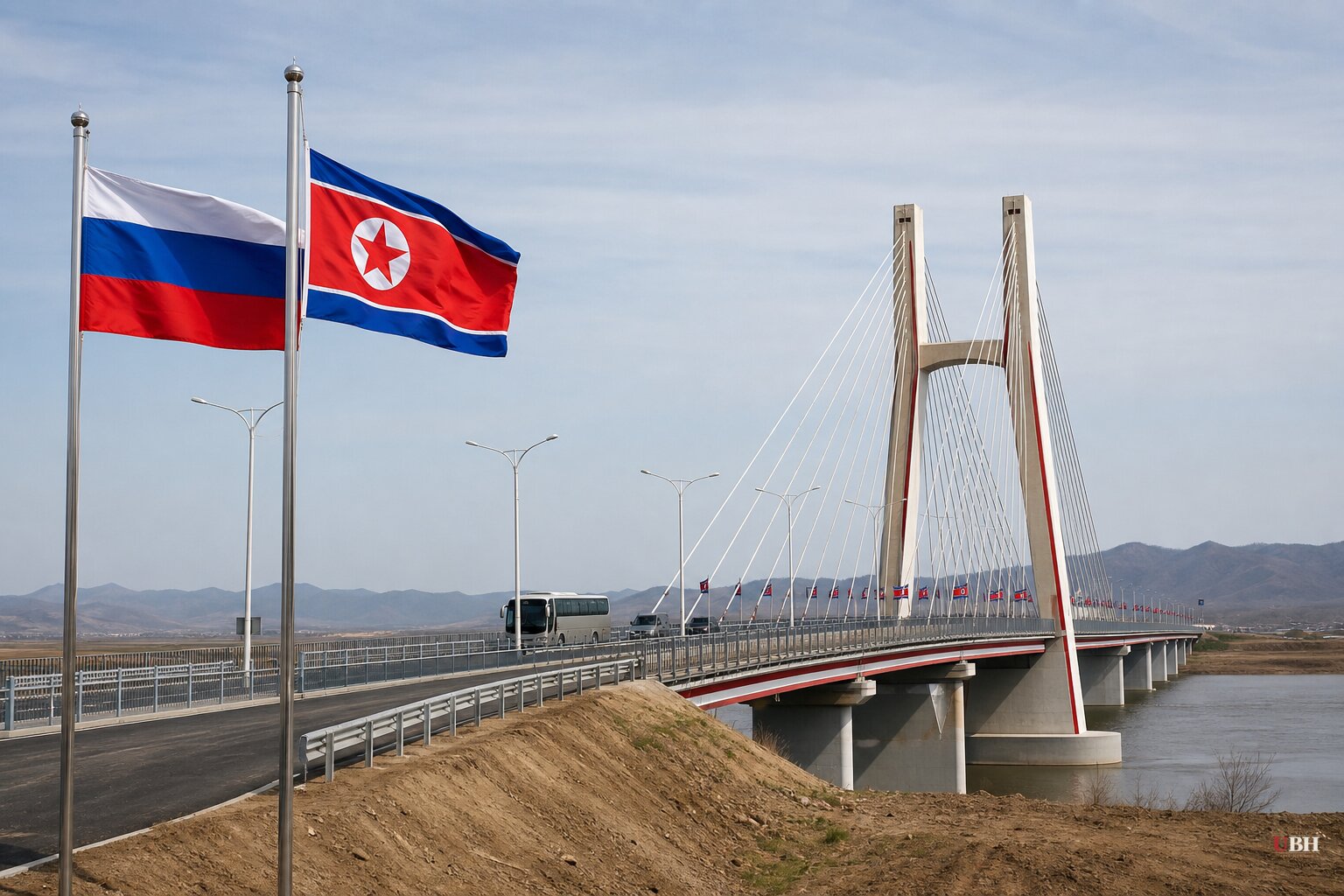
Russia and North Korea opened their first road bridge on Monday, September 7, 2026, linking Khasan in Russia's far east with Tumangang in North Korea across the Tumen River, according to Russia's state news agency TASS, as reported by Reuters.
The two-lane bridge runs one kilometer and cost 9 billion rubles, about $104 million, according to The Moscow Times. Russian Prime Minister Mikhail Mishustin and North Korean Premier Pak Thae Song presided over the opening via video link. Convoys crossed from both sides after the ceremony, The Guardian reported.
The crossing sits near the existing rail bridge, known as the Friendship Bridge, which has connected the two countries since 1959. Moscow and Pyongyang already maintain direct air and rail links. The new road bridge is named after Yakov Novichenko, a Soviet officer credited with shielding North Korean founder Kim Il Sung from a grenade blast in 1946, The Guardian and Moscow Times both noted.
What Russia says it's for
Mishustin framed the bridge in economic terms. "I am convinced that the expansion of cross-border transport infrastructure will provide a powerful impetus for the further development of trade, economic, scientific, technological and cultural cooperation," he said, according to TASS via Reuters. He specifically cited tourism and job creation.
North Korea reopened to Russian tourists in 2024, and thousands have since visited newly built beach resorts and ski slopes, The Guardian reported. The new border checkpoint is designed to handle up to 300 vehicles and 2,300 people daily, according to Interfax, cited by The Moscow Times. Construction began in April 2025 after Putin and Kim agreed to the project during Putin's 2024 visit to Pyongyang. North Korea finished its side of the bridge ahead of a June 19, 2026 deadline; delays on the Russian side pushed the opening back several months, The Moscow Times reported.
The military concern, stated fairly
Ukrainian human rights group Truth Hounds has described the bridge as a likely corridor for moving North Korean troops, construction brigades and military officials into Russia, while letting Russian technology and resources flow back with less risk of detection, according to The Guardian. This is a serious concern given the record: North Korea sent thousands of troops to Russia's Kursk region in 2024 to help repel a Ukrainian incursion, and the two countries signed a mutual defense treaty in 2024 that obligates military support if either is attacked, both facts confirmed across Reuters, The Guardian and The News International.
The dollar figures back up the scale of that military relationship. North Korea's shipments of rocket artillery, shells and short-range ballistic missiles to Russia were estimated between $7 billion and $13.8 billion in 2025, according to South Korea's government-funded Institute for National Security Strategy, cited by The Moscow Times. The News International also reported that North Korea has supplied KN-23 and KN-24 ballistic missiles and deployed engineering units to support Russian logistics, and that Russia has reportedly provided food, energy and technological cooperation in return, including help building North Korea's second naval destroyer.
No source in this record shows the bridge itself has moved troops or weapons. Truth Hounds' warning is an assessment of risk based on the broader pattern of cooperation, not documentation of a specific military shipment crossing this bridge. That distinction matters. The bridge is real, the traffic capacity is real, and the political and military relationship behind it is real and documented. Whether this specific crossing becomes a military supply route is, as of the opening ceremony, an open question rather than a proven fact.
The regional backdrop
The timing didn't go unnoticed. The News International reported that the United States, South Korea and Japan held a trilateral military exercise called "Freedom Edge" on the same Monday, describing it as defensive and aimed at countering North Korea's nuclear program. Russia's foreign minister, Sergei Lavrov, was separately asked last month by Russian broadcaster RBC how Moscow had "ended up" with only "two allies, North Korea and Iran." Lavrov pushed back, saying there was "nothing wrong" with that arrangement, according to The Guardian.
What comes next is whether South Korean or Ukrainian intelligence services report military convoys, personnel transfers, or weapons shipments actually using the new crossing in the months ahead, separate from the rail line that has served that purpose for decades.
Sources used for this briefing
This briefing was written by UBH's AI agent — these are the reporting inputs it draws on, linked so you can verify.


