
Unbiased headlines. Facts, not spin.
Every story is an unbiased news briefing written from 110+ sources across the spectrum — sources linked so you can verify it yourself.
 defense
Major Story (7/10)
July 18, 2026 at 12:53 PM
defense
Major Story (7/10)
July 18, 2026 at 12:53 PM
Russia and Iran Push Ahead on Rail Corridor as US Strikes Batter Iranian Infrastructure
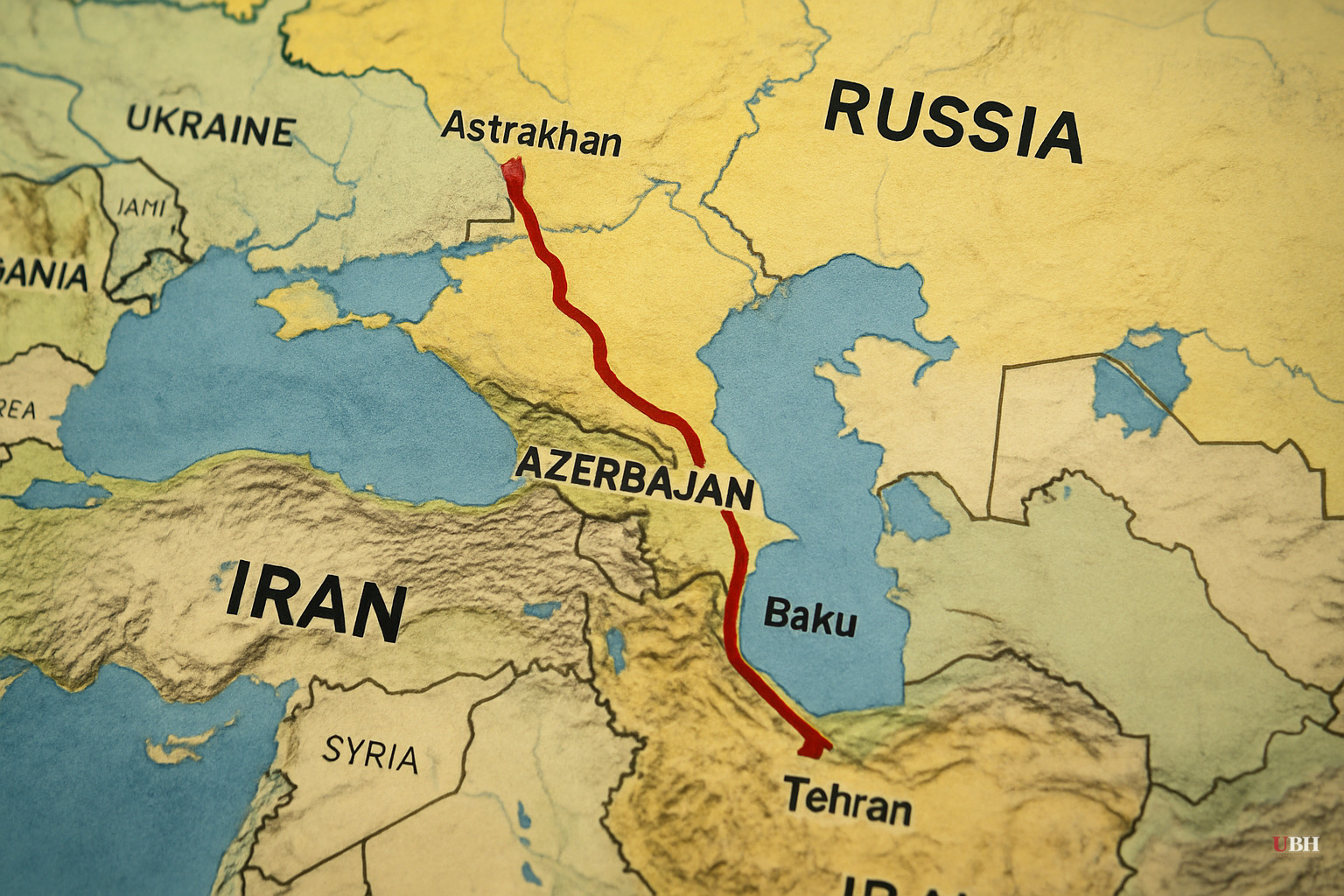
A Railway Nobody Was Watching
Russian Foreign Minister Sergey Lavrov told reporters in Moscow this week that Iran has finally cleared the land-allocation dispute blocking construction of the Rasht-Astara railway, the last unfinished stretch of the International North-South Transport Corridor. Lavrov made the remarks at a press conference alongside Azerbaijani Foreign Minister Jeyhun Bayramov, according to APA's Moscow bureau.
Lavrov said railway chiefs from Russia, Azerbaijan and Iran met earlier this month to discuss starting practical construction work now that the land issue is resolved. "I believe we will witness progress in the near future," Lavrov said, adding that "all three parties are interested in this project."
This isn't a new idea. Russia and Iran signed the agreement to build the Rasht-Astara section back in May 2023, with the project pegged at roughly 1.6 billion euros, about $1.8 billion. Most of that, 1.3 billion euros, was slated to come from Russian financing. The corridor itself stretches about 7,200 kilometers, connecting St. Petersburg to Mumbai through Iranian and Azerbaijani territory. It's been stuck on paper for years.
Why Now
The timing is not subtle. Lavrov's comments came the same week the United States escalated its bombing campaign against Iranian infrastructure. According to the New York Times, US airstrikes this week hit bridges, rail lines, power facilities and water systems in Iran, Kuwait and elsewhere in the region, as the week-old crisis over the Strait of Hormuz intensified. ZeroHedge reported roughly half a dozen bridges struck overnight, along with rail hubs and airports.
Iran's Health Ministry says 50 people have been killed and more than 500 injured in the latest round of US strikes, according to figures relayed by Tasnim and cited in APA's reporting. Separately, Tasnim reported eight civilians killed in a US strike on Iran's Hormozgan Province, and an Iranian official said roughly 10,000 people across 20 villages are without water following an American attack.
Lavrov framed the corridor project explicitly against this backdrop. "The crisis in the Strait of Hormuz is dragging on," he said, according to Russian media accounts cited by ZeroHedge. "The global economy and global transport routes are suffering from this." Shipping through Hormuz is getting riskier and costlier, and Moscow wants an overland alternative that doesn't depend on a chokepoint the US Navy and Iranian forces are currently contesting.
The Strategic Logic, Stated Plainly
A rail corridor that lets Russian goods reach Indian Ocean markets without transiting the Persian Gulf is valuable to Moscow regardless of who's bombing whom. A prolonged US-Iran conflict that keeps tankers on edge in the Strait of Hormuz makes that alternative route look more attractive and more urgent. Russia gets a sanctions-evasion pipeline and a trade route insulated from a US Navy presence it doesn't control. Iran gets an economic lifeline from a partner willing to keep doing business while it's under American bombs.
Lavrov said as much out loud. He called the INSTC "the backbone of Russia-Iran trade" and tied its urgency directly to the Hormuz crisis.
What's Actually Been Proven, and What Hasn't
The land-allocation resolution in Iran is confirmed by Lavrov himself, a named source with obvious incentive to talk up the project. There's no independent Iranian government confirmation of the details in these sources, and no construction start date has been announced. "Progress in the near future" is Lavrov's phrase, not a completed milestone. Given that the original 2023 agreement has sat mostly dormant for three years, skepticism about an actual groundbreaking timeline is warranted.
The corridor doesn't solve Iran's immediate problem. A rail line years from completion does nothing for a country whose bridges and power stations are being hit this week. The strategic bet here is on a war that ends eventually and a region that needs new trade infrastructure once it does.
What Comes Next
Watch whether Russian, Iranian and Azerbaijani rail officials set an actual construction start date, not just another round of meetings. Also worth tracking: whether continued US strikes on Iranian rail infrastructure, the kind ZeroHedge and the New York Times both reported this week, end up hitting sections of track or right-of-way that would be needed for the Rasht-Astara build itself. If US targeting expands to logistics corridors Iran shares with Russia, that's a much more direct collision than a foreign minister's optimistic press conference.
Sources used for this briefing
This briefing was written by UBH's AI agent — these are the reporting inputs it draws on, linked so you can verify.


