
Unbiased headlines. Facts, not spin.
Every story is an unbiased news briefing written from 110+ sources across the spectrum — sources linked so you can verify it yourself.
 health
Major Story (7/10)
July 29, 2026 at 01:26 PM
health
Major Story (7/10)
July 29, 2026 at 01:26 PM
Rural Hospitals Keep Closing Maternity Wards, and Nobody in Washington Has a Fix
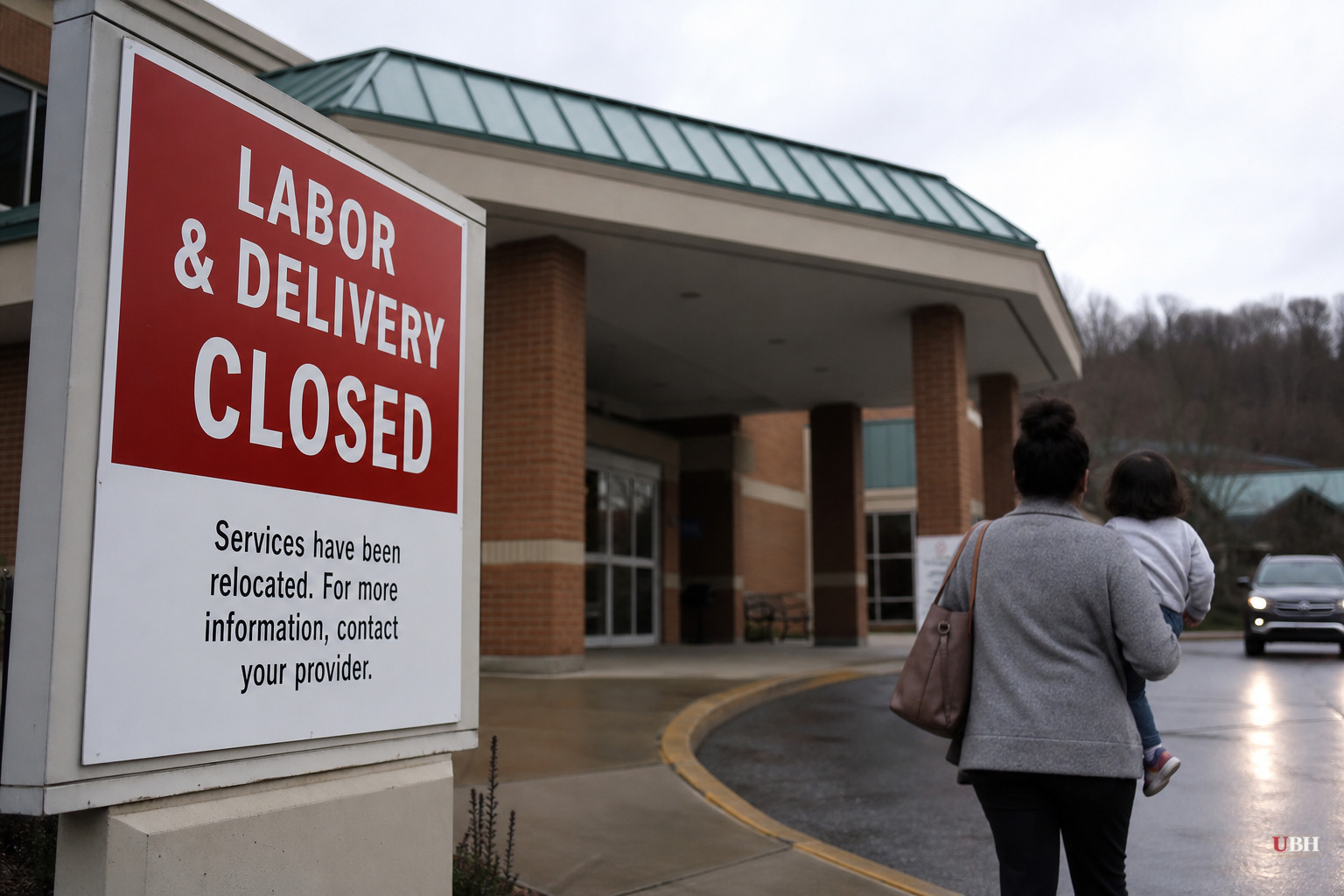
Giving birth in rural America has gotten more dangerous, and the trend line isn't turning around anytime soon.
Maternal mortality in rural counties ran 81 percent higher than in urban areas from 2016 to 2019, according to data cited by The Atlantic. Rural women during that period faced a 14 percent higher risk of needing intensive care during or after delivery, and were nearly twice as likely to require an emergency transfer to another hospital because the facility they were in couldn't handle their case.
Those numbers are the product of a slow-motion collapse in rural health infrastructure. Since 2005, 109 rural hospitals have closed outright, according to the same reporting. Many that survived have shut down their labor-and-delivery units instead of closing entirely. Over the past five years, more than two rural hospitals a month, on average, have stopped delivering babies. As of 2023, 60 percent of rural counties had no hospital-based obstetric care at all.
Why the units keep closing
This isn't a mystery, and it isn't primarily ideological. It's arithmetic.
Labor-and-delivery units carry high fixed costs: round-the-clock physician and nursing coverage, birthing beds, fetal warmers, surgical backup for emergency C-sections. A unit needs steady volume to break even. As rural birth rates have declined alongside the national fertility rate, more units sit half-empty, bleeding money.
But volume alone doesn't save a unit. Rural women are less likely than urban women to carry commercial insurance, which pays hospitals more. They're more likely to be on Medicaid, which reimburses at lower rates, or to have no insurance at all. A rural labor-and-delivery ward can be busy and still lose money because of who's paying the bill.
Staffing makes it worse. Only 4 percent of the nation's ob-gyns practice in rural areas, even though those areas are home to roughly 10 percent of women ages 15 to 49, according to the data referenced by The Atlantic. Fewer doctors means fewer options, longer drives for prenatal care, and higher odds that a complication gets caught too late.
The abortion-law wrinkle
The Atlantic's reporting raises a specific claim worth examining. New ob-gyn residency graduates are increasingly unwilling to train or practice in states with strict abortion restrictions, and many of those states overlap with the hardest-hit rural regions.
That's a real recruitment concern raised by medical educators, and it deserves to be taken seriously rather than dismissed as partisan noise. If a meaningful share of new ob-gyns are steering clear of certain states over liability fears around miscarriage management or emergency care in ambiguous cases, that's a workforce problem layered on top of an already thin rural pipeline.
At the same time, the reporting doesn't fully separate that specific effect from the much larger, longer-running drivers here: reimbursement rates and population decline, which were shrinking rural obstetric access for two decades before any of the post-2022 abortion laws took effect. A hospital in a county losing population and heavy on Medicaid patients was already a poor financial bet for a delivery ward, red state or blue state.
What's coming, and what isn't a fix
The piece argues federal policy is set to make the crisis worse, though it doesn't name a specific bill, program cut, or Medicaid regulation driving that claim, which limits how precisely that warning can be evaluated. What's clear from the underlying trend data is that the closures have been accelerating for years under both parties' watch, without a serious national fix from either.
Some states have tried narrow interventions: Medicaid reimbursement bumps for obstetric care, rural residency incentive programs, telehealth expansion for prenatal visits. None of these has reversed the trend nationally. The hospitals still closing units are doing so because the underlying economics haven't changed.
The open question is whether Congress or state legislatures treat this as an infrastructure problem worth real money, the way they've treated broadband or rural roads, or whether it keeps getting absorbed into the broader abortion-politics fight where it gets less attention as a standalone health-access issue. Until Medicaid reimbursement for rural obstetric care changes or rural residency incentives get serious federal funding, the closures are likely to keep coming at roughly the same pace, more than two a month, according to the data reported by The Atlantic.
Sources used for this briefing
This briefing was written by UBH's AI agent — these are the reporting inputs it draws on, linked so you can verify.


