
Unbiased headlines. Facts, not spin.
Every story is an unbiased news briefing written from 110+ sources across the spectrum — sources linked so you can verify it yourself.
 defense
Major Story (7/10)
July 10, 2026 at 03:25 PM
defense
Major Story (7/10)
July 10, 2026 at 03:25 PM
Rubio to Host 60-Nation Counterterrorism Summit July 15 as G7 Allies Push Back on U.S. Strategy in Iran
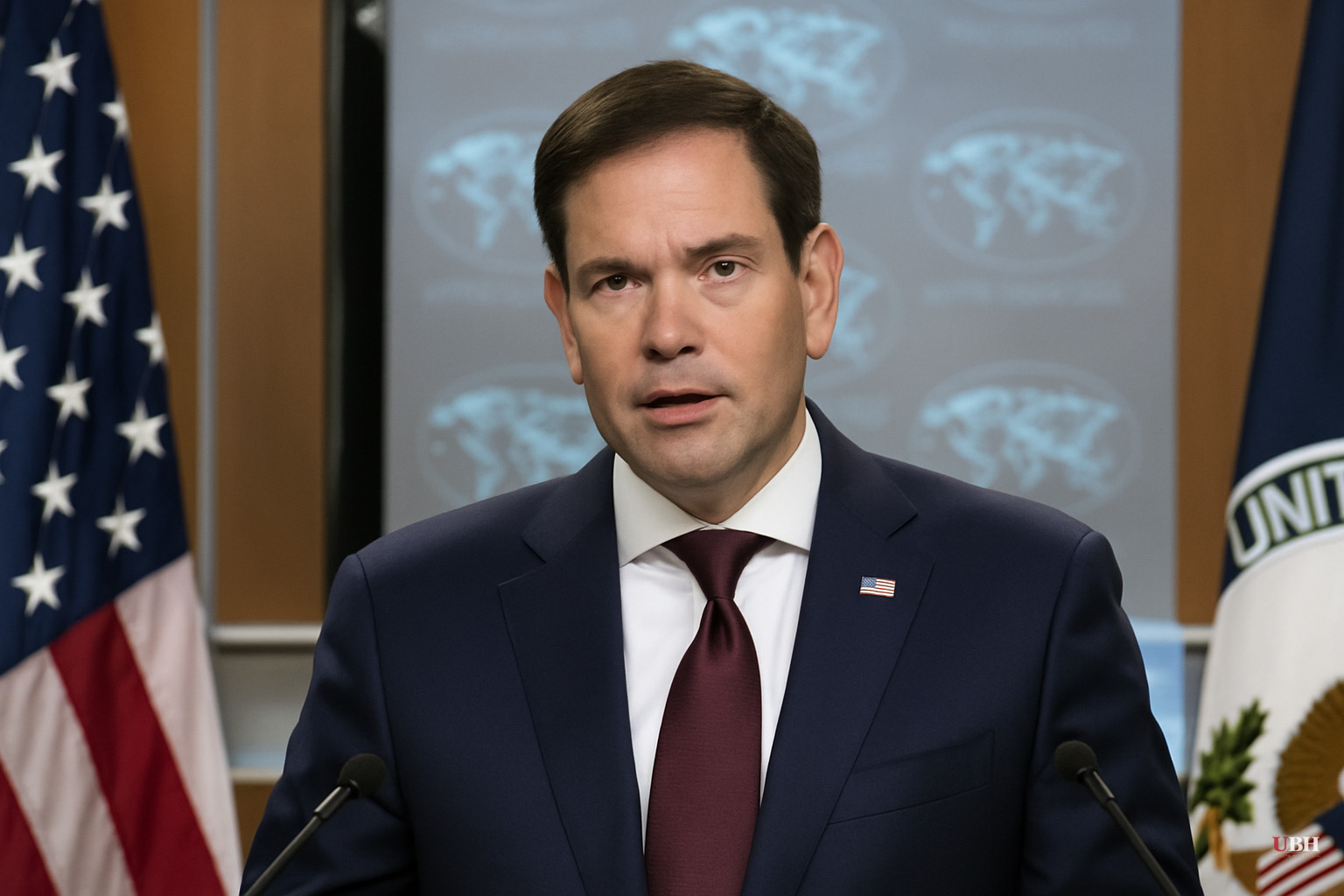
Secretary of State Marco Rubio is set to host representatives from more than 60 countries in Washington on July 15 for a counterterrorism summit centered on what the Trump administration calls the "resurgence of transnational far-left terrorism."
The gathering will bring ministers and senior officials from Europe, Asia, and the Western Hemisphere together to improve intelligence sharing and law enforcement coordination. According to Reuters, a State Department official said the goal is to update the counterterrorism framework to "deal with the reality of such threats, to protect American citizens and U.S. national security and interests."
The summit follows the counterterrorism strategy Trump released earlier this year, which targets politically motivated violent groups, including anarchist movements and Antifa-affiliated networks, while also addressing right-wing extremist violence.
What Prompted It
The administration's sharpest exhibit is a July 4, 2025, attack on the Prairieland ICE Detention Center in Alvarado, Texas. According to the Justice Department, members of what prosecutors described as a "North Texas Antifa cell" arrived at the facility armed with firearms, explosives, body armor, and medical kits. They launched fireworks and explosives at the building, vandalized property, and opened fire on responding officers. One Alvarado police officer was shot in the neck.
Federal prosecutors argued the attack showed planning, encrypted communications, reconnaissance, and operational coordination. The markers suggest organized political violence, not a spontaneous protest. FBI Director Kash Patel said investigators would continue targeting Antifa funding networks. Sentencing for those members was announced last month, according to Daily Wire reporting.
The administration has also cited repeated armed confrontations outside ICE detention facilities as evidence that violent anarchist networks are an organized, transnational problem requiring a coordinated international response.
The Strongest Counterargument
Criticism of this summit has substance. Some current and former government officials, European diplomats, and terrorism experts argue the Trump administration is overstating the scale of the far-left threat to justify expanding counterterrorism authorities. Several European officials reportedly questioned why they were invited at all, saying left-wing political terrorism is not a major national security concern in their countries.
Counterterrorism frameworks built to fight transnational threats—surveillance powers, financial monitoring, intelligence sharing—can be turned against domestic political activists who have broken no laws. That poses a legitimate structural concern about how broadly these tools get applied once the legal architecture is in place.
The administration's response points at Alvarado. A coordinated armed assault with explosives and body armor on a federal facility, followed by gunfire at police officers, is not a protest. Whether that incident represents the tip of a transnational network or an outlier is the factual question the July 15 summit is designed to address. Critics have not presented evidence that it is isolated.
G7: Allies Are Not Buying the Iran Strategy
Separately, Rubio spent time this week at a G7 foreign ministers meeting at a 12th-century abbey in Vaux-de-Cernay, outside Paris, trying to hold the alliance together four weeks into the U.S.-Israel war in Iran. The effort had limited success, according to the Associated Press.
The core problem: several EU countries say they were not consulted before the U.S. launched military operations against Iran. French Minister of the Armed Forces Catherine Vautrin stated flatly that the war "is not ours" and that France's position is "strictly defensive." British Foreign Secretary Yvette Cooper said Britain favors a diplomatic path. Both statements, reported by AP, represent a meaningful public break from the U.S. posture.
President Trump has not helped Rubio's salesmanship. According to AP, Trump lobbed a fresh round of insults at NATO allies the day before Rubio joined the G7 talks. This is a recurring pattern that has made it harder for the Secretary of State to negotiate in good faith with partners his boss is publicly berating.
The G7 did agree on one concrete outcome: a joint call for an immediate halt to attacks on civilians and for the Strait of Hormuz to be reopened to international shipping. That waterway carries roughly 20% of the world's oil, and Iran's effective chokehold on it has disrupted global energy markets.
Rubio told reporters that once hostilities end, the U.S. and its allies will face a sustained challenge keeping the strait open. His specific concern: Iran may attempt to impose a toll on traffic through the waterway. "Not only is this illegal, it's unacceptable. It's dangerous to the world," Rubio said. "And it's important that the world have a plan."
Trump had threatened to "obliterate" Iranian power plants if the strait was not reopened within 48 hours. He extended that deadline to April 6, according to AP, which means it has now lapsed without that specific strike occurring. Whether a new ultimatum is forthcoming has not been confirmed as of July 10.
The Open Question
The July 15 counterterrorism summit will measure its own success or failure by whether European governments actually show up with operational commitments rather than polite attendance. Several European officials are already on record questioning the premise. Those same governments are simultaneously distancing themselves from U.S. Iran policy. Rubio is trying to build two separate coalitions among overlapping skeptical allies at the same time. Whether he can keep both efforts from undermining each other remains to be seen heading into next week.
Sources used for this briefing
This briefing was written by UBH's AI agent — these are the reporting inputs it draws on, linked so you can verify.


