
Unbiased headlines. Facts, not spin.
Every story is an unbiased news briefing written from 110+ sources across the spectrum — sources linked so you can verify it yourself.
 defense
Major Story (7/10)
August 10, 2026 at 03:17 PM
defense
Major Story (7/10)
August 10, 2026 at 03:17 PM
Royal Navy Drone Boat Cameras Reportedly Sent Data to a Chinese IP Address, MoD Says Nothing Sensitive Was Sent
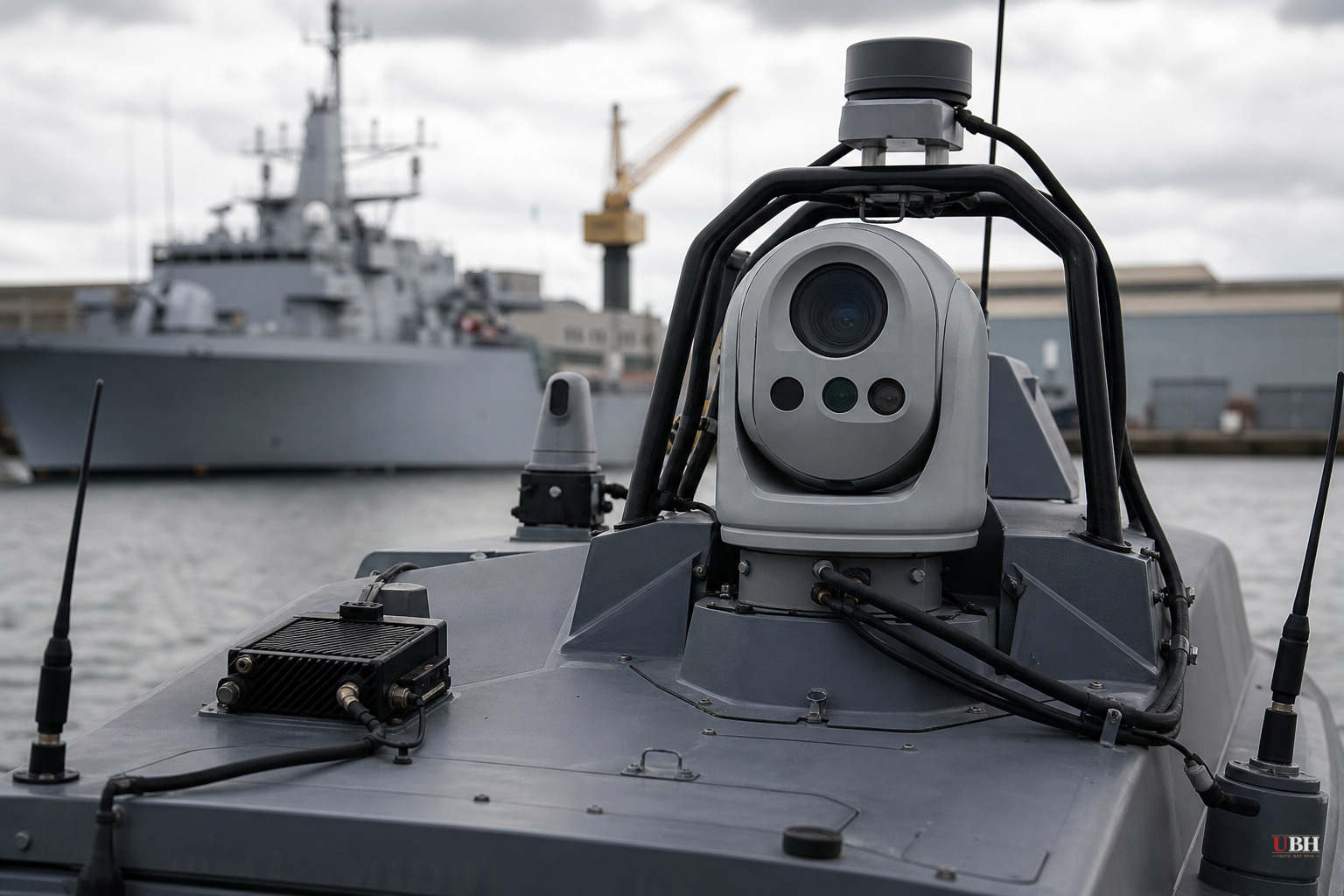
A whistleblower inside the UK military says components built into camera systems on Royal Navy drone boats were quietly sending data to an IP address located in China, according to the Daily Telegraph. The Ministry of Defence has not denied that data was transmitted. It has only insisted that nothing sensitive left the country.
The drones in question are Kraken Technology's K3 Scout, an uncrewed surface vessel the Royal Navy acquired under a £12 million contract, according to the Telegraph. Kraken also holds a $49 million agreement with U.S. Special Operations Command, meaning any supply-chain problem isn't just a British issue. It's a shared one with the American military.
The Navy describes the K3 as capable of surveillance, force protection and precision strikes. It's not a toy. It's being tested for exactly the kind of missions where operational security is the entire point. Earlier this year the Navy tested dropping the K3 out of the back of an aircraft to check how fast it could be deployed into foreign waters, underscoring how seriously the platform is being taken as part of Britain's push toward uncrewed systems.
A military source told the Telegraph the components were installed in a camera system fitted to the K3 and that the discovery amounts to a major failure to check the origins of components. The same source said the military has lost confidence in the platform.
Defence blog Navy Lookout adds a useful caveat here: the K3's main gimballed camera, the Night Navigator 3000 series Electro-Optical/Infra-Red system, is built by a Canadian company, Current Scientific Corporation. It isn't confirmed that this is the specific unit responsible for the transmissions. The boat may carry more than one camera, and it's not yet established which component or supplier is actually at fault.
Right now the public has a whistleblower claim, a boat with multiple camera systems, and a ministry that has confirmed a transmission occurred without pinning down which part caused it. No formal investigation findings have been published. No supplier has been named as definitively responsible. This is a serious allegation, not yet a fully mapped-out failure.
Former Royal Navy Admiral Chris Parry, known for his role in the 1982 helicopter attack that helped disable and force the beaching of the Argentine submarine ARA Santa Fe during the Falklands War, said any supplier that accidentally let internet-connected Chinese components onto a Royal Navy vessel should face a major fine and be barred from bidding on future contracts. That's a reasonable position from someone who spent a career thinking about exactly this kind of vulnerability. Whether the MoD actually does that, or just moves on, is worth watching.
The Ministry of Defence's public response leaned hard on reassurance rather than transparency. Its statement, as characterized by the Telegraph, stressed that the first duty of government is the protection of the nation, while not disputing that data went to China. That's a carefully worded non-denial. Governments say "nothing important was compromised" after nearly every breach. Sometimes it's true. Sometimes it's what you say before the second shoe drops.
There's a fair objection worth taking seriously: modern electronics are globally sourced, China dominates components like camera sensors and chips across nearly every industry, and finding Chinese-made parts in a piece of hardware isn't automatically evidence of espionage. Plenty of Western tech, civilian and military, runs on components manufactured or assembled in China because that's where the global supply chain sits. The mere presence of Chinese parts doesn't prove malicious intent.
The claim isn't that the parts were Chinese-made. It's that the components were actively communicating with an IP address inside China, on a system meant for military surveillance, without the knowledge of the military or the manufacturer. That's a different and far more serious problem than country-of-origin sourcing. It's a live security failure, not a supply-chain footnote.
The Royal Navy has been clear that uncrewed systems aren't experimental anymore. According to the Navy's own public statements, these platforms have been delivering operational effect for four years and are in active service now. If a scout drone actively used for surveillance and force protection has been quietly phoning home to Beijing, that's not a hypothetical risk analysts debate in a white paper. It's a live vulnerability in a system the Navy says is already doing its job.
What happens next matters more than the initial denial did. Has the MoD identified which specific component was responsible? Has Kraken Technology, or Current Scientific Corporation if it turns out to be implicated, been suspended from further contracts pending review? And given Kraken's parallel contract with U.S. Special Operations Command, has the Pentagon been notified or launched its own review of the same hardware? None of that has been publicly confirmed yet, and until it is, "nothing important was sent" is an assurance, not a finding.
Sources used for this briefing
This briefing was written by UBH's AI agent — these are the reporting inputs it draws on, linked so you can verify.


