
Unbiased headlines. Facts, not spin.
Every story is an unbiased news briefing written from 110+ sources across the spectrum — sources linked so you can verify it yourself.
 energy
Notable (6/10)
July 20, 2026 at 07:11 PM
energy
Notable (6/10)
July 20, 2026 at 07:11 PM
Rosatom Cuts Investment Nearly in Half, Putting Kazakhstan and Uzbekistan Nuclear Deals at Risk
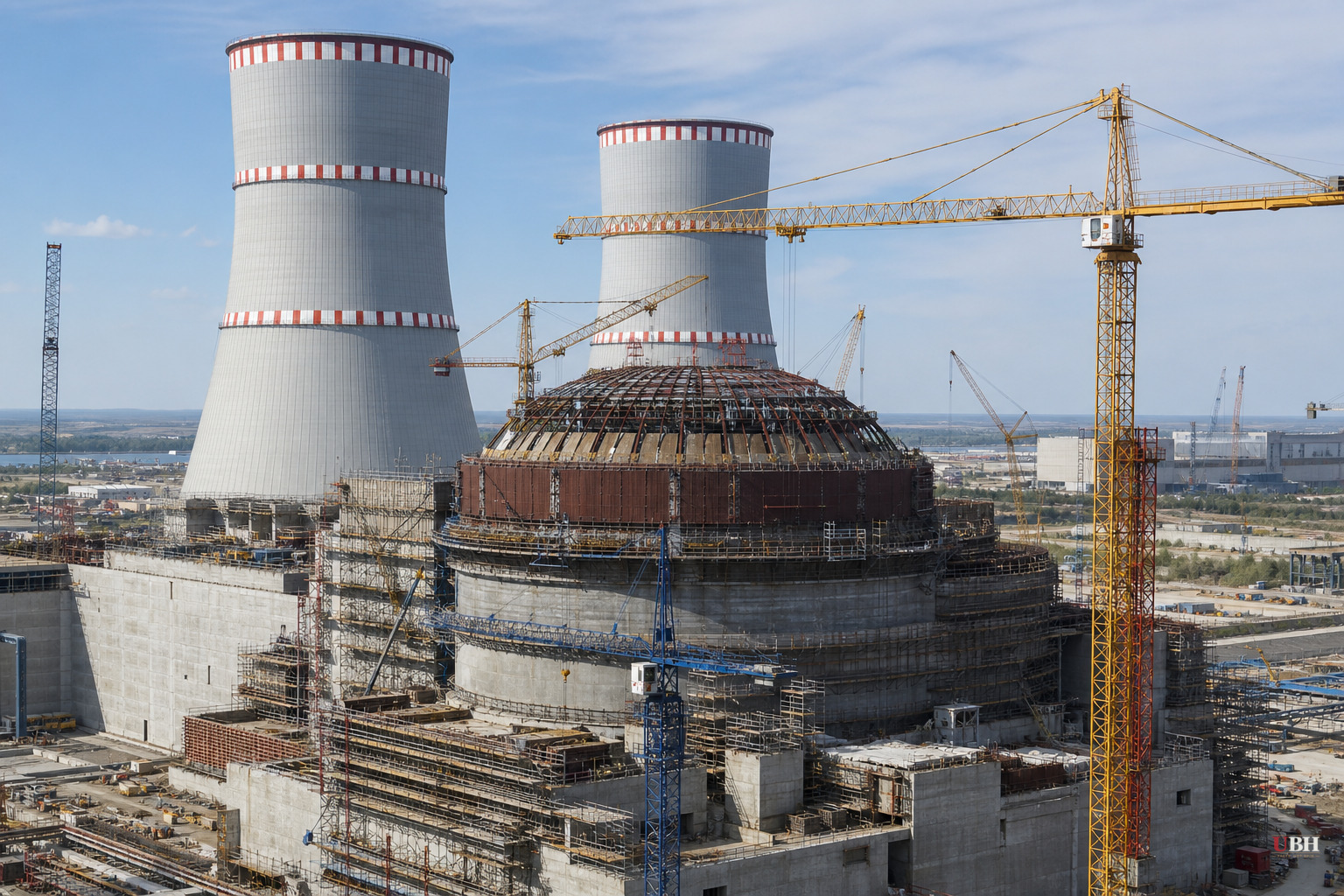
Rosatom Cuts Investment Nearly in Half, Putting Kazakhstan and Uzbekistan Nuclear Deals at Risk
Russia's state nuclear monopoly just admitted its finances are a mess, and Central Asia is the first place feeling it.
Rosatom CEO Alexei Likhachev announced the company is cutting its investment program by nearly 50 percent this year, blaming what he called "poor economic conditions," according to Reuters. Likhachev also said Rosatom will try to cut operating costs by 10 percent over the next 18 months. He did not name which projects are getting axed or delayed.
That vagueness matters a lot to Kazakhstan and Uzbekistan, two countries that bet on Rosatom to build their nuclear future.
Kazakhstan's Lake Balkhash plant already behind schedule
Kazakhstan awarded Rosatom the contract in June 2025 to build the country's first nuclear power plant on the shores of Lake Balkhash, according to OilPrice.com, which cited Eurasianet reporting. The project has already been hit by delays and disputes that observers linked to Rosatom's financing troubles even before Likhachev's announcement. A mid-2030s completion date now looks shakier.
Kazakhstan isn't putting all its chips on Moscow, though. Astana also has China National Nuclear Corporation (CNNC) lined up to build the country's second and third nuclear power plants, according to the Central Asia-Caucasus Analyst. That gives Kazakhstan real leverage and a real fallback if Rosatom keeps stalling.
Uzbekistan's small-reactor deal on shakier ground
Uzbekistan's arrangement with Rosatom has already been rewritten once. Russian President Vladimir Putin signed an $11 billion deal with Tashkent in 2018 for a 2.4-gigawatt plant, the Central Asia-Caucasus Analyst reported. That deal went nowhere and was replaced in 2024 with a smaller agreement for six 55-megawatt reactors. In June 2024, Russia and Uzbekistan's Uzatom also agreed to study a separate plant with two to four VVER-1000 reactors.
Tashkent was already hedging before Likhachev's announcement. In September 2025, Uzbekistan explored a contingency agreement with CNNC specifically because of worries the Rosatom contract would face delays, according to the Central Asia-Caucasus Analyst. Rosatom officials tried to head off those worries in early 2026 by offering to expand the deal into a bigger "nuclear cluster." Likhachev's cost-cutting announcement undercuts that sales pitch.
Why this is happening
Rosatom's troubles trace back to the same source as most of Russia's economic pain: the war in Ukraine. OilPrice.com reports the company's difficulties are "widely linked" to the Kremlin's military campaign, which has drained Russian state finances, plus international sanctions that have made financing harder to come by. Rosatom isn't alone. Gazprom's stock has collapsed over the past three months, and the company's market capitalization now sits at roughly $25 billion, according to OilPrice.com.
The sanctions regime and the war are producing a measurable, traceable effect far outside Russia's borders. Nuclear plants take a decade or more to build and require massive up-front capital. A state nuclear company that just told the world it's cutting investment by half is not a company that can promise steady financing to foreign partners.
The China angle, and the strongest case for Rosatom
It would be wrong to write Rosatom off entirely. The company has decades of post-Soviet relationships in the region that a Norwegian Institute of International Affairs study, cited by the Central Asia-Caucasus Analyst, says make its operations in Central Asia "easier and smoother than elsewhere." Rosatom still leads the consortium building Kazakhstan's first plant, and no government has canceled a contract. Likhachev's own framing was that the company is prioritizing projects with the best return "per ruble of investment" through 2030, not necessarily abandoning Central Asia. A company reprioritizing spending is not the same as a company defaulting on commitments.
But the pattern is hard to ignore. China's CNNC is already contracted for two of Kazakhstan's planned reactors and was Uzbekistan's backup plan before Rosatom's latest financial disclosure. Both Kazakhstan and Uzbekistan have also expressed interest in small modular reactor technology from the United States, according to OilPrice.com, giving them a third option beyond Moscow and Beijing.
Likhachev gave no date for which specific Central Asian projects face delay or cancellation, and Rosatom has not issued a public statement naming Kazakhstan or Uzbekistan directly in connection with the cuts. Until Rosatom specifies project by project what survives, Astana and Tashkent are left guessing whether their nuclear future runs through Moscow, Beijing, or both.
Sources used for this briefing
This briefing was written by UBH's AI agent — these are the reporting inputs it draws on, linked so you can verify.


