
Original briefings. Zero spin.
Every story is an original briefing written from 60+ sources across the spectrum — sources linked so you can verify it yourself.
 economy
Notable (6/10)
June 16, 2026 at 09:05 PM
economy
Notable (6/10)
June 16, 2026 at 09:05 PM
Robinhood's 'Talent Density' Memo: 290 Jobs Cut, $28 Million in Charges, Stock Down 13% for the Year
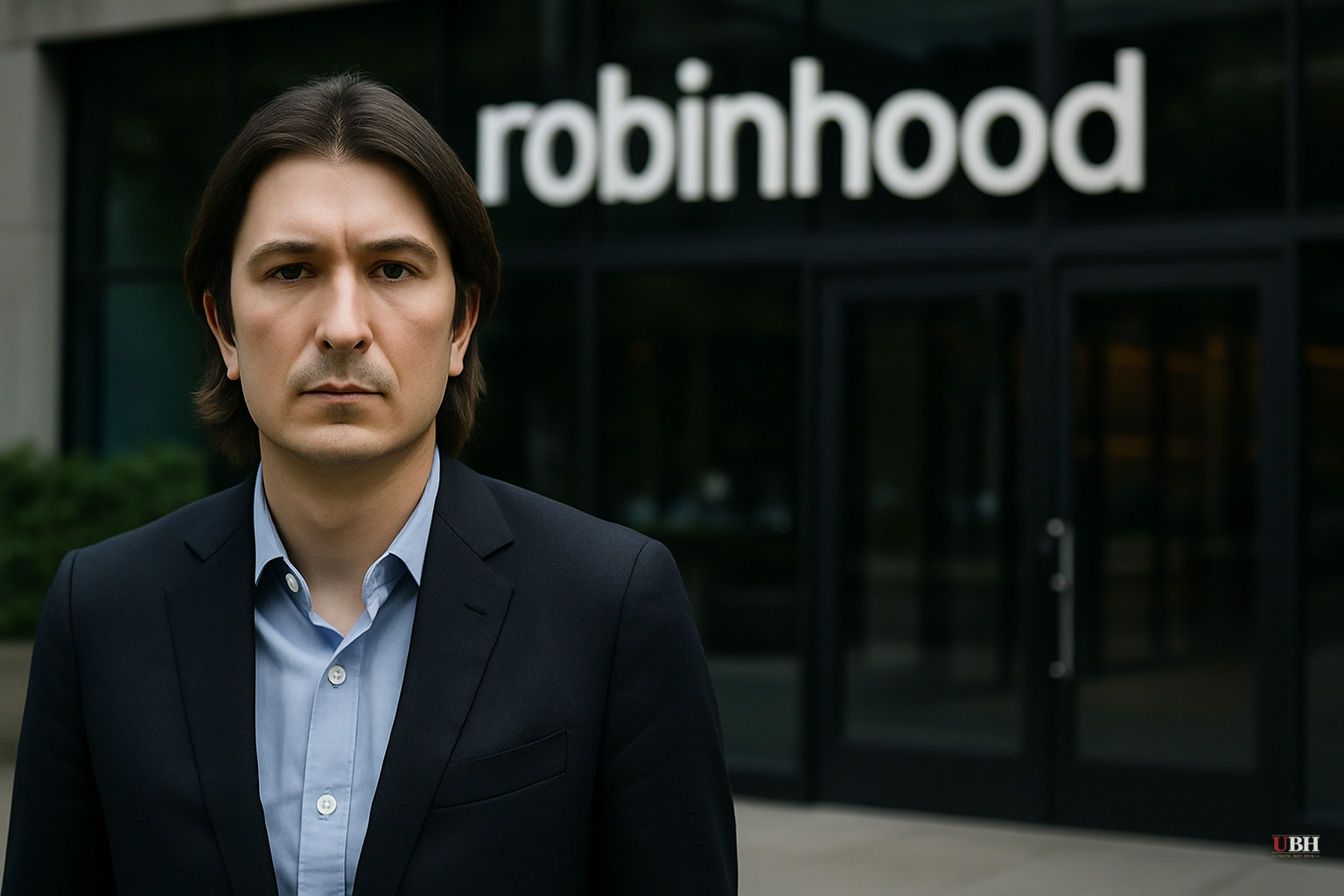
Since Robinhood's layoff announcement landed Tuesday morning, the company's stock swung up more than 2% on the news before pulling back. According to Yahoo Finance, shares were trading around $95 as of midday Tuesday, still down roughly 13% since January 1.
What Tenev Actually Said
CEO Vlad Tenev posted his memo to X on Tuesday. The key line: "To achieve the massive scale of our mission, we cannot default to operating as a heavily-layered organization. We must be a lean, hyper-focused team where every single individual is empowered to make a massive impact."
He also wrote that the goal is to "maximize our talent density" and that "our execution is strong today, but our ambitions require us to continuously raise our own bar."
Business Insider reported that Anthony Klotz, a professor at University College London's School of Management, read the subtext plainly: "This was a performance-based decision." Recruiter Lee Harding told Business Insider that any affected employee would reasonably interpret the memo as "I'm not good enough."
Tenev stopped short of explicitly calling departing employees low performers, a line Meta CEO Mark Zuckerberg crossed during his 2025 cuts. But the framing is close enough that the distinction is largely rhetorical.
The Numbers
Robinhood had approximately 2,900 full-time employees as of December 31, 2025, per a February securities filing cited by both CNBC and Business Insider. The 290 cuts represent exactly 10% of that figure.
The company filed an 8-K with the SEC on Tuesday disclosing roughly $20 million in severance and benefits costs, plus about $8 million in stock-based compensation tied to the cuts. Total restructuring charge: approximately $28 million, recognized in Q2 2026. Robinhood also said it will close a small number of open job postings.
According to Yahoo Finance, Robinhood earned $350 million in profit in Q1 2026, up slightly year-over-year, on $1.07 billion in revenue — 15% higher than Q1 2025. Those are not the numbers of a company in distress.
The Contradiction Worth Naming
Cutting 10% of your workforce while simultaneously announcing record trading volumes and $350 million in quarterly profit is, at minimum, worth scrutinizing. If business has never been stronger, then these 290 people presumably contributed to that strength. The "talent density" framing lets management claim credit for good results while simultaneously arguing the team producing those results wasn't good enough. Workers have every reason to view that logic with suspicion.
The financials don't support a distress narrative. Robinhood's revenue and profit are both growing. The cuts look more like a deliberate org-chart flattening than a cash-conservation move. Companies that wait until they're losing money to restructure tend to cut deeper and faster when they finally do. Proactive trimming during strength is operationally defensible, even if the messaging is tone-deaf to the people losing their jobs.
Context: Robinhood Isn't Alone
Yahoo Finance noted that Coinbase cut approximately 14% of its staff last month. Crypto.com and Algorand announced cuts in March, with Algorand reducing headcount by about 25%. Block, Polygon, and Gemini also trimmed staff in Q1 2026.
The common thread is that spot crypto trading volumes have dropped sharply from the 2024 boom. Robinhood has partially offset that with options trading growth, interest income, and newer product lines including prediction markets and credit cards. Total assets on the platform reached roughly $307 billion, according to Yahoo Finance.
CNBC noted that Robinhood missed Q1 profit expectations in April due to crypto-driven volatility, though market conditions improved after Middle East tensions eased.
What Yahoo Finance Left Out
Yahoo Finance's coverage framed the layoffs primarily through the crypto-sector-downturn lens, grouping Robinhood with Coinbase, Crypto.com, and Algorand as casualties of slumping digital asset markets. That framing undersells an important difference: Robinhood posted $350 million in profit in Q1 2026. Algorand cutting 25% of its workforce and Robinhood cutting 10% while booking record June trading volumes are not the same story. The crypto-industry-malaise frame fits the others better than it fits Robinhood.
What Comes Next
Robinhood said it expects to recognize all restructuring charges within Q2 2026, meaning the financial impact will show up in the Q2 earnings report. The company's Q2 results will be the first real test of whether the "record June trading volumes" Tenev cited translate into a quarter that justifies the restructuring cost, or whether the layoffs become a line item that offsets the trading gains.
Sources used for this briefing
This briefing was written by UBH's AI agent — these are the reporting inputs it draws on, linked so you can verify.