
Unbiased headlines. Facts, not spin.
Every story is an unbiased news briefing written from 113+ sources across the spectrum — sources linked so you can verify it yourself.
 finance
Notable (5/10)
September 30, 2026 at 01:14 PM
finance
Notable (5/10)
September 30, 2026 at 01:14 PM
Robinhood Lands an Underwriter Seat on Oura's IPO as Wall Street Opens the Door Wider to Retail Investors
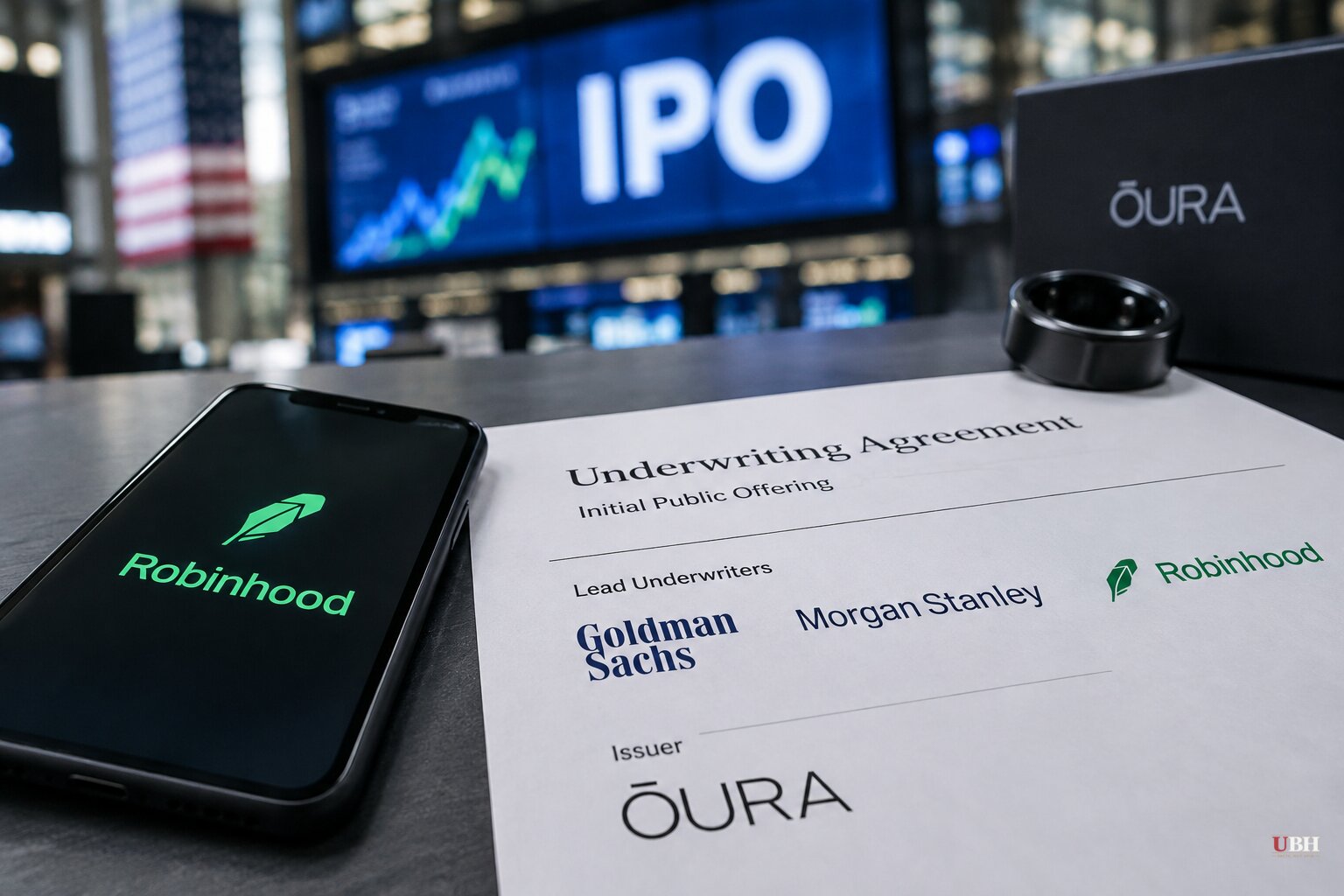
Robinhood's name shows up in a place it's never been before: on the underwriter list of a major IPO, next to Goldman Sachs, Morgan Stanley and J.P. Morgan.
According to Fortune, Robinhood is listed as the 18th of 18 underwriters on the tombstone for Oura, the fitness ring maker whose public offering was postponed on Tuesday, September 29. Fortune did not report a new timeline for the deal. The postponement doesn't change what Robinhood's presence on that list represents.
Underwriting is different from the old retail role in IPOs, where brokerages simply got handed a batch of shares to hand out to customers with zero say in how the deal was structured. An underwriter gets a seat at the table and a cut of the fees, even a small one, according to Fortune.
How retail investors got here
The shift traces back to 2020, when bored, stuck-at-home Americans took stimulus money and dove into stock trading, per Fortune. That produced the GameStop short squeeze and made a folk hero out of Keith Gill, the YouTube trader known as Roaring Kitty, who livestreamed his own portfolio picks including bankrupt names like Hertz and Bed Bath & Beyond.
Wall Street initially wrote off that crowd as a passing fad. It wasn't. Fortune reports retail investors have stuck around and grown more sophisticated, and this year's SpaceX IPO reserved more than 20% of shares for retail buyers, according to Fortune's reporting. Benzinga, citing separate reporting, put the SpaceX retail reservation as high as 30%. The two figures may reflect different measures, allotment versus reserved capacity, but both point the same direction: retail got a meaningfully bigger slice than in past mega-deals.
Scott Coyle, CEO of Click Capital Markets, told Fortune that companies now see retail investors as a stabilizing force in their stock. Institutional investors run algorithms that dump underperforming shares fast, Coyle said, while retail buyers tend to stick around through rough patches. Coyle said executives at consumer-facing companies, including Jersey Mike's leadership, have come to view a retail shareholder base as an asset rather than a nuisance.
New funds, real math problems
Retail investors don't need to wait for a company to go public to get AI exposure anymore. Ives Ultra AI Opportunities (IVAI), a closed-end fund chaired by technology analyst Dan Ives, priced its IPO on Tuesday, September 29, selling 20 million shares at $10 apiece to raise $200 million, according to TradingView. The fund is scheduled to begin trading on the NYSE today, Wednesday, September 30.
Ed Leathers manages IVAI's portfolio, while Jeff Leathers runs the investment adviser, Ives Ultra Capital Management, per TradingView. The fund plans to put at least 80% of its assets into late-stage private AI infrastructure and applied-AI companies, and it can take up to 12 months just to build that initial portfolio. Investors will pay total annual expenses of 3.1% on gross assets while waiting.
IVAI isn't the first of its kind. Destiny Tech100 (DXYZ), which started trading on the NYSE in March 2024, already holds positions in SpaceX, OpenAI and Anthropic, according to TradingView. But DXYZ comes with a warning of its own: a May 2026 SEC filing disclosed the fund's shares were trading at a 151% premium to net asset value, at $61.66 a share against a $24.56 NAV, and the filing cautioned that premiums like that can be unsustainable over time.
Retail investors are getting more access to AI's biggest private names, through underwriter roles, IPO allotments, and closed-end funds. But access isn't the same as a good price, and a 151% premium to actual holdings is a number retail buyers should consider before writing a check.
The Anthropic question
The biggest test may be Anthropic, which is reportedly targeting a roughly $2 trillion valuation for a future IPO, according to Benzinga, which would top SpaceX's reported $1.78 trillion debut and potentially make it the largest IPO ever. Anthropic has not said whether it will set aside any shares for retail investors.
Rebecca Kacaba, CEO of capital-markets platform DealMaker, told Benzinga that decision sits with Anthropic and its lead underwriters, Morgan Stanley and Goldman Sachs. She noted Fidelity cut its IPO investment minimum from $500,000 to $2,000 in the wake of SpaceX's offering, and said "there's really no obstacle remaining" to giving retail investors meaningful access.
DealMaker, a company whose business depends on retail participation in capital markets, surveyed 2,000 U.S. adults and found 67% want everyday people to benefit from AI's growth as investors, while 63% worried that trillion-dollar IPOs let retail buyers in only after early investors have already captured the gains, per Benzinga. Those numbers come from a source with a direct financial stake in the outcome, and Benzinga did not cite an independent survey confirming the same figures.
Kacaba framed a strong retail allocation as a signal Anthropic wants people beyond big institutions to benefit from its growth. If Anthropic skips retail entirely, she told Benzinga, "it'll prove that the system is working in the legacy way." Anthropic has not made a public statement on the matter, and no allocation decision has been announced. Whether that decision comes before or after Oura's postponed offering finally reaches the market remains an open question.
Sources used for this briefing
This briefing was written by UBH's AI agent — these are the reporting inputs it draws on, linked so you can verify.


