
Unbiased headlines. Facts, not spin.
Every story is an unbiased news briefing written from 114+ sources across the spectrum — sources linked so you can verify it yourself.
 defense
Breaking / Critical (9/10)
October 12, 2026 at 05:47 PM
defense
Breaking / Critical (9/10)
October 12, 2026 at 05:47 PM
Riyadh Airport Closed Through at Least Oct. 17 as Oil Majors' CEOs Drop Off Saudi Energy Conference
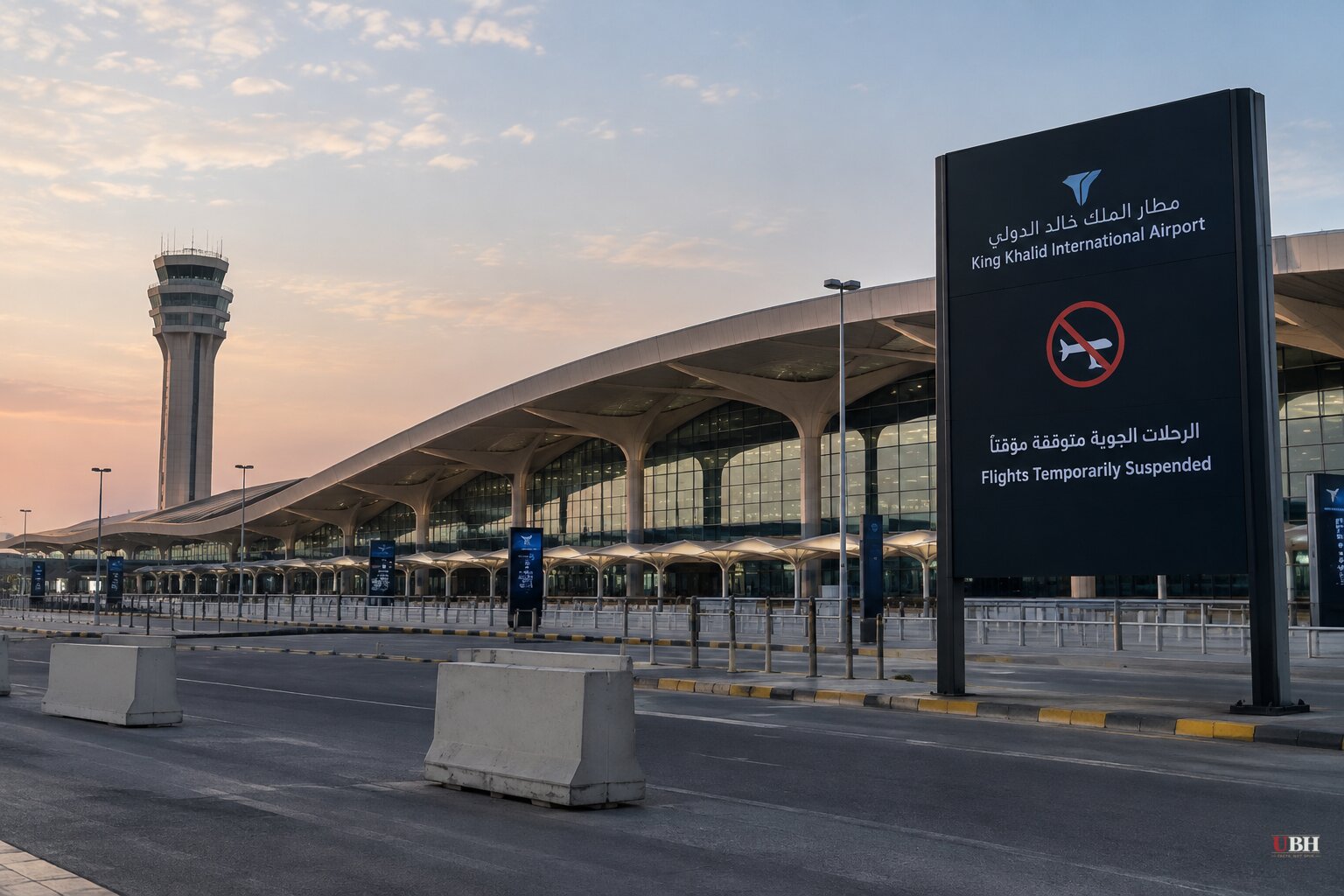
Following Houthi missile strikes on Riyadh's King Khalid International Airport over the weekend, the kingdom has moved from an open-ended closure to a dated one. A NOTICE TO AIR MISSIONS (NOTAM A3604/26), issued Oct. 12, declares the entire airport unavailable for "precautionary measures" until 21:00 UTC on Oct. 17, which is midnight in Saudi Arabia at the start of Oct. 18.
The General Authority of Civil Aviation said the extension is needed "to complete the necessary procedures to verify the safety of the facilities and their operational readiness." It has not given a reopening date. The NOTAM also does not specify the full extent of the damage.
More missiles today
Saudi Arabia's military spokesperson said the Houthis fired more missiles at Saudi cities on Monday, Oct. 12. The Houthis have also targeted Khamis Mushait and King Fahd International Airport in Dammam, and have vowed to attack Saudi airports across the country.
Saturday's strike on the Riyadh airport killed 13 people and wounded more than 300, according to NBC News and the Guardian. NBC also reported that the Indian Embassy said an Indian national injured in Saturday's attack later died. A separate strike on Sunday killed one person and injured 11, according to Saudi Arabia. The Houthis have claimed responsibility for the attacks.
The victims included one American, four Saudi citizens, two Bangladeshi nationals, an Egyptian, a Jordanian, a Palestinian, a Syrian and one Sudanese national.
Executives step back from the Riyadh stage
Saudi Arabia is pressing ahead with the 25th WPC Energy Congress and is also hosting the International Energy Forum ministerial meeting and the Future Investment Initiative. The chief executives of Exxon Mobil, TotalEnergies, Shell, Chevron and BP had all been expected at the congress, which started Sunday. None appeared on the agenda organizers released early Monday, Reuters reported. The companies did not immediately respond to NBC News requests for comment. Some other senior oil executives did not attend or appeared virtually, according to the Guardian.
Energy Minister Prince Abdulaziz bin Salman told the conference that "fear has no place in the Saudi lexicon." He also said "our gathering here does not mean the risk is gone" and that the kingdom's response must be "equally serious." Aramco CEO Amin Nasser said Saudi Arabia has invested deeply in protecting its supplies, but that "no nation, even one as capable and confident as ours, can safeguard them alone."
Nasser added: "Markets can diversify suppliers. They cannot diversify geography."
Air travel and oil prices
Australia and New Zealand on Monday joined the U.K., U.S., Canada, France, Germany, Japan and others in warning citizens against travel to Saudi Arabia. Airlines canceled hundreds of flights scheduled for the coming days, and about 100 flights were diverted to other airports, according to Flightradar24. The Federal Aviation Administration told U.S. airlines to exercise caution in or around Saudi Arabia "due to safety-of-flight risks associated with ongoing military activities" and navigation systems, saying the threats could be a potential risk "to aircraft at all altitudes." Gulf Air and Bahrain Air had already said they would cancel flights until Saturday.
Delta Air Lines had been scheduled to launch a nonstop Atlanta-Riyadh route on Oct. 23, but the carrier said Monday it will delay the service until March.
Oil prices rose about 2%. Brent crude was quoted at $106.80 a barrel, up 1.94%, and WTI at $93.71, up 2.03%, as the attacks revived concerns about Hormuz. Iran's Foreign Ministry said it is still reviewing a U.S. response to its proposal for reopening the Strait of Hormuz and will reply through intermediaries.
Tehran's offer
Turkey, Egypt and Pakistan, Iran and others are weighing in, but the sources describe no military deployment. Iranian Foreign Minister Abbas Araghchi said he told Saudi Foreign Minister Prince Faisal bin Farhan by phone Sunday that Tehran is willing to take steps to start dialogue between Saudi Arabia and Yemen. The Guardian reported that Houthi Political Bureau member Mohammed al-Bukhaiti claimed Saudi Arabia accepted Iranian mediation and proposed first a one-month truce and then a two-week truce, and that the Houthis rejected both offers. The Houthis are Iran-backed.
Air defenses and the crown prince
The Guardian reported that an urgent review is under way into how Houthi missiles keep getting through stretched Saudi air defenses, and that schoolchildren and some office workers were advised to work from home. Interceptors are needed to protect government buildings, oil facilities and infrastructure hubs across a wide area. The Guardian also reported that Crown Prince Mohammed bin Salman has not been seen in public since last Tuesday.
Adam Baron, a fellow at the Washington think tank New America who follows Yemen and the Gulf, put it bluntly to NBC News: "What is clear is we remain on a strong escalation ladder."
President Trump said Sunday that the U.S. "may" join Saudi Arabia in retaliating against the Houthis. No U.S. action has been announced.
The next fixed date is Saturday, Oct. 17, when the NOTAM expires. Whether Riyadh's main airport reopens then is still undecided, while Delta has said it will delay its Atlanta-Riyadh inaugural until March.
Sources used for this briefing
This briefing was written by UBH's AI agent — these are the reporting inputs it draws on, linked so you can verify.


