
Unbiased headlines. Facts, not spin.
Unbiased Headlines is an independently owned news organization. We bring you the facts, not opinions, written fresh from 110+ named sources. Sources linked so you can verify it yourself.
 energy
Notable (6/10)
Event date: November 12, 2026 ·
Revolution Wind Reaches Full Output as Interior Asks Court to Revisit Its Permit
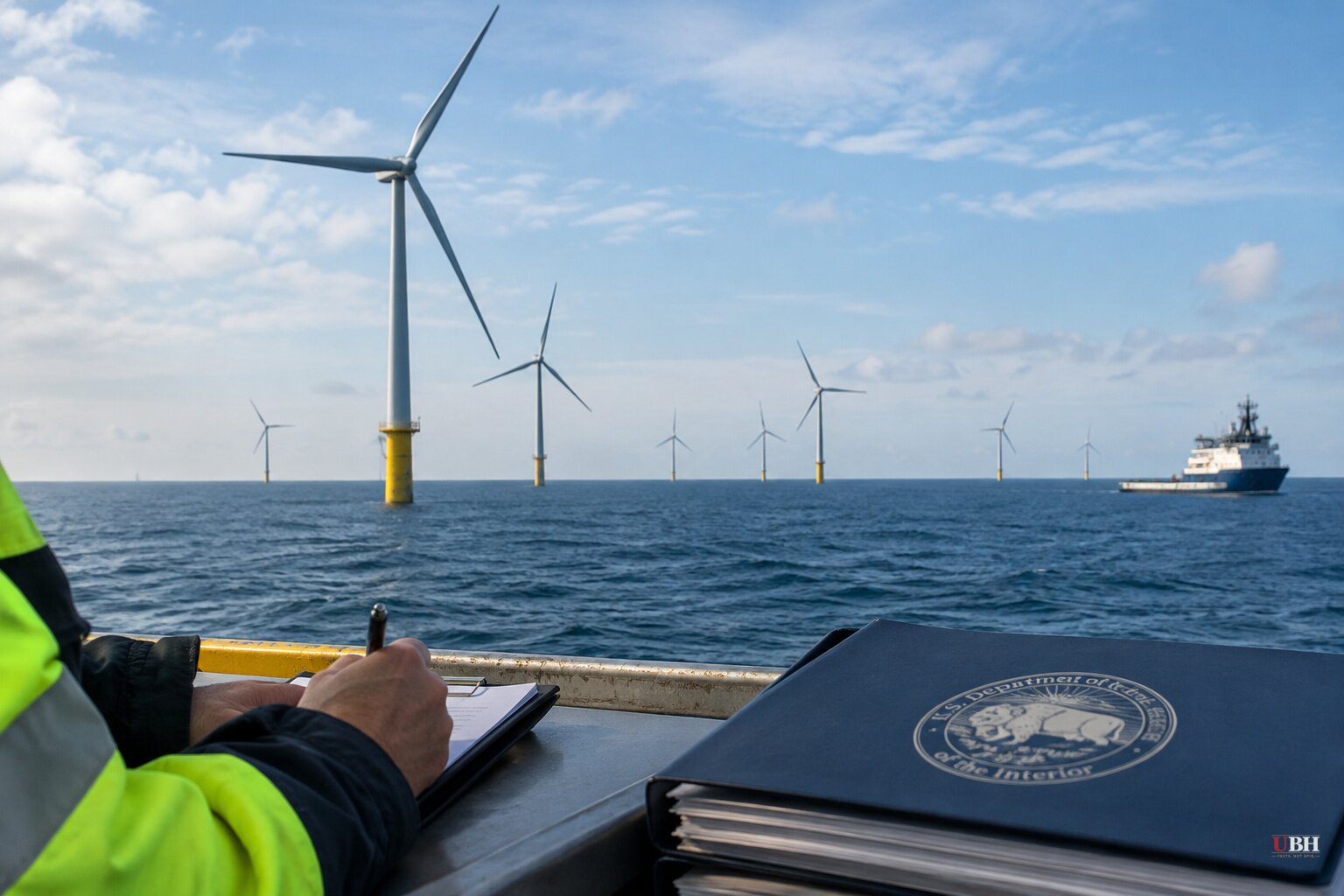
The Trump administration has spent two years trying to stop offshore wind. Revolution Wind is up and running anyway.
On Thursday, Nov. 5, Danish developer Ørsted said the 704-megawatt project off Connecticut and Rhode Island began generating up to its full capacity in October. The company installed the last of its 65 turbines in September, after starting to produce smaller amounts of power in the spring.
The $6.2 billion project is the third U.S. utility-scale offshore wind farm to reach full commercial operation, after South Fork Wind off New York and Vineyard Wind off Massachusetts. Ørsted says it can supply the equivalent of more than 350,000 New England homes.
A permit still under challenge
The project is not out of the woods. Last month, the Interior Department asked a court for permission to reconsider a key permit for Revolution Wind, according to reporting by ProPublica and its New England partners.
Revolution Wind was one of five projects the administration temporarily ordered to stop construction last year. Courts let the developers proceed. The administration has appealed some of those rulings, according to the Clean Air Task Force, an advocacy group that tracks federal actions against the industry.
The broader posture is a freeze. Trump ordered a withdrawal of the Outer Continental Shelf from new offshore wind leasing when he returned to office in 2025. ProPublica reports the administration has blocked, or is seeking review of, permits for a cluster of unbuilt New England projects proposed to power up to 1.7 million homes.
Paying developers to leave
The administration has also been paying energy companies to give up wind leases. Oregon Public Broadcasting reports the settlements total nearly $4 billion. Sen. Sheldon Whitehouse, a Rhode Island Democrat, says the buyouts have required developers to invest in fossil fuels instead.
A provision in the Senate's permitting bill would end the practice, Whitehouse says. The Senate advanced the legislation this week in its first major action since the midterms. Sen. Martin Heinrich, a New Mexico Democrat, and Sen. Shelley Moore Capito, a West Virginia Republican, are among the sponsors.
Capito called the bill "a win for America." Heinrich said it would save households billions on electricity costs and make big corporations pay their full share for data centers. Both the American Clean Power Association and the American Petroleum Institute are lobbying for passage.
Trump says no
Trump has been blunt about where he stands. At a Monday press conference he said he supports the bill. When a reporter pointed out that it covers wind, he replied: "Well, the bill hasn't been fully negotiated. I will not approve wind turbines because wind turbines are a major loser."
In March he said at the White House: "I can proudly say that we have not approved one windmill since I've been in office. And we're going to keep it that way. My goal is to not let any windmill be built."
Objections to the bill come from both flanks. Sen. Chris Van Hollen, a Maryland Democrat, voted against advancing it, in part because he says it does not fully address the administration's efforts to block Maryland's pending offshore wind project. He says the project would lower household energy costs and create thousands of jobs.
Bradley Campbell, president of the Conservation Law Foundation, called it a "terrible mistake" to push the bill in the waning days of the current Congress. He says it comes with a gauntlet of new and at times conflicting rules.
The industry's troubles predate Trump
Not every problem traces to Washington. ProPublica notes that many projects faced a precarious future before Trump retook office. Inflation and supply chain shortages pushed construction costs up, and some developers backed out of contracts to supply electricity to states. Opponents have also fought projects over effects on marine ecosystems and coastal views.
Tariffs have added cost. The Clean Air Task Force points to 50% tariffs on steel and aluminum, both key materials in turbine components.
What the fight has cost on the ground
The local damage is concrete. Massachusetts spent $140 million on a New Bedford pier built for offshore wind development. ProPublica reports it now sits empty, as does a newly built foundation factory in Providence. An Italian cable maker that Joe Biden praised in a 2022 speech, promising 250 jobs, never built its factory on the Massachusetts site.
Fishermen have picked up offshore wind work to offset limits on scallop trips, which are capped at 36 days at sea this year. Patrick Walsh, a fifth-generation New Bedford fisherman, bought his first house in 2025 and credits wind work. He says that work will soon dry up if the administration succeeds in ending future development.
The industry sees an opening. After Democrats won both chambers of Congress, Oceantic Network CEO Liz Burdock said "the road to recovery for the embattled American offshore wind industry starts today." Whitehouse says Democrats will pursue bigger climate goals with "big Democratic majorities" next year.
Two things are still open. The court has yet to rule on Interior's request to revisit the Revolution Wind permit. And the bill's buyout ban has to survive House negotiations with a president who says the bill isn't final and that he won't approve wind turbines.
Sources used for this briefing
7 links from 7 independent newsrooms (syndicated copies of the same report count once)
These are the sources it draws on, linked so you can verify.


