
Unbiased headlines. Facts, not spin.
Every story is an unbiased news briefing written from 110+ sources across the spectrum — sources linked so you can verify it yourself.
 energy
Notable (6/10)
August 10, 2026 at 12:08 AM
energy
Notable (6/10)
August 10, 2026 at 12:08 AM
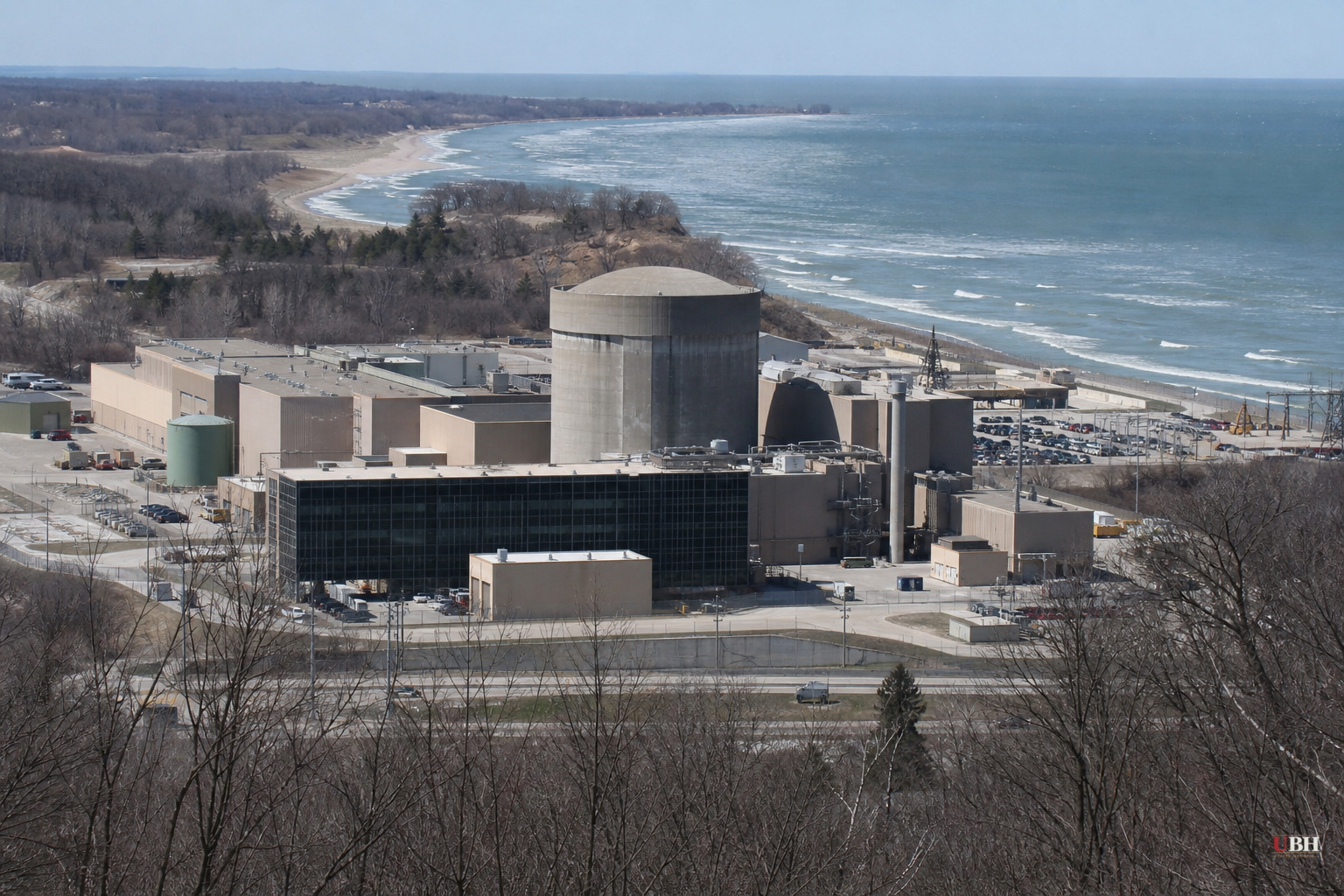
Restarting Palisades Nuclear Plant Took Longer and Cost More Than Holtec Planned
Turning a dead nuclear reactor back on sounds simple. It is not.
President Trump signed an executive order in May 2025 called "Reinvigorating the Nuclear Industrial Base," setting a goal of starting construction on 10 new large reactors and adding 5 gigawatts of capacity to existing plants by 2030, according to OilPrice.com. Part of that plan leans on restarting reactors that utilities had already shut down and written off.
Three plants became the test cases: Holtec International's 789-megawatt Palisades plant in Michigan, which shut down in 2022; Constellation Energy's 835-megawatt Crane Clean Energy Center at the old Three Mile Island site in Pennsylvania; and NextEra's 615-megawatt Duane Arnold plant in Iowa.
The Trump administration announced on Friday, July 24, that it had hit an earlier target: bringing three new advanced test reactors to criticality, the point where a nuclear chain reaction becomes self-sustaining, ahead of a July 4, 2026 goal, according to OilPrice.com. That milestone applies to new test reactors, not the older commercial plants being restarted.
Palisades is the case study in how messy this gets. Holtec bought the plant from Entergy and figured recommissioning would take about two years. It did not.
Engineers found extensive corrosion in equipment that uses hot radioactive water to generate high-pressure steam, according to OilPrice.com. Add a leaking underground water line, the need for new valves, and supply chain delays, and the timeline blew past Holtec's own estimate.
Jeff Borah, Palisades' general manager of plant operations, put it bluntly: "We didn't take the time to really plan out the whole project before we started doing work," he said, according to OilPrice.com. "It's like building a fire truck on your way to the fire."
Holtec had never operated a nuclear plant before buying Palisades, and it had not finished inspecting the whole site before starting restart work.
Holtec's president, Rick Springman, offered a defense: "There are some systems you can't really inspect until you start the project," he said, according to OilPrice.com, pointing to equipment like the turbine that had to be partially dismantled just to assess its condition.
Some faults genuinely only surface once you start tearing into decommissioned equipment. But skipping a full inspection before committing to a two-year restart timeline is still a planning failure, and it is the kind of failure that costs ratepayers and taxpayers real money when projects run late.
The bigger policy question
Nuclear power's supporters have a strong case. Reactors run around the clock regardless of weather, unlike wind and solar. China is building reactors at a pace the U.S. cannot currently match, and falling behind on nuclear technology has real national security implications. Public opinion on nuclear power has shifted favorably in recent years after decades of fear following Chernobyl, Fukushima, and Three Mile Island.
But the Palisades experience is a warning against treating restart timelines as political talking points instead of engineering realities. If a well-funded company with federal backing and public attention still ran into corrosion problems, leaking pipes, and supply chain gaps it did not fully account for, smaller or less-resourced operators attempting similar restarts elsewhere should expect the same.
The Nuclear Regulatory Commission's safety review process exists precisely because these systems degrade in ways that are not obvious from the outside. That process takes time. Cutting corners on inspection to hit a political deadline is a legitimate concern, not a partisan talking point, whether you support the broader nuclear buildout or not.
Palisades has not yet returned to commercial operation as of this writing based on available reporting. The open question is whether Constellation's Crane Clean Energy Center and NextEra's Duane Arnold restart on anything resembling their original schedules, or whether they hit the same wall Holtec did. If they do, the administration's 2030 target for new reactor construction and capacity additions could face the same kind of slippage Palisades already has.
Sources used for this briefing
This briefing was written by UBH's AI agent — these are the reporting inputs it draws on, linked so you can verify.


