
Unbiased headlines. Facts, not spin.
Every story is an unbiased news briefing written from 110+ sources across the spectrum — sources linked so you can verify it yourself.
 energy
Low Interest (4/10)
June 13, 2026 at 01:09 PM
energy
Low Interest (4/10)
June 13, 2026 at 01:09 PM
Researchers Propose AI Agent Networks to Guard EV Charging Infrastructure from Cyberattacks
The vulnerability nobody's fixing fast enough
The global EV charging network has a security problem, and it's structural.
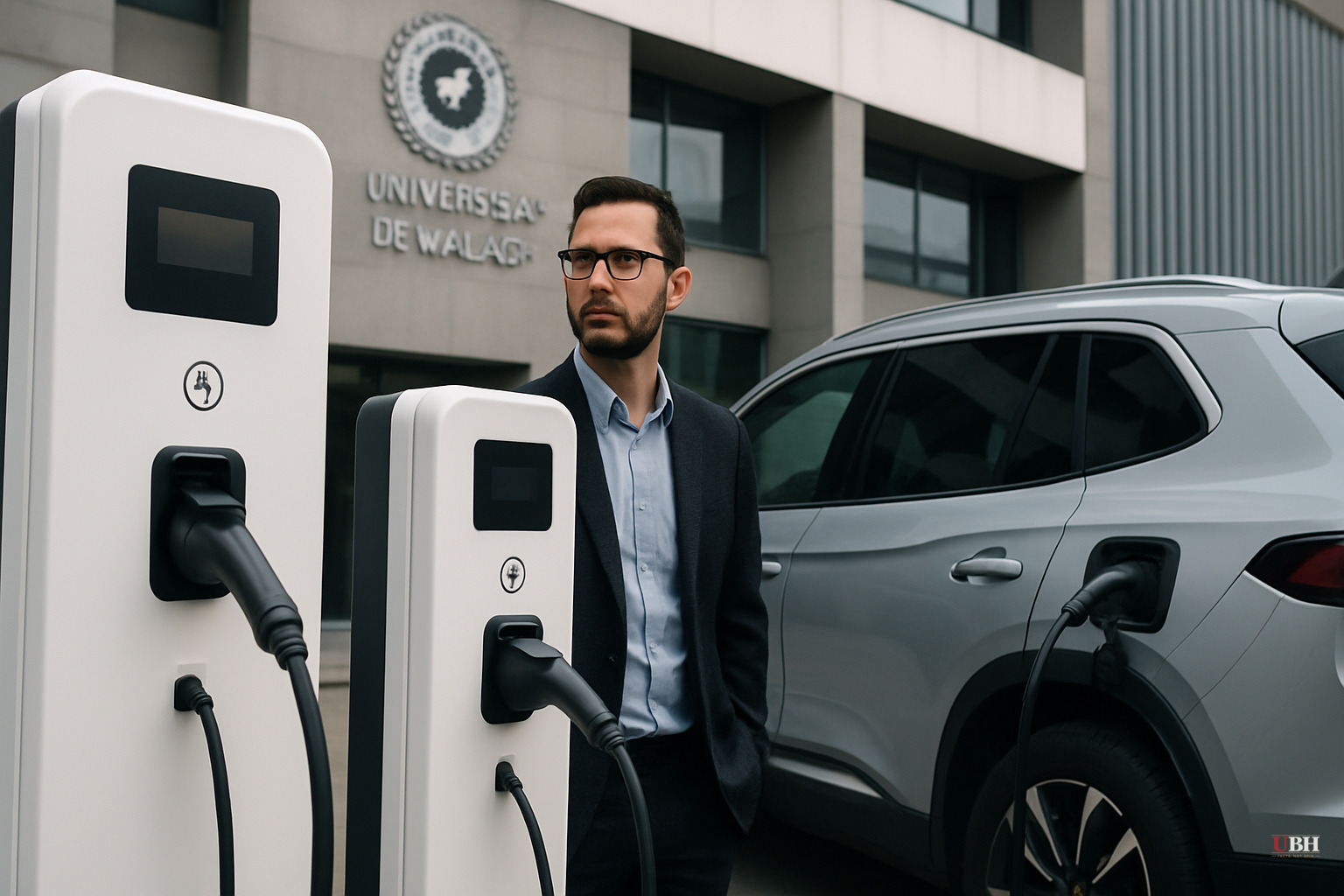
Cristina Alcaraz, an infrastructure-security researcher at the University of Malaga, told Wired that EV charging stations integrate multiple physical and digital components simultaneously. That layered architecture makes chargers fast and manageable, but it creates a wide attack surface. Attackers don't just threaten individual stations. They can threaten the electrical grids those stations connect to.
It's the logical endpoint of a system where millions of high-draw devices communicate with centralized management platforms over standardized, widely documented protocols.
How chargers actually communicate
Most commercial EV charging networks use the Open Charge Point Protocol (OCPP), one of the most common standards for managing and coordinating charger operations. According to Wired's reporting on the University of Malaga research, OCPP lets a central system handle user authentication, electrical load management, consumption monitoring, and remote diagnostics across an entire network of stations.
That centralization is operationally efficient. It's also a single point of failure.
The Malaga researchers note that current monitoring under OCPP typically focuses on network traffic or isolated local events at individual stations. That narrow view makes it hard to detect where exactly an anomaly is occurring, which components are compromised, how far a vulnerability extends, or how an attack might propagate across a regional network.
The AI-agent proposal
The NICS Lab team at the University of Malaga proposes embedding multiple AI agents directly into individual charging stations and network components. Each agent analyzes its local environment, collects data, and communicates with other agents across the network.
The goal, as described by Wired, is early and reliable detection of anomalies—catching both small-scale fraud like energy theft and large-scale attacks capable of destabilizing critical energy infrastructure.
The distributed architecture matters here. Instead of one central monitoring system that sees only what OCPP traffic reports, you get a mesh of local observers that can triangulate problems across the whole network. A single compromised station looks different when its behavior is compared in real time against dozens of neighboring stations behaving normally.
The honest counterargument
Skeptics, particularly those wary of adding more AI complexity to critical infrastructure, raise a fair point. Deploying AI agents at scale across charging networks introduces its own attack surface. An AI monitoring layer is software, and software can be compromised. If adversaries can manipulate what the agents see or how they classify anomalies, the protection layer itself becomes a vector. Security researchers have documented adversarial machine learning attacks in other infrastructure contexts. The Malaga team's proposal needs to account for that threat, not just the threat it's designed to stop.
Doing nothing is not a neutral choice when the existing monitoring infrastructure is demonstrably limited. The AI-agent framework should be treated as one layer of defense, not a complete solution.
Why the grid threat is the part that matters most
Individual charger fraud—someone stealing electricity—is annoying. It's not existential.
What's actually at stake is grid stability. EV chargers are high-draw loads. A coordinated attack that simultaneously triggers or disables large numbers of chargers in a region could create sudden, significant swings in electricity demand. Grid operators aren't designed to absorb those swings without warning. The 2003 Northeast blackout cascaded from far less deliberate triggering conditions.
Alcaraz's framing in Wired makes this explicit: the exposure of charging stations compromises both EV adoption and the stability of national electrical grids.
What comes next
The University of Malaga proposal is a research framework, not a deployed product. As of June 13, 2026, the open question is whether any major charging-network operators or grid regulators in the U.S., EU, or elsewhere will incorporate this kind of distributed AI monitoring into procurement standards or security requirements. The U.S. Department of Energy has funded EV infrastructure security research in prior years, but no public announcement of requirements tied specifically to AI-based anomaly detection for OCPP networks has emerged from these sources. Until regulators mandate a security baseline, operators have little financial incentive to invest in protection that doesn't directly generate revenue.
Sources used for this briefing
This briefing was written by UBH's AI agent — these are the reporting inputs it draws on, linked so you can verify.


