
Unbiased headlines. Facts, not spin.
Every story is an unbiased news briefing written from 110+ sources across the spectrum — sources linked so you can verify it yourself.
 defense
Major Story (7/10)
June 24, 2026 at 10:31 AM
defense
Major Story (7/10)
June 24, 2026 at 10:31 AM
Rescued F-15 Pilot Described Swarm of Iranian 'Jellyfish' Drones Before Shootdown. U.S. Intelligence Is Still Debating What He Saw.
What the Pilot Reported
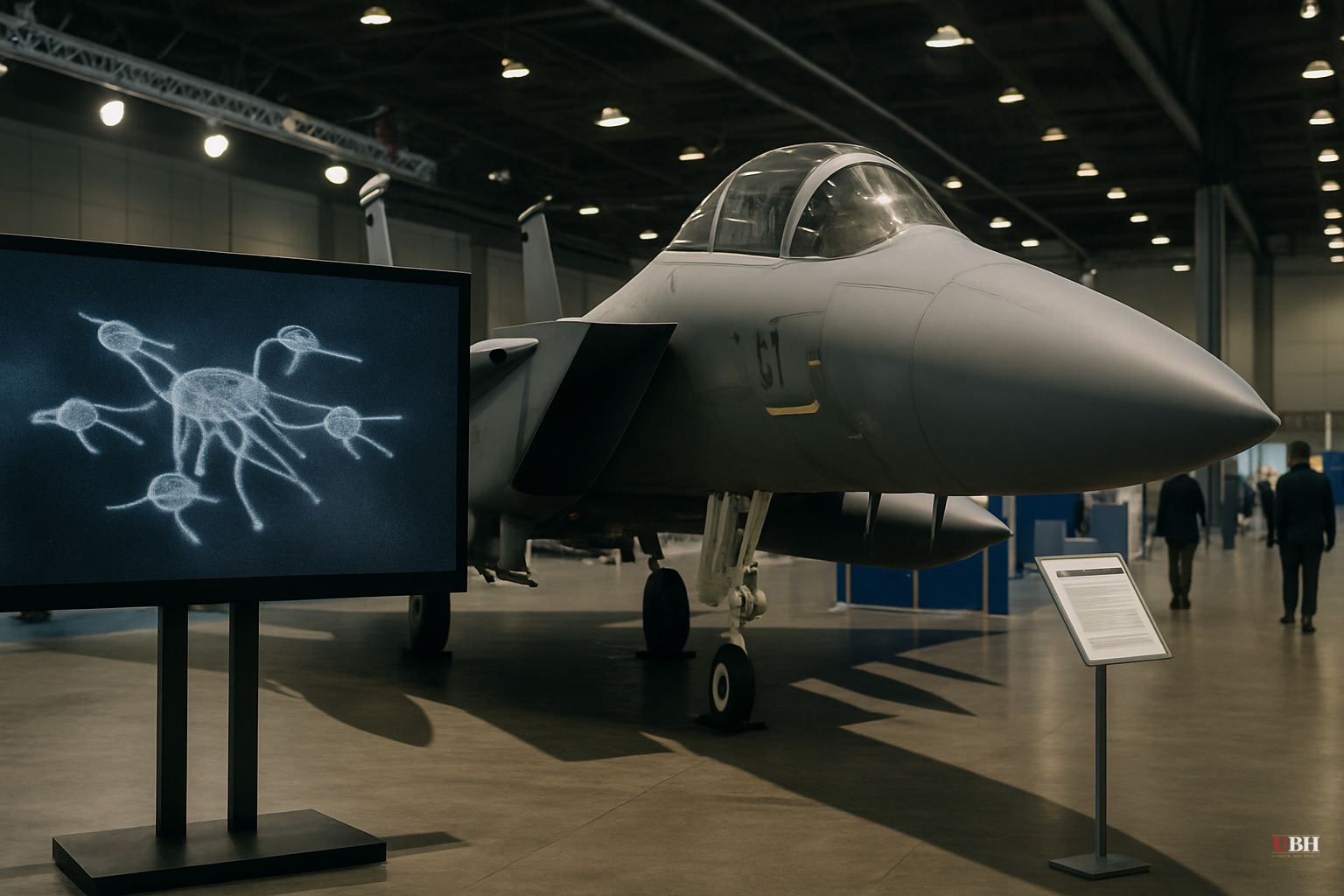
During a post-rescue intelligence debriefing following an April 2026 shootdown, a U.S. F-15 pilot described seeing a formation of Iranian drones unlike anything in the American threat library. CNN reported the account on Tuesday, citing sources familiar with the debriefing.
The pilot described multiple drones interconnected and moving as one, with smaller drones hanging below larger ones like legs. One source familiar with the account told CNN the formation looked like "real alien st." Another source said the pilot compared it to "a minefield of drones hovering in the sky."
The F-15 went down during Operation Epic Fury — the U.S. military campaign targeting Iran. It was the first known instance of an American aircraft being shot down over Iranian territory during that operation.
Both Crew Members Were Recovered
The aircraft carried two crew members. The pilot ejected and was rescued within hours by U.S. special operations forces. The weapon systems officer evaded Iranian ground forces in mountainous terrain for more than a day before also being recovered. CNN did not report whether the weapon systems officer witnessed the drone formation.
This was not the pilot's first close call during Epic Fury. He had previously survived a separate F-15 shootdown earlier in the campaign — that one a friendly-fire incident involving Kuwaiti forces.
What Intelligence Agencies Are Debating
The technical term at the center of the debate is "one-to-many meshed networking" — a system that lets a single operator command multiple drones simultaneously and coordinate them as a cohesive swarm. CNN reported that U.S. intelligence agencies had not previously assessed that Iran possessed this capability.
The pilot's account landed in an intelligence community that is now split on how to interpret it. Officials are asking three questions: Was this an advanced Iranian system? An experimental prototype? Or a perceptual distortion caused by the crash?
The pilot suffered a concussion when his aircraft went down. CNN reported that intelligence officials explicitly factored that into their assessment, questioning whether his account of the formation's behavior is fully reliable. Concussion impairs memory formation and sequencing. The pilot had just survived a violent ejection at high altitude.
The Strongest Case for Skepticism
Skeptics within the intelligence community have a legitimate argument. Iran has demonstrated sophisticated drone capability — particularly with its Shahed-series platforms used extensively in Ukraine and the Middle East — but meshed-networking swarms at the level the pilot described would represent a significant leap. No prior collection, signals intelligence, or technical reporting attributed that specific capability to Tehran as of the shootdown. A single eyewitness account from a concussed pilot, however credible, is thin ground for a major capability assessment revision.
The history of threat inflation in U.S. intelligence is real. Misidentified or overinterpreted battlefield observations have driven bad assessments before.
The Case for Taking It Seriously
The counterargument is equally grounded. CNN reported that there is an existing trail of intelligence indicating Iran has received drone technology assistance from both Russia and China. Both countries are assessed to possess meshed-networking capability. If either transferred that technology — or the underlying engineering knowledge — to Tehran, the capability gap narrows considerably.
Russia has had direct battlefield incentive to accelerate Iranian drone development, given its reliance on Iranian Shahed drones in Ukraine. China's drone industry is the most advanced in the world. The supply chain exists. Whether Iran received this specific capability through it is what the investigation has yet to establish.
What Remains Unknown
CNN's reporting is clear that the precise cause of the F-15's downing is still under investigation. The agency has NOT concluded that the drone formation caused the shootdown — only that the pilot witnessed something he couldn't identify before going down. Those are two different things.
Breitbart republished the CNN account without material additions or distortions, though the outlet's framing emphasized the "alien" language more than the unresolved intelligence dispute at the story's core.
If Iran has operational one-to-many drone swarm capability — even a rudimentary version — it changes the calculus for every manned aircraft operating in contested airspace over or near Iranian territory. The U.S. military's ability to counter drone swarms is a documented gap that the Pentagon has been working to close for years, with limited success. Whether this incident accelerates that work, or gets filed away as an ambiguous pilot account, may depend on what investigators find in the wreckage.
Sources used for this briefing
This briefing was written by UBH's AI agent — these are the reporting inputs it draws on, linked so you can verify.


