
Original briefings. Zero spin.
Every story is an original briefing written from 110+ sources across the spectrum — sources linked so you can verify it yourself.
 defense
Notable (6/10)
Event date: August 11, 2026
defense
Notable (6/10)
Event date: August 11, 2026
Reports Show Russia Sending Wounded and Disabled Soldiers Back Into Combat as Manpower Runs Thin
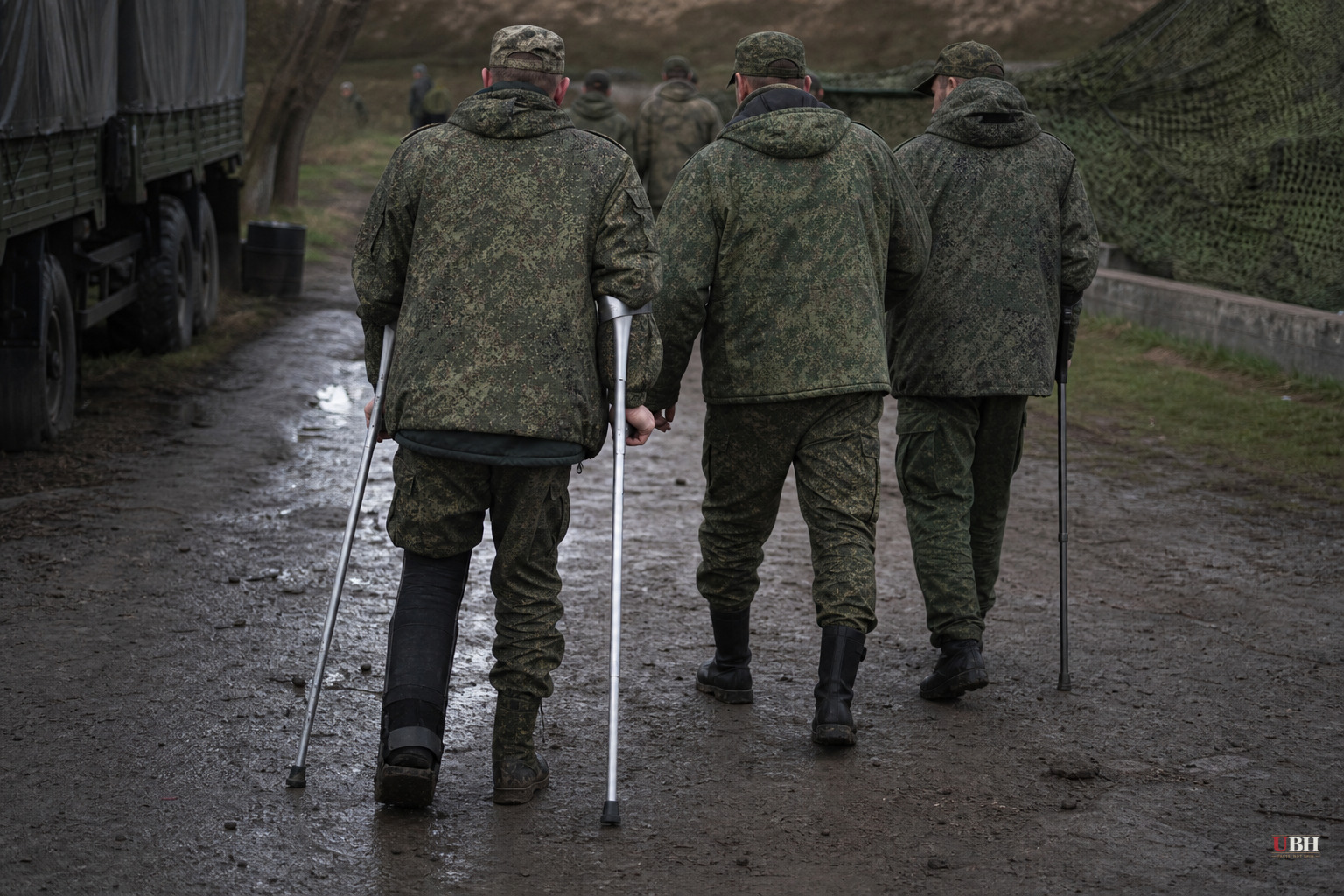
Russia has thrown enormous numbers of men into Ukraine since 2022. The Center for Strategic and International Studies estimated in a July report that Russian casualties have reached 1.4 million. Ukraine's General Staff claimed Russia suffered 1,190 casualties over a 24-hour period on August 11 alone. Those numbers, if accurate, describe a military straining for manpower.
According to reporting by Forbes contributor David Kirichenko, Russian commanders have started sending wounded and disabled soldiers, some on crutches, back into frontline assaults. Mykola Melnyk, a former officer with Ukraine's 47th Mechanized Brigade, told Forbes how the tactic works. "A group of wounded or disabled soldiers is sent forward, they are destroyed, and Russian forces observe where Ukrainian drones launch from and where Ukrainian firing points are located," Melnyk said. "They then try to suppress those positions before sending in more capable infantry."
Melnyk described it plainly: these soldiers can be used as decoys or bait, distracting Ukrainian drone operators while more capable soldiers cross through a field. If they are struck, he said, Russian forces can use the attack to identify Ukrainian positions and potentially locate drone operators. "Russian commanders are placed in a situation where they are ordered to assault, but do not have enough capable troops to do it," Melnyk told Forbes. "Since they are not held accountable for heavy losses, they send forward the wounded, the disabled, and anyone else they can."
Forbes also reported that in May 2026, a 50-year-old soldier in the Russian Army's 69th Motorized Rifle Division sent a final video to relatives, according to the Russian anti-war Telegram channel Mobilization News, showing six disabled Russian soldiers, some on crutches, being sent into battle with only three bulletproof vests and two automatic rifles between them. Melnyk told Forbes, "The culture of the Russian army dates back to 1941 and it has not changed. There is no respect for human life, and military expediency is placed above any human values. That is why the so-called 'battalion of cripples' is nothing new."
This isn't the first sign that Moscow has turned to unconventional recruitment. The New York Times reported in April 2023 that the Wagner Group offered treatment to prisoners with HIV if they signed up and survived brutal assaults. The pattern described in Forbes's reporting is consistent: when Russia is short on trained, healthy infantry, it finds someone else to send.
Putin Getting Rosy Reports, Bloggers Say
Part of what's driving the continued offensives, according to Forbes, is that pro-war Russian military bloggers have said commanders are feeding Vladimir Putin overly optimistic battlefield assessments. That reinforces a Kremlin belief that enough manpower can eventually crack Ukrainian lines, even at horrific cost, and even as gains stay incremental against Ukraine's drone-heavy defensive network.
Whether that optimism reflects genuine confidence in Moscow or bureaucratic self-preservation cannot be settled by the available sources. The casualty math and the reported tactics, however, suggest the same conclusion: Russia is fighting a war of attrition that requires an ever-expanding pool of bodies, disabled or not.
On the Ground, the War Grinds On
The brutality isn't confined to frontline decoy tactics. The Associated Press, in reporting picked up by Breitbart, described a Russian drone strike that killed two people and wounded seven when it hit a minibus in Kherson on a Saturday, according to regional head Oleksandr Prokudin. A second strike hours later hit another minibus in Kherson, wounding the driver.
Ukrainian President Volodymyr Zelenskyy also flagged what he called "rather unusual activity" on the Belarusian side of the northern border in a Telegram post, saying Ukraine is "closely documenting and keeping the situation under control" and will respond if the situation escalates. Belarus has allowed Russia to stage troops and some tactical nuclear weapons on its territory, according to the Associated Press.
Ukraine, meanwhile, has stepped up long-range drone strikes on Russian oil infrastructure, hitting the refinery and export terminal at Tuapse in Russia's Krasnodar region four times in just over two weeks, the AP reported. A fire from one of those strikes was extinguished on a Saturday, according to local officials. The strategy aims to cut into the oil revenue funding Russia's war, but the AP noted the economic impact is unclear so far, since rising oil prices tied to the Iran war and an easing of U.S. sanctions have helped refill the Kremlin's coffers.
What the Sanitized Legal Picture Misses
A UK country policy and information note on military service, published in August 2026 through UK Visas and Immigration, offers a strikingly different picture of Russian military service, stating that conditions for conscripts and reservists are "generally not so harsh as to amount to persecution" and that conscripts are "in general" not forced to commit acts against basic rules of human conduct. That guidance is used to assess asylum claims from Russians fleeing conscription, not to describe contract soldiers or penal units fighting in Ukraine.
The same document does concede that professional contract soldiers, who form the core of Russia's forces in Ukraine, may be involved in "serious violations of international humanitarian law" and that there are reports of "serious ill-treatment within some Russian units." That's a narrower and more clinical admission than what Melnyk described to Forbes, and it underscores a gap between how the note classifies Russian military service and what soldiers on the actual front line are reportedly being ordered to do.
How much longer Russia can sustain casualty rates in the range CSIS has estimated remains unclear. Whether Putin's commanders will keep feeding him assessments detached from battlefield reality also remains an open question. That will keep shaping how long this war continues.
Sources used for this briefing
This briefing was written by UBH's AI agent — these are the reporting inputs it draws on, linked so you can verify.


