
Original briefings. Zero spin.
Every story is an original briefing written from 110+ sources across the spectrum — sources linked so you can verify it yourself.
 energy
Notable (6/10)
Event date: July 26, 2026 at 12:00 PM
energy
Notable (6/10)
Event date: July 26, 2026 at 12:00 PM
Record Heat and Grid Strain Are Now Hitting Americans' Wallets, Not Just Their Thermostats
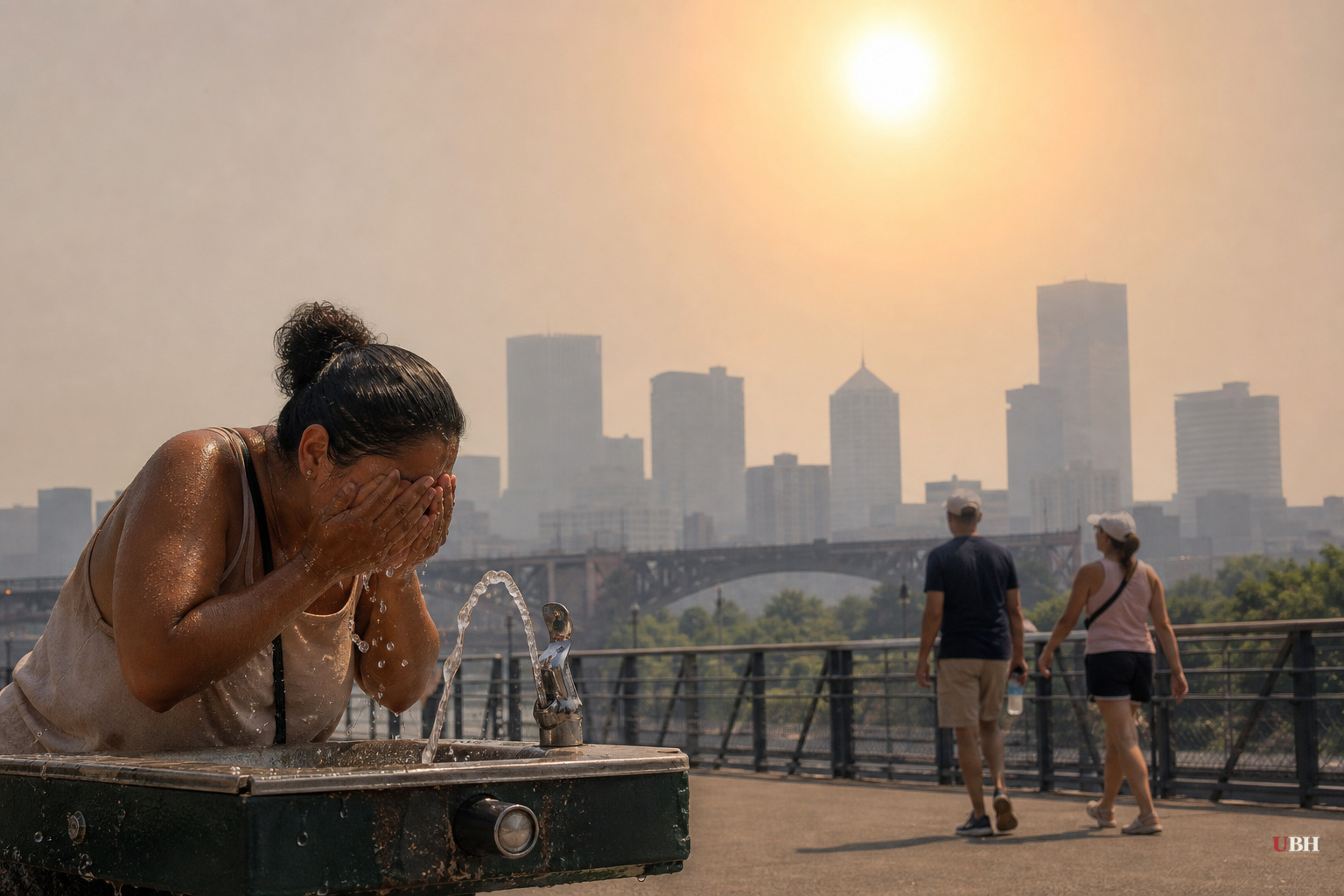
The Department of Energy issued an emergency order on July 26 giving grid operators in the Southwest Power Pool special authority to keep the lights on across 17 states, according to OKDiario. That's not a routine action. Order No. 202-26-37, invoked under Section 202(c) of the Federal Power Act, let SPP dispatch specific power plants and tap backup generators as a last resort if things got bad enough to hit an Energy Emergency Alert Level 3.
Things got close. SPP briefly hit that highest alert level in its western territory on July 20, though OKDiario reported no controlled blackouts were ordered. The Energy Information Administration recorded SPP demand hitting a record 57.9 gigawatts at 5 p.m. Central on July 27. DOE extended the order through Aug. 10, with a Conservative Operations Advisory running through midnight Aug. 11.
An emergency order and a blackout are not the same thing. SPP has three alert levels, and hitting the top one is a warning system working as designed, not proof the grid failed. OKDiario is right to flag that a state appearing on the SPP coverage map doesn't mean every resident there was at risk. ERCOT, not SPP, handles roughly 90% of Texas's load, for instance. People should be skeptical of anyone claiming blackouts were imminent everywhere on that list. They weren't.
But grid operators needed extra tools because demand, forced plant outages, and unpredictable wind and solar output left almost no cushion. That's the DOE's own stated justification for issuing the order.
Wildfire smoke is now a grid problem, not just an air quality problem
Solar power depends on sunlight hitting panels. Wildfire smoke blocks it. Research from Colorado State University, cited by Insurance Journal's David Maguire, found that during California's 2020 fire season, daily solar radiation near major fires dropped 11% to 17% for standard panels, and up to 61% in heavily smoke-affected areas close to active fires.
That's a significant loss to a power source states like California, Texas, Arizona, and Nevada increasingly depend on. And it lands at the worst possible time: big fires typically burn during heat waves, which is exactly when air conditioning demand spikes. Less solar output, more demand, same afternoon.
Heat is already costing people money and canceling their plans
An AP-NORC poll of 1,165 adults conducted July 23-27, cited by The Cool Down, found roughly 8 in 10 Americans said heat affected their power bills this year, up from 69% in July 2024. The Midwest saw the sharpest jump: 44% reported a major electricity-cost impact, compared to 29% a year earlier.
It's not just bills. About 4 in 10 adults said heat altered travel or vacation plans, up from roughly a quarter in 2024. Daemien Williams, a 50-year-old bridge inspector in Cahokia Heights, Illinois, told the AP his utility costs "probably doubled in the last three or four years." Elisa Bracamonte, a 74-year-old retired nurse in Tucson, said she now wakes up earlier just to get a walk in before it's dangerous outside.
Jennifer Francis, a climate scientist at the Woodwell Climate Research Center who wasn't involved in the poll, said heat waves "have become more frequent, more intense, and more persistent in many parts of the globe, including our Western and Midwestern states."
Even as people feel the heat in their bills, the poll found only 66% of Americans say climate change is happening, down from 73% in September 2025, with 15% saying it isn't happening at all. Feeling the financial squeeze from hot weather and agreeing on its cause are clearly two different things.
Small businesses are eating the cost directly
CBS News reported that Canal Park Brewing Company in Duluth, Minnesota, had to close for a day and shut down patio service for three days in mid-July when its air conditioning failed during a heat dome. Restaurant manager Alex Niemi said the outage "threw off our whole month" during peak tourist season.
Jeremy Porter, physical risk research director at First Street, told CBS the bigger issue is business disruption: damaged infrastructure, power outages, and lower labor productivity. A First Street review of nearly 30,000 corporate financial disclosures found heat's impact on workforce productivity was the third most common climate-related business concern, behind two drought-related issues.
The demand side isn't slowing down
None of this accounts for the other force straining the grid: data centers. Microgrid Knowledge reported that U.S. power demand is projected to grow nearly 40% by 2035, and interconnection queues in some markets now run five to ten years. ERCOT recently switched to a "Batch Interconnect" process after requests for new power hookups hit over 474 gigawatts on a system that currently handles 95 GW, according to Microgrid Knowledge. Texas Governor Greg Abbott has pushed for tighter evaluation of those demand requests to protect grid stability, a fair concern given the state's memory of the deadly 2021 Winter Storm Uri blackouts.
BDO's analysis frames this as no longer just a utilities problem. It's becoming a supply-chain and enterprise-risk issue for any company that depends on reliable power, pushing some firms toward on-site generation instead of waiting years for a utility hookup.
The open question is whether the fixes—batch interconnection queues, emergency dispatch orders, behind-the-meter generation—can scale faster than demand is growing. SPP's emergency order has already been extended once. Whether it gets renewed again before the next heat wave will be a real-time test of how much slack is actually left in the system.
Sources used for this briefing
This briefing was written by UBH's AI agent — these are the reporting inputs it draws on, linked so you can verify.


