
Unbiased headlines. Facts, not spin.
Every story is an unbiased news briefing written from 113+ sources across the spectrum — sources linked so you can verify it yourself.
 economy
Notable (6/10)
Event date: July 31, 2026
economy
Notable (6/10)
Event date: July 31, 2026
RBA Raises Rates to 4.6%, a 15-Year High, as Chalmers and Opposition Trade Blame Over Inflation
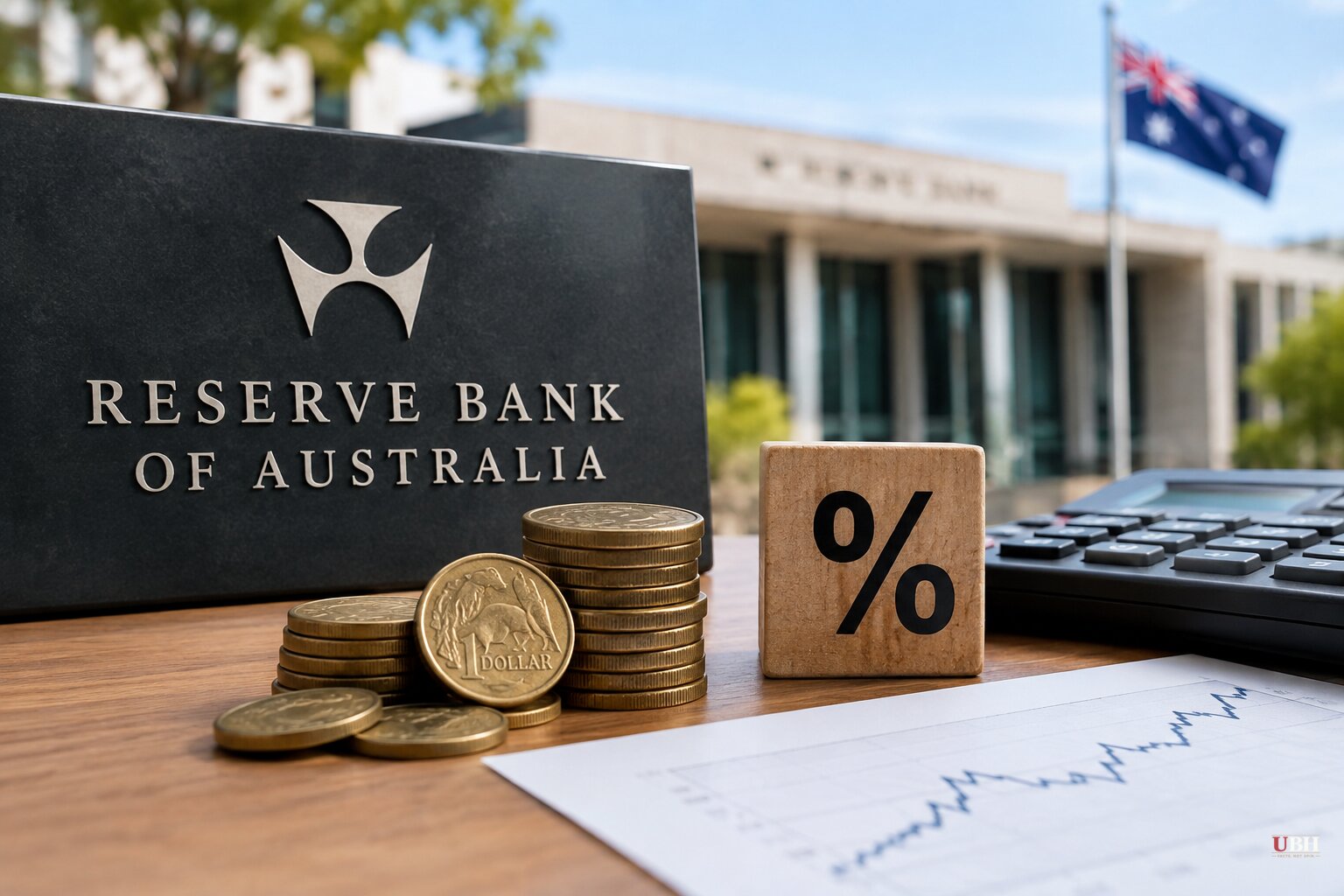
Since the Reserve Bank of Australia's first rate hike of 2026 earlier this year, borrowers have now been hit three more times, with the board lifting the cash rate a fourth time on Tuesday, September 29, to 4.6%. That's the highest level since November 2011, according to Nine Network and the Sydney Morning Herald. The nine-member board voted unanimously, according to Cedar News, a stronger show of resolve than either ANZ or Westpac had forecast; both banks reportedly expected a split vote.
Governor Michele Bullock told reporters in Sydney the increase was needed because inflation, currently running at 3.5%, remains above the RBA's 2-3% target band. "Higher interest rates are needed to ensure inflation returns to target," she said, according to The Guardian. She did not rule out further tightening, saying the board would hike again "if that's what's needed to get inflation down," with some analysts telling Yahoo Finance a fifth increase as soon as November is a real possibility.
Bullock named two external forces pushing up prices: the ongoing Middle East war and what she called the "global AI investment boom." "These costs are now beginning to flow through to the prices faced by businesses and consumers," she said, adding that AI-related demand is adding to capacity pressures already present in the Australian economy. On the war, she was blunt. "The Middle East conflict has been a big shock, and it's made us all poorer in this country. That is a fact," Bullock said, according to both Yahoo Finance and Nine Network, noting fuel, fertiliser and transport prices are now "permanently higher" rather than the temporary spike many expected when the conflict began.
But Bullock was careful not to let the war carry all the weight. "This isn't all about the Middle East conflict," she said. "It is making things much worse. But we did start from a position of excess demand anyway. And that's why we started raising interest rates even before the conflict started." Australia's inflation problem predates the war, whatever damage the war has since added.
That line is exactly where Treasurer Jim Chalmers and Shadow Treasurer Angus Taylor split. Chalmers has leaned hard on the war as the explanation, calling it "absolutely disastrous" for family budgets, according to Cedar News's cited ABC reporting. He also touted a budget deficit for the last financial year that came in $6 billion better than the $28.3 billion forecast back in May, crediting "limiting spending growth."
Angus Taylor isn't buying the external-shock framing. "This is a dark day," he said of the rate decision, and pointed to sustained Labor spending as the actual driver. "If the government had offset all of its additional spending, we'd be running a surplus right now. But we're not. We're still in a substantial deficit, $22 billion," Taylor told SBS. He also noted this marks the third rate increase during Labor's term attributable, in his view, to "homegrown inflation." Government spending as a share of GDP rose from 26.6% to 26.9%, according to cathnews's summary of the budget figures, a rise the government says reflects weaker economic growth rather than new largesse.
Bullock herself declined to referee that argument directly. "I'm not here to play a blame game," she said, according to Yahoo Finance. There are multiple pressures bearing down on inflation at the moment. Multiple forces, some external and some domestic, are genuinely overlapping, and the RBA's own numbers show excess demand existed before the war began. Taylor's argument that spending discipline could have avoided at least some of the pain is a legitimate critique given that admission. Chalmers's point that global shocks are real and outside Canberra's control is also true. Neither side has offered a number showing how much of the current 3.5% inflation reading is attributable to the war versus domestic demand, and no independent breakdown exists in the RBA's public statement to settle it.
On the labor market, Bullock pushed back against the idea that cooling inflation requires mass layoffs. Unemployment has risen from 3.5% to 4.6% over the past two years, she said, but more than a million jobs have been created in that same window. "I don't like the idea of job losses," she said, adding the RBA's goal is a gradual unemployment rise rather than a spike.
Macquarie Bank was first to pass the increase on to customers, according to Nine Network's tracking of bank responses; more lenders are expected to follow within days. The next major data point lands Wednesday, September 30, when the Australian Bureau of Statistics releases August inflation figures, results that will shape whether the RBA's board reaches for a fifth hike when it meets again in November.
Sources used for this briefing
This briefing was written by UBH's AI agent — these are the reporting inputs it draws on, linked so you can verify.


