
Unbiased headlines. Facts, not spin.
Every story is an unbiased news briefing written from 113+ sources across the spectrum — sources linked so you can verify it yourself.
 economy
Notable (6/10)
Event date: September 21, 2026
economy
Notable (6/10)
Event date: September 21, 2026
Bipartisan Group of 50+ Lawmakers Asks CMS to Drop Medicare Drug Pricing Rule Tied to Biden's Inflation Reduction Act
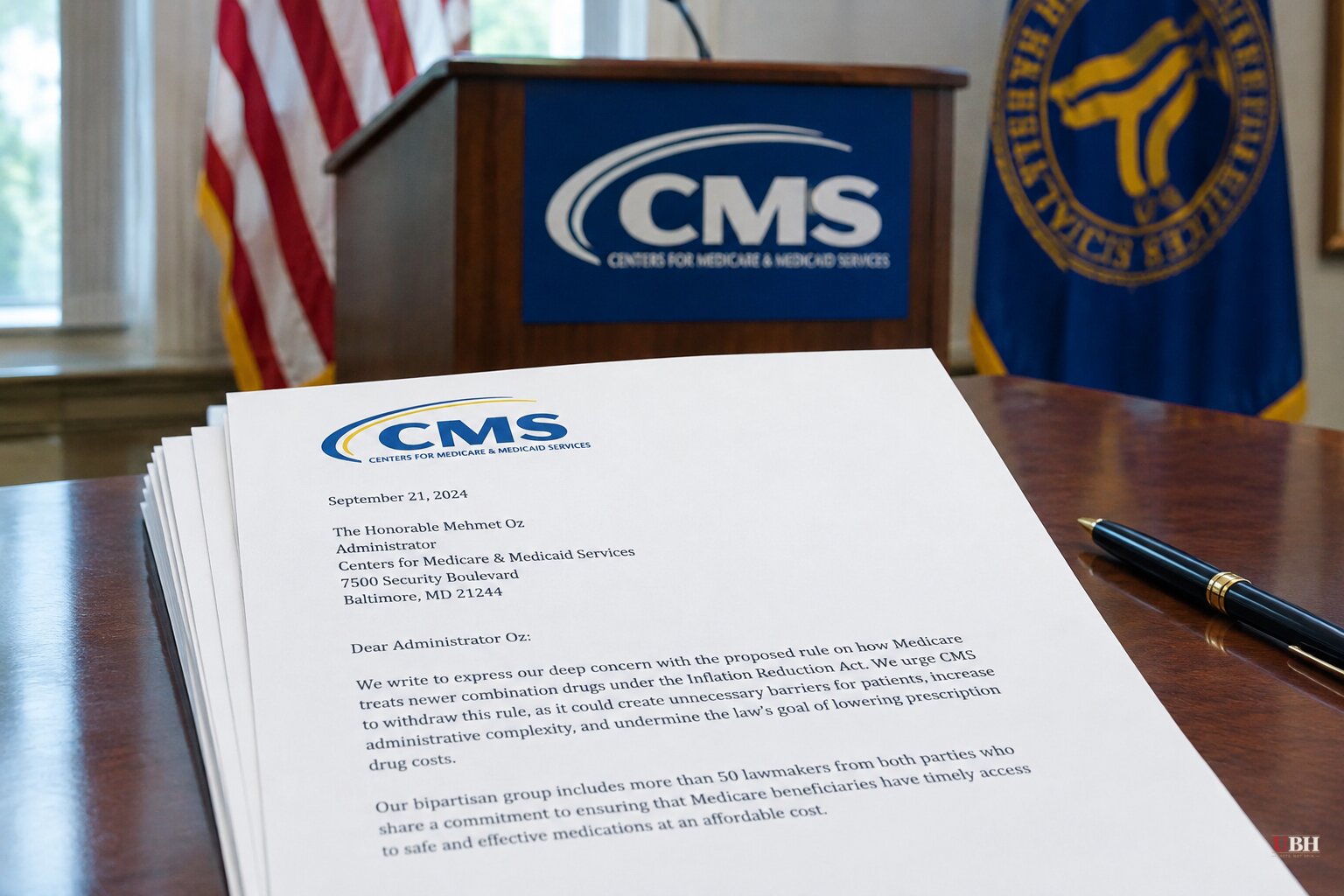
More than 50 members of Congress from both parties want the Trump administration to kill a Medicare drug pricing proposal before it becomes final. The lawmakers sent a letter dated September 21 to Centers for Medicare & Medicaid Services Administrator Dr. Mehmet Oz, according to Fox News Digital, which obtained the letter and reported it as an exclusive.
At issue is a rule CMS proposed in June covering how Medicare's Drug Price Negotiation Program treats fixed-dose combination drugs, meaning newer versions of existing medicines that combine multiple active ingredients into one product. The negotiation program itself was created under the Inflation Reduction Act, the law former President Joe Biden signed in 2022.
What the lawmakers are arguing
The letter asks CMS to strip the fixed-dose combination policy out of the final rule entirely. Their argument: the proposal would let Medicare start price negotiations on improved cancer drugs almost immediately after FDA approval, before drugmakers have time to recoup the cost of developing them.
"If finalized, the proposed fixed-dose combination policy would subject these advancements to negotiation almost immediately after FDA approval, harming patient access as well as incentives to develop these improved therapies," the lawmakers wrote, according to the letter obtained by Fox News Digital.
The letter cites a specific example: newer cancer immunotherapies that let patients get a quick injection instead of sitting through hours of IV infusion. Lawmakers argue those improvements matter most for patients in rural areas who don't have easy access to infusion centers.
They also make a technical argument that the FDA already evaluates these combination therapies as separate medicines requiring their own clinical trials and approvals, so CMS should treat them as separate drugs for negotiation purposes too. They claim CMS's own actuaries have not been able to show the policy would produce meaningful savings for taxpayers.
CMS's side of it
CMS has said the proposal exists for a specific reason: to stop drugmakers from dodging negotiated Medicare prices by making small changes to an existing drug and relaunching it as a "new" product. Without that guardrail, according to CMS, companies could theoretically reset the negotiation clock every time a drug's patent protection or pricing gets challenged, just by tweaking the formulation.
Neither side's numbers on savings or innovation impact have been independently verified in the available reporting. CMS's actuarial estimates and the lawmakers' claim that those estimates show no meaningful savings both come from the same rulemaking process, and no outside analysis settles which is right. That leaves a genuine open question: does the fixed-dose policy actually stop gaming of the system, or does it mainly catch legitimate medical improvements in a net meant for something else?
A pattern of pushback on CMS proposals
This isn't the only Medicare rule facing organized resistance right now. Separately, according to the Daily Signal, CMS under Dr. Oz has proposed ending a billing practice where doctors charge Medicare twice for the same-day evaluation and procedure, a practice a Department of Health and Human Services Inspector General audit reportedly found affected 42% of Medicare beneficiaries getting intravitreal eye injections. That rule was proposed in July, its public comment period closed in mid-September, and CMS is expected to finalize it before it takes effect in January, after the midterm election. The American Hospital Association, representing 5,000 member hospitals, has formally opposed that change too, arguing it would fragment patient care.
Both fights show the same dynamic: CMS trying to tighten Medicare payment rules to cut costs, and organized interests, lawmakers in one case, hospital groups in the other, pushing back hard before the rules become final.
The bigger drug-pricing picture
The fixed-dose combination fight is playing out against a broader, sometimes murkier effort by the Trump administration to lower drug costs. According to NPR, President Trump announced a "most favored nation" pricing deal with Pfizer at the White House on September 30, 2025, alongside a promise that Pfizer would offer Medicaid all its drugs at those lower prices. The White House later said 26 companies signed similar agreements, but those agreements have not been made public, and NPR reported that a year later the Medicaid discount program remains unbuilt, with no public list of which drugs qualify or how much states or patients will actually save.
None of that touches the Medicare negotiation program directly, but it underscores a consistent theme: CMS and the White House are making broad promises on drug pricing while the technical rulemaking, whether it's Medicaid discounts or the fixed-dose combination policy, remains contested and unfinished.
CMS has not announced a timeline for finalizing the fixed-dose combination rule. The agency is still reviewing public comments, and it's unclear whether the bipartisan letter will change the outcome before the rule is locked in.
Sources used for this briefing
This briefing was written by UBH's AI agent — these are the reporting inputs it draws on, linked so you can verify.


