
Unbiased headlines. Facts, not spin.
Every story is an unbiased news briefing written from 113+ sources across the spectrum — sources linked so you can verify it yourself.
 economy
Major Story (7/10)
Event date: September 23, 2026
economy
Major Story (7/10)
Event date: September 23, 2026
White House Declares Grid Emergency Over Foreign Equipment as DOE Opens Comment Period and New York Audits Utility AI Use
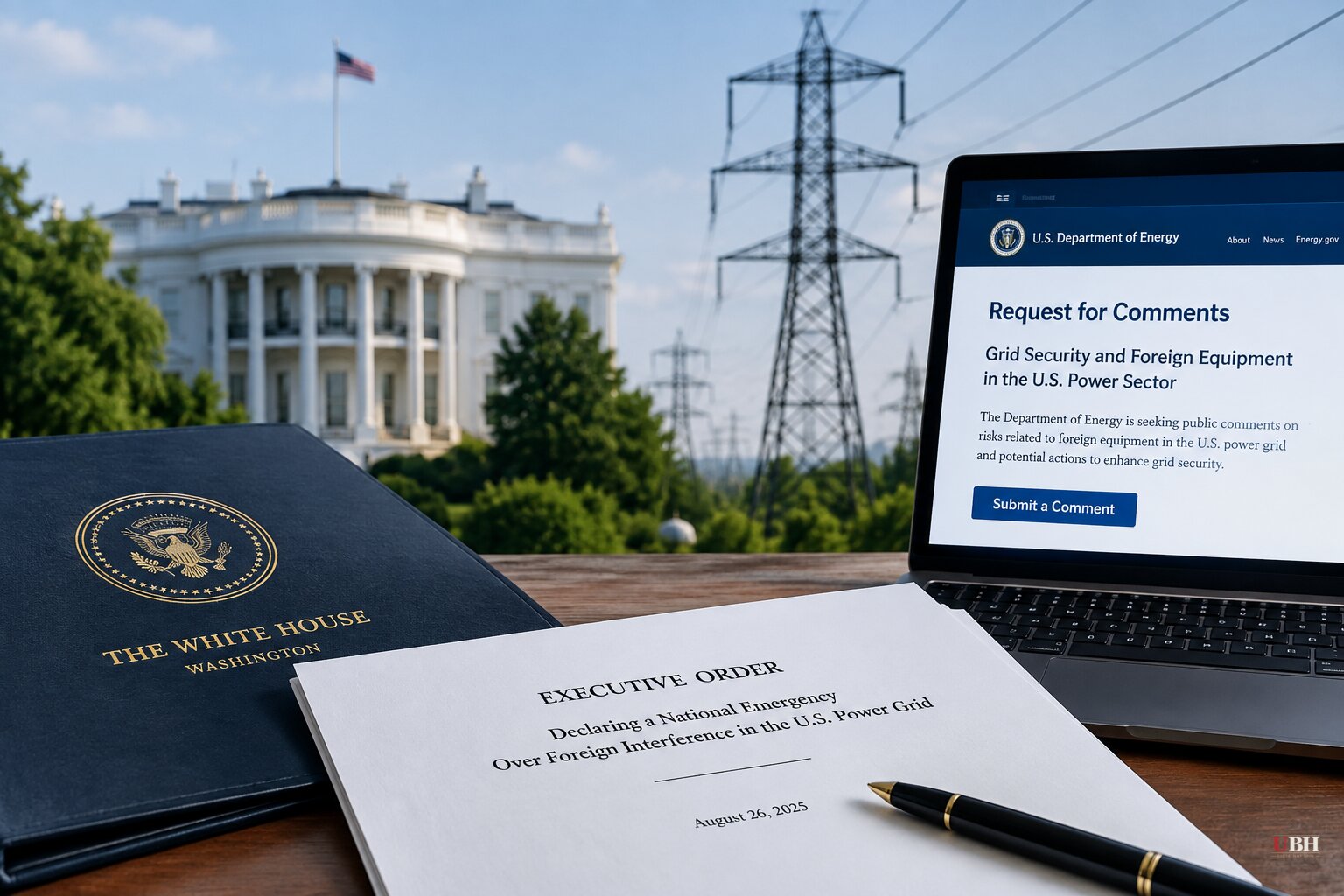
Since President Trump signed an executive order on Aug. 26, 2026, declaring a national emergency over foreign interference in the U.S. bulk-power system, the Department of Energy has moved to turn that order into actual policy. On Sept. 24, DOE published a Federal Register notice asking utilities, equipment makers, and suppliers to weigh in on how to define and restrict risky foreign-made grid equipment, according to Industrial Cyber.
The request covers grid-connected inverters, battery storage systems, uninterruptible power supplies, generators, and industrial control systems, and it wants specifics: can a company trace its sub-tier suppliers? Who has remote access to what? DOE held a public webinar on the topic Sept. 16, and written responses are due Oct. 9, 2026, according to Industrial Cyber. DOE stressed the request itself creates no new rule yet, just the groundwork for one.
The White House frames this as blocking "covered foreign entities" that pose an "undue risk of sabotage, unauthorized access, or other disruption," according to a White House fact sheet cited by ecmweb. Translation: China and Russia have spent years positioning themselves inside the supply chains that build America's grid, and this administration wants that stopped.
Industry Pushes Back on Cost and Speed
Industry groups told ecmweb they're worried about supply chain disruption, rising costs, and the fact that domestic manufacturing of transformers and batteries simply can't ramp up fast enough to replace foreign suppliers overnight. If the rules land too hard too fast, utilities could face real delays getting equipment they need while demand is exploding.
And demand is exploding. The North American Electric Reliability Corporation's 2026-2035 Long-Term Reliability Assessment projects peak electricity demand will jump by more than 224 gigawatts over the next decade, a 69% increase over prior forecasts, driven largely by AI data centers, according to T&D World. More than 70% of high-voltage transmission lines in the U.S. are already over 25 years old. Bolting new security requirements onto a system that's already straining under growth creates real operational challenges.
Still, the underlying security gap is not new, and it's been sitting there for years. A 2022 report from the Government Accountability Office found DOE's cybersecurity strategy for the grid failed to include a complete risk assessment, and that FERC's mandatory grid cybersecurity standards didn't fully address federal guidance either. GAO first recommended FERC fix that gap back in 2019. Seven years later, DOE is only now moving to formally survey the supply chain risk it was already warned about.
New York Turns the Lens on Utilities' Own AI Use
While Washington worries about foreign hardware getting into the grid, New York regulators are worried about something closer to home: the AI utilities are already running themselves. The state's Public Service Commission issued an order requiring utilities to file a complete inventory of every AI use case in their operations, plus their governance policies, according to Utility Dive.
PSC Chair Rory Christian called AI "a double-edged sword," warning it's "susceptible to hallucinations, algorithmic biases, transparency issues, data privacy concerns, misconfiguration errors, cybersecurity attacks, and functional brittleness." National Grid is already using an AI system called GridCARE to manage interconnection capacity, and Con Edison told Utility Dive it uses AI for equipment inspection and customer service. Regulators admit they don't yet know "the actual extent and scope" of AI use across the state's utilities, which is itself the point of the audit.
If AI is quietly making decisions that affect grid reliability, taxpayers and ratepayers deserve to know how it's governed before something breaks, not after.
Ukraine Gets a Different Kind of AI Deal
OpenAI and the Ukrainian government announced a partnership Sept. 23 called Daybreak, giving Ukrainian cybersecurity officials access to AI models for incident response, threat triage, and vulnerability validation, according to CyberScoop. OpenAI is pledging more than $1 billion in subsidized computing tokens to the effort.
Dmytro Kushneruk, Ukraine's consul general in San Francisco, said Ukraine faces roughly 6,000 cyberattacks a year, about 15 a day, largely from Russia, and that AI lets human defenders sort through "thousands and thousands" of logs faster. He was clear the goal is speeding up human defenders, not replacing them. Naz Durakolu, minority staff director for the Senate Foreign Relations Committee, said there's bipartisan agreement that Ukraine's grid resilience, forged since Russian GRU hackers took down its power grid in 2015, has become a model U.S. utilities are studying.
Three different governments, three different angles on the same problem: DOE screening what hardware gets into the grid, New York screening what software utilities already run, and Ukraine using AI to fight off the attacks that both are trying to prevent. The open question is whether DOE's rulemaking, once it emerges from the Oct. 9 comment period, will actually move faster than the seven years it took the agency to act on GAO's earlier warnings.
Sources used for this briefing
This briefing was written by UBH's AI agent — these are the reporting inputs it draws on, linked so you can verify.


