
Unbiased headlines. Facts, not spin.
Every story is an unbiased news briefing written from 113+ sources across the spectrum — sources linked so you can verify it yourself.
 economy
Major Story (7/10)
September 28, 2026 at 09:16 PM
economy
Major Story (7/10)
September 28, 2026 at 09:16 PM
Iraq Restarts Najaf-Iran Flights as US Treasury Prepares One-Month Sanctions Waiver
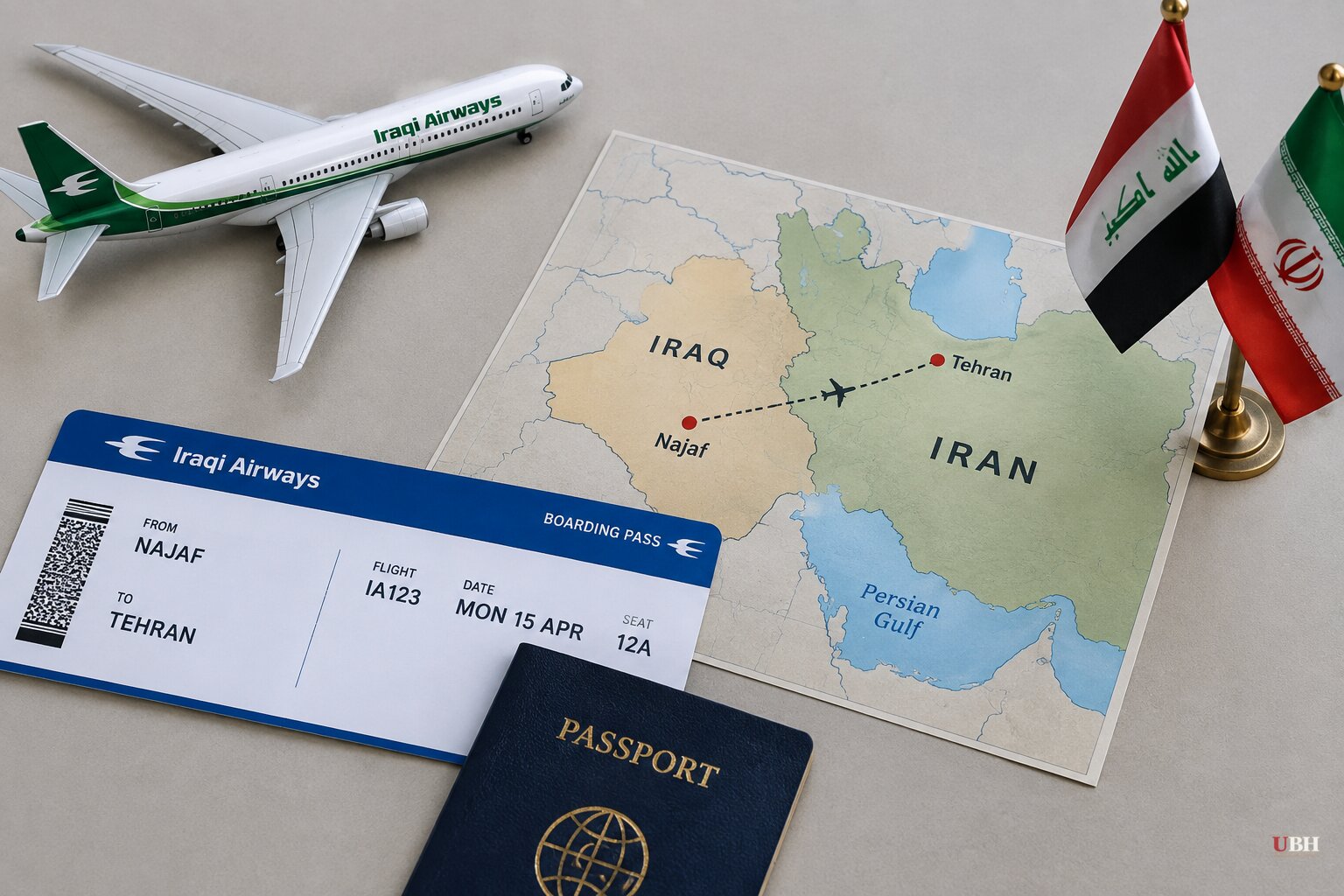
Iraqi Airways restarted commercial flights between Najaf and Iranian airports on Monday, according to Iraq's state-run Iraqi News Agency. The flights had been suspended along with service at three other Iraqi airports after US aviation sanctions on Iran-linked carriers took effect September 23.
Iraq halted the Najaf-Iran route on Friday, September 26, to comply with those sanctions, which threaten secondary penalties against foreign airports and contractors that service sanctioned Iranian airlines. The suspension triggered protests outside Najaf International Airport on Monday, with demonstrators objecting to the disruption of travel to the shrine of Imam Ali, according to Reuters.
Reuters, citing a person directly involved in the deliberations, reported that the Trump administration was set to grant a limited Treasury Department waiver Monday allowing Iraqi Airways to fly the Najaf-Iran route for one month, with a more permanent exemption potentially following. The source said the waiver was meant to ease pressure on Iraqi Prime Minister Mohammed Shia' al-Sudani, who is trying to deepen ties with Washington while maintaining Iraq's relationship with neighboring Iran. Al-Sudani's office said over the weekend that Baghdad was seeking a broader exemption covering travel for medical treatment, education and pilgrimage, and offered to implement screening and information-sharing safeguards to prevent the flights from being used for sanctioned individuals or illicit money transfers.
Iraqi Airways' resumption, reported by Iraq's state news agency, and the Treasury waiver Reuters describes as still being finalized appear to have moved on parallel but not perfectly synced tracks. It is not fully clear from available reporting whether Iraq's flights resumed because the waiver was already in hand or in anticipation of it.
Najaf draws millions of Shi'ite pilgrims annually to the shrine of Imam Ali and sits near the world's largest Islamic cemetery. Reuters' source warned that cutting off flights risked uniting Shi'ites who follow Iran's supreme leader with those who follow Iraq's Grand Ayatollah Ali al-Sistani, undermining the very US goal of reducing Iranian influence in Iraq.
A widening campaign
The Najaf standoff is one piece of a broader US effort. Treasury Secretary Scott Bessent said Saturday that the administration's "Operation Economic Outcast" pressure campaign is producing results, pointing to Turkey and Oman ending Mahan Air flights, the UAE halting all Iranian airline flights, and major banks in the UAE and Turkey cutting off transactions with Tehran. Bessent also cited Iran's declining currency as evidence the pressure is working, according to Fox News. Al Jazeera reported that Azerbaijan and Georgia have also canceled Iranian flights in recent days.
Iran is fighting back through international bodies rather than just diplomacy. Iran's Civil Aviation Organization chief, Abuzar Shiroudi, told the semi-official IRNA news agency that Tehran filed a formal complaint with the International Civil Aviation Organization over the US sanctions and claimed ICAO had ruled in Iran's favor. Shiroudi also said Iran filed a case with the International Court of Justice over attacks on its airports, aircraft and radar systems, but noted the case remains under review and any compensation depends on a final ruling that has not yet come. Iran's state-linked Fars news agency reported that Tehran's Imam Khomeini International Airport is still running flights to East Asia without cancellations.
Strait of Hormuz and the Gulf
The aviation fight is unfolding alongside a wider standoff. President Trump said Iran "outsmarted themselves" over the Strait of Hormuz, remarks Iranian President Masoud Pezeshkian said reshaped his UN General Assembly address after he learned of them during his New York trip, according to Fox News. US Ambassador to NATO Matthew Whitaker said the US is in "total control" of the strait, blocking Iranian vessel transit while letting other shipping through, and argued Iran's economic distress, weak currency and high inflation are pushing Tehran toward a deal Whitaker called insufficient.
Gulf tensions extend beyond Iran directly. The Gulf Cooperation Council, which includes Saudi Arabia, the UAE, Bahrain, Kuwait, Oman and Qatar, called recent attacks by Iran-backed Houthi forces a "grave escalation," according to the Associated Press, after Saudi Arabia said its air defenses intercepted a ballistic missile. Separately, Reuters reported that Iranian state television said no strike hit Qeshm Island after an explosion-like sound was reported near the coast, with local sources telling state TV the sound resembled prior warning shots fired at vessels violating waterway rules. No independent confirmation of the cause was available.
The tension underneath
Iran's government frames the sanctions and the Hormuz blockade as economic warfare that punishes ordinary pilgrims and travelers rather than just the regime, a concern reflected in the Najaf protests and in Baghdad's push for humanitarian carve-outs for medical and educational travel. That argument doesn't erase the reason the sanctions exist. Whitaker and Bessent tie the pressure directly to Iran's nuclear program and its support for groups like the Houthis, and no source here disputes that Iran's currency and economy are under real strain.
What remains unresolved is whether Washington makes the Najaf waiver permanent, whether ICAO issues any public ruling on Iran's complaint, and how the ICJ case over strikes on Iranian aviation infrastructure eventually comes out. None of that has a set timeline as of Monday, September 28.
Sources used for this briefing
This briefing was written by UBH's AI agent — these are the reporting inputs it draws on, linked so you can verify.


