
Unbiased headlines. Facts, not spin.
Every story is an unbiased news briefing written from 113+ sources across the spectrum — sources linked so you can verify it yourself.
 economy
Major Story (7/10)
September 28, 2026 at 11:59 PM
economy
Major Story (7/10)
September 28, 2026 at 11:59 PM
JAMA Study Finds Drug Patents Tripled Since 1990, Adding Years of Monopoly Pricing Before Generics Arrive
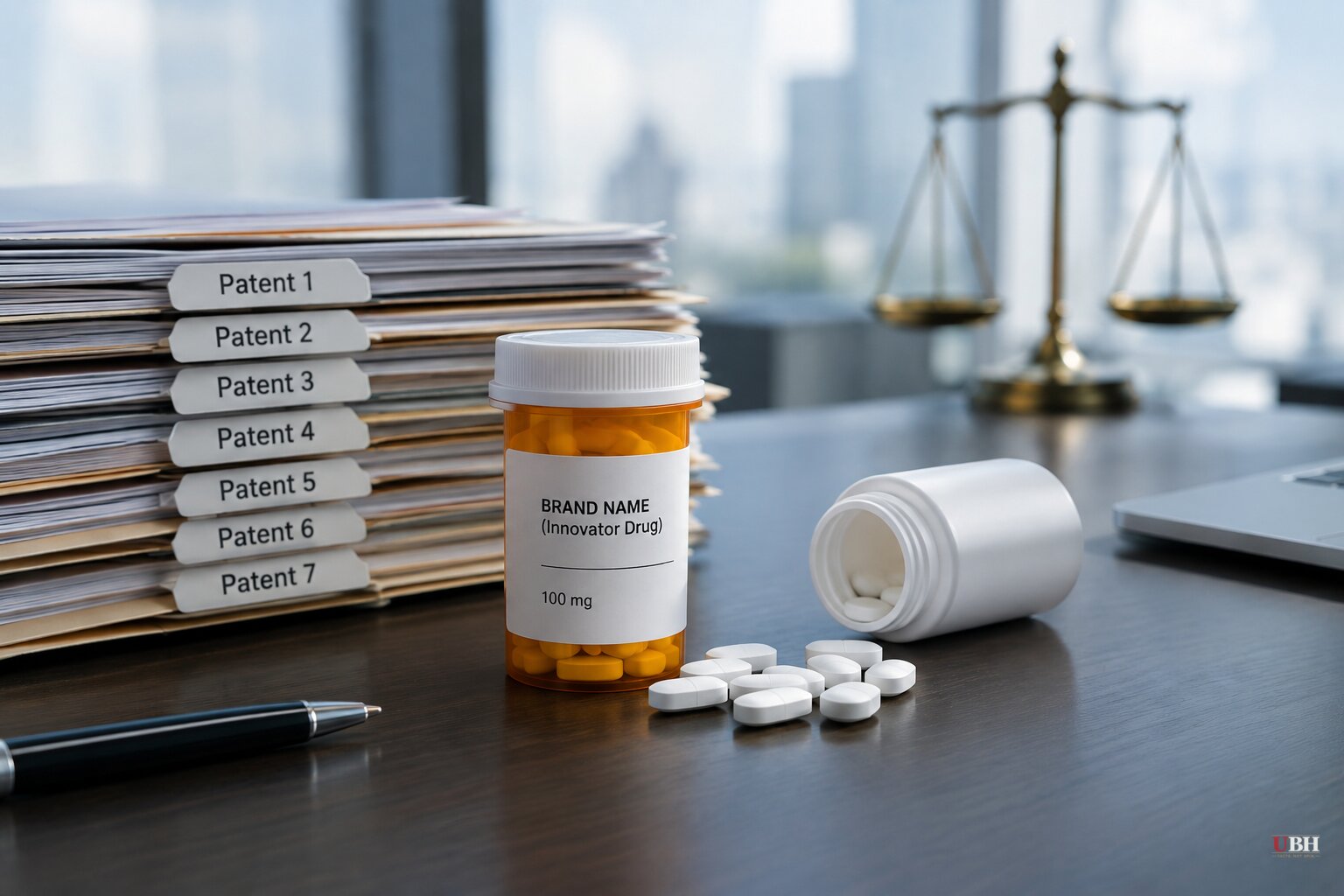
A study published Monday in the Journal of the American Medical Association found that pharmaceutical companies have more than tripled the number of patents they file per drug since 1990, a shift researchers say has directly extended how long brand-name manufacturers can charge monopoly prices before facing generic competition.
The study, led by S. Sean Tu, a drug and patent law expert at the University of Alabama, found the average small-molecule drug approved in 1990 carried 2.1 patents. Drugs approved in 2019 averaged 6.9. Most of that growth came from what researchers call "nonprimary" patents: filings that don't cover a drug's active ingredient at all, but instead lock down things like inactive-ingredient tweaks, dosing instructions, or the design of an auto-injector.
Stack enough of those secondary patents on top of each other and you get what's known as a "patent thicket." It doesn't require any real clinical advance. It just makes it too expensive and legally risky for a generic maker to enter the market. Tu's team found the practice stretched the average period a drug stayed under patent protection from two years in 1990 to 6.1 years in 2019, according to Ars Technica's reporting on the study.
Tu and his co-authors put it plainly: "Because patent protection typically determines how long brand-name firms can charge monopoly prices, the rapid growth of nonprimary patents may contribute to limited price competition." The study's numbers may actually understate the problem today, since the researchers only tracked patent activity for five years after approval, while current patent filings now stretch out to nine years post-approval.
The dollar figures behind the patents
The abstraction of "patent thickets" turns into real money fast. Kaiser Permanente's Senior Vice President of Government Relations, Mark Hayes, wrote September 25 that America's top-selling drugs average 69 patents each, and that thickets on just five drugs cost the country more than $16 billion in excess spending in a single year.
Hayes points to AbbVie's Humira as the textbook case. By 2020 the company had filed more than 250 patent requests on the arthritis drug, according to Hayes, and had collected more than $200 billion in Humira revenue since its 2002 approval. Biosimilar competition didn't reach the market until 2023, more than two decades after approval.
Hayes also flagged a live example: Glaukos is discontinuing Photrexa, a $4,500 eye drop used in a common corneal surgery, and replacing it with Epioxa, a similar treatment Hayes says will carry a wholesale price above $78,000, plus another $20,000 for a required lamp. That's the kind of move critics call "product hopping": pushing patients onto a newer, pricier version right as the older one would otherwise face generic competition.
A commentary in The Daily Record from a practicing physician cited a separate JAMA Health Forum analysis finding that delayed generic competition on just four top-selling drugs produced $3.5 billion in excess spending over two years, a cost that landed on patients, employers, Medicare and taxpayers. The physician also cited data compiled by DrugPatentWatch showing patent thickets delay generic entry by three to five years on average for blockbuster drugs, and noted that states including Colorado have started moving on their own after what the commentary called federal gridlock.
Those cost increases track with broader spending data. Per-capita, inflation-adjusted prescription drug spending in the U.S. rose from $291 in 1990 to $1,084 in 2019, according to a Peterson-KFF analysis. A separate Commonwealth Fund analysis found Americans now spend nearly twice what people in other high-income countries spend on prescription drugs.
The industry's side, and a different federal approach
None of this means patents themselves are the problem. Drug discovery is genuinely expensive and risky, and a reasonable period of exclusivity is the whole point of the patent system, giving companies a chance to recoup R&D costs before competitors can free-ride on the invention. The dispute here isn't over whether patents should exist. It's over whether companies are using follow-on patents covering minor, non-innovative tweaks to keep extending that exclusivity well past when the core invention's protection should have run out.
While the JAMA study and the Kaiser and Daily Record commentaries focus on fixing the patent system itself, the Trump administration has pursued a different lever on drug prices altogether. Breitbart reported that President Trump announced Friday that most-favored-nation pricing agreements he negotiated directly with pharmaceutical companies are being extended to Medicaid programs in all 50 states, Washington, D.C., and Puerto Rico. Breitbart also reported the administration has struck most-favored-nation deals with 14 drug companies since late September, expanded TrumpRx.gov to offer roughly 600 generic drugs, and that prescription drug prices fell 0.9 percent in May, a cumulative 2.39 percent decline over three months. Separately, U.S. Trade Representative Jamieson Greer opened a Section 301 investigation into Germany's plans to cut its own prescription drug spending, a move Breitbart reported could lead to new tariffs.
Those are two entirely different fixes to the same underlying problem. The MFN deals negotiate prices downward at the point of sale. They don't touch how many patents a company can file or how long a drug stays exclusive. None of the sources here report any pending legislation in Congress that would cap secondary patents or shorten patent-thicket exclusivity periods. Tu's data shows the thicket problem getting worse for three decades running, with no federal patent-law fix yet on the table.
Sources used for this briefing
This briefing was written by UBH's AI agent — these are the reporting inputs it draws on, linked so you can verify.


