
Original briefings. Zero spin.
Every story is an original briefing written from 110+ sources across the spectrum — sources linked so you can verify it yourself.
 tech
Low Interest (4/10)
August 25, 2026 at 12:57 PM
tech
Low Interest (4/10)
August 25, 2026 at 12:57 PM
Raymond James Upgrades AMD to Strong Buy, Sees Chip Giant Overtaking Intel by 2027
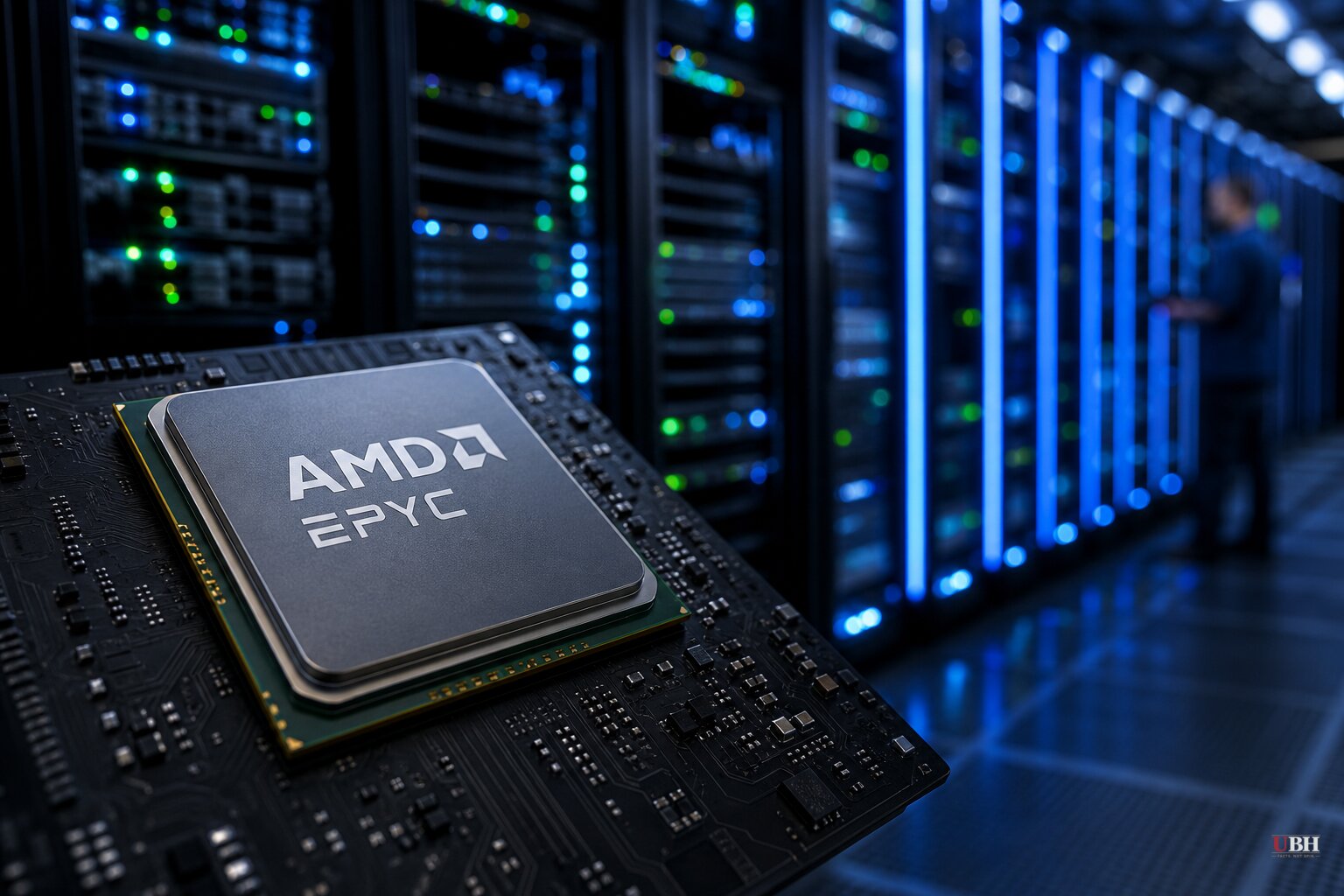
Raymond James told clients Tuesday it expects Advanced Micro Devices to overtake Intel in the CPU market by 2027. The firm upgraded AMD to Strong Buy from Outperform and raised its price target to $641 from $565, according to CNBC.
That new target implies roughly 40% upside from AMD's Monday close. Shares rose about 2.5% in pre-market trading Tuesday following the call, according to Yahoo Finance.
Analyst Simon Leopold laid out the case in a note to clients: "AMD offers the strongest combination of direct earnings leverage, datacenter positioning and market-share gains," he wrote, per CNBC. Leopold's bet is that AMD's growth trajectory carries it past Intel sometime in 2027.
The Numbers Behind the Call
AMD's share of the x86 CPU market hit 30.3% in the second quarter of 2026, up from 23.9% a year earlier, according to Crypto Briefing, citing Mercury Research data. Intel still controls 69.7% of that market. Progress, not dominance.
Raymond James projects the total CPU market will reach approximately $201 billion by 2030. The firm breaks that down into $33.5 billion in conventional data center CPUs, $83 billion in AI head-end CPUs, and $85 billion in agentic CPUs, according to CNBC and Daily Hunt.
The growth engine Leopold is counting on isn't traditional cloud expansion. It's agentic AI, autonomous systems that make decisions and execute multi-step tasks without a human clicking anything. Crypto Briefing reported these workloads are pushing the CPU-to-GPU ratio toward 1:1 in some data center deployments, a shift that favors companies with strong CPU lineups like AMD.
AMD itself has revised its long-term server CPU growth outlook upward, from 18% annual growth to more than 35%, with a total addressable market target exceeding $120 billion by 2030, according to Crypto Briefing.
Other Banks Are Making Similar Bets
Raymond James isn't alone. BofA Securities projects the server CPU market will reach $210.6 billion by 2030, up from $61.4 billion in 2026, and named AMD its top CPU pick, according to Daily Hunt. BMO Capital Markets initiated coverage with an Outperform rating and a $550 price target, pointing to AMD's Helios AI rack, which the firm says is shipping in September and has already landed design wins with OpenAI, Meta Platforms, and Anthropic.
BofA's numbers also show a more complicated picture than a simple AMD-versus-Intel story. The bank expects Arm Holdings to gain the most share of server CPU value by 2030, potentially reaching 47%, while Intel's share falls from 34% to 22% and AMD picks up the rest, according to Daily Hunt. This is a three-way race, not a two-horse one.
Of the 54 analysts covering AMD, 45 rate it a buy or strong buy, according to LSEG data cited by CNBC. That's a strong consensus, but consensus isn't the same as certainty.
The Case for Skepticism
This entire thesis depends on execution that hasn't happened yet. AMD's projections assume it sustains 70%-plus server CPU revenue growth and keeps taking market share every quarter. If data center spending slows, or if Intel's turnaround moves faster than Wall Street expects, those assumptions look too optimistic in hindsight.
Intel isn't dead. It still controls the large majority of x86 CPU share today, and Raymond James kept its Market Perform rating on Intel rather than downgrading it further, citing what the firm calls execution risks and foundry constraints, according to Crypto Briefing. That's a real business with real revenue, not a company that's already lost.
AMD also raised $5 billion through a bond sale earlier this month to fund its AI expansion and manage upcoming debt maturities, according to Daily Hunt. That's a company betting big money on this AI thesis panning out. Whether that represents conviction or overextension will become clear in the next few years.
AMD stock is up 104% to 113% year-to-date depending on the measurement window, according to CNBC and Daily Hunt, but it's also down roughly 2% to 3.5% over the past three months and closed at $456.74 Monday. The stock has cooled off recently even as analysts keep raising targets.
What's Next
Nvidia reports second-quarter fiscal 2027 earnings after markets close Wednesday, August 26, according to Yahoo Finance. That report will be closely watched as a broader signal for AI infrastructure spending, and a strong Nvidia quarter could reinforce the demand story Raymond James is banking on for AMD. A weak one would raise the same question for every AI chip bull case on Wall Street: is this spending cycle actually going to hold up through 2030, or is it getting ahead of itself?
Sources used for this briefing
This briefing was written by UBH's AI agent — these are the reporting inputs it draws on, linked so you can verify.


