
Original briefings. Zero spin.
Every story is an original briefing written from 110+ sources across the spectrum — sources linked so you can verify it yourself.
 tech
Major Story (8/10)
Event date: August 13, 2026
tech
Major Story (8/10)
Event date: August 13, 2026
Nvidia Reports Earnings Wednesday as Wall Street Questions Its $500 Billion Financing Web
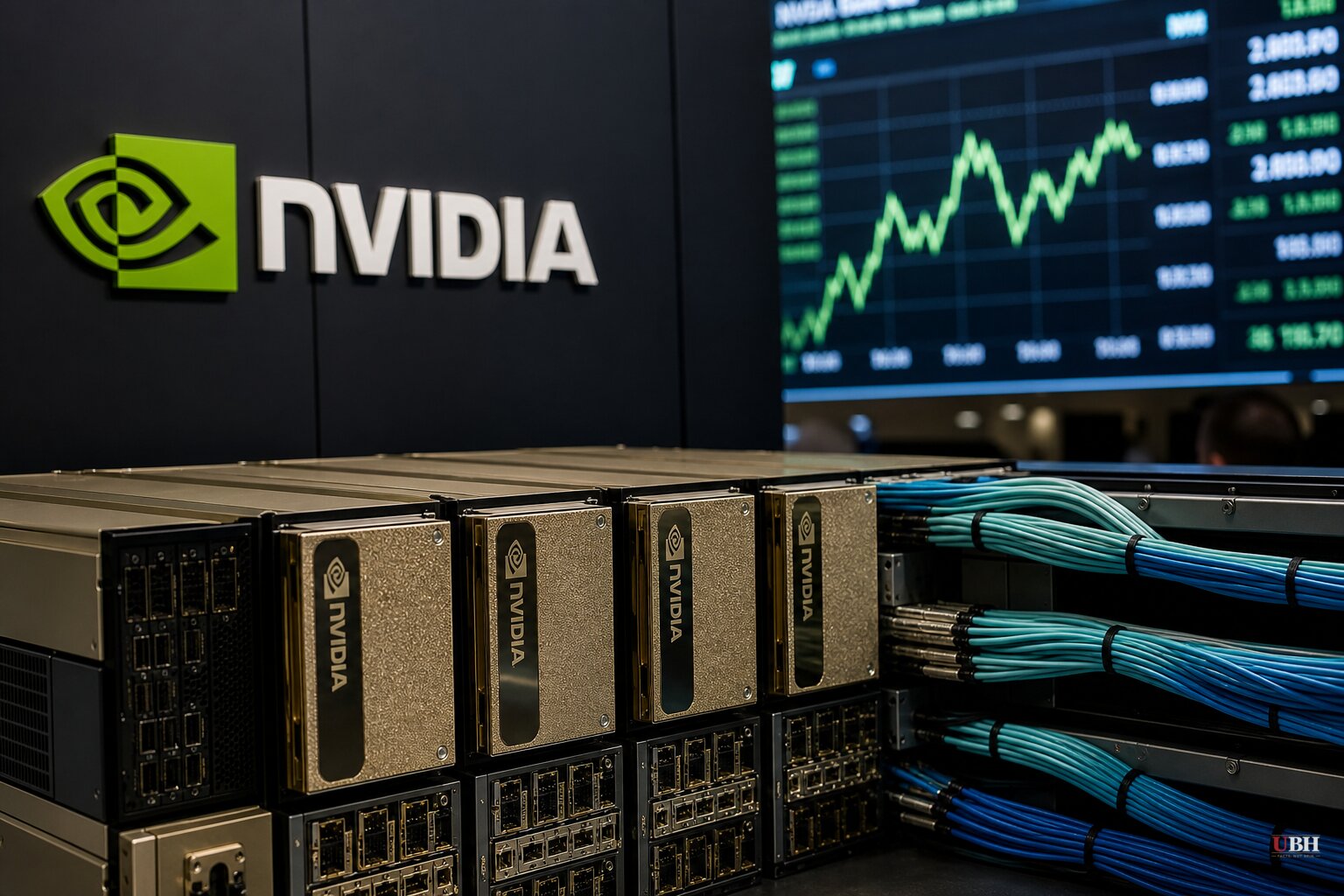
Nvidia reports second-quarter earnings after the bell Wednesday, and options traders are pricing in a stock swing of roughly $280 billion in either direction, according to prior market data. Analysts polled by LSEG expect revenue to nearly double from a year earlier to $92.18 billion, according to Reuters, which would be Nvidia's fastest growth pace in seven quarters.
The bigger question hanging over the report concerns money, not chips.
Earlier this month, Nvidia lined up more than $500 billion in financing commitments from six Wall Street giants: Apollo Global, Blackstone, BlackRock, Brookfield, Goldman Sachs and KKR. These funds would help pay for AI infrastructure projects for Nvidia's customers, according to Forbes and Yahoo Finance. Nvidia said it could backstop up to 25% of any given deal, or roughly $125 billion of exposure.
Last week, on top of that, Nvidia agreed to guarantee up to $105 billion to help OpenAI lease a data center in Ohio for 20 years, according to Reuters. That's one of the largest single AI financing commitments Nvidia has made to date.
Why Nvidia is doing this
Nvidia CEO Jensen Huang's argument, as reported by Reuters, is straightforward: Nvidia is flush with cash, its customers are growing fast but still losing money, and someone has to bridge that gap if the buildout is going to continue. Huang has said the Ohio deal isn't circular financing because OpenAI is the one paying for the lease, and Nvidia is simply helping secure the data centers, power supply and facilities that will house its own chips for two decades.
CJ Muse, an analyst at Cantor Fitzgerald, told Yahoo Finance the strategy is also a competitive move: Nvidia wants customers using its GPUs instead of in-house chips being developed by Amazon, Alphabet, Microsoft and Meta. Financing support, in his view, is another "competitive moat."
There's a legitimate business logic here. Financing has underwritten aircraft fleets, telecom buildouts and power plants for decades, as Forbes contributor Jim Osman noted. If AI data centers generate reliable long-term cash flow, there's nothing inherently corrupt about bringing in institutional capital like pensions and insurers to fund them.
Why Wall Street is nervous
The skeptics have a specific, technical concern. UBS Global Wealth Management analysts said Nvidia's approach "raises further questions about AI circular financing, where suppliers help fund purchases of their own products and services," according to Yahoo Finance.
Jay Goldberg, an equity analyst at Seaport Global Securities, put it bluntly to Yahoo Finance: "The bull case is there's infinite demand for AI, and this is going to go on forever. Somebody at some point is going to say, 'Whoa. Wait a minute, what are we doing?'"
The mechanics matter here. In circular financing, Company A lends money to, invests in, or guarantees a lease for Company B, and Company B turns around and spends that money buying Company A's product. It can look like organic demand when it's actually manufactured demand, propped up by the seller's own balance sheet. CNN noted this dynamic echoes the dotcom bust, when telecom equipment makers lent money to customers so they could buy more gear, right before that market collapsed.
Nvidia's stock actually fell when the $500 billion financing news broke, shedding close to $60 billion in market value in a single day, according to Vested Finance. Investors read it, at least in part, as a signal that even Nvidia's own customers can't fund the buildout on cash flow alone.
Brian Mulberry, chief market strategist at Zacks Investment Management, told Reuters the arrangement makes Nvidia "a kind of central banking figure in the AI space." His concern isn't collapse, it's concentration: "The real risk is total AI exposure with no diversification; the key for this to be successful is that adoption rates of AI tools must continue to grow."
What's at stake Wednesday
Beyond the financing debate, Nvidia investors are watching whether its new Vera Rubin chips can sustain growth once Blackwell sales mature, with Rubin shipments expected to begin this autumn, according to Reuters. Big Tech's own data-center spending is projected to exceed $730 billion this year and top $1 trillion in 2027, per Yahoo Finance, and Apollo president Jim Zelter has put the total AI infrastructure bill at $8 trillion through the end of the decade, according to Vested Finance.
Nvidia's shares are up 11.8% year-to-date, according to Reuters, a modest gain by the company's own recent standards and one that lagged rivals enough that Apple briefly overtook it as the world's most valuable company last month.
None of the financing arrangements amount to fraud or a regulatory violation. No investigation has been announced into Nvidia's lending structure, and Huang has publicly defended the Ohio deal on the record. The dispute here is a disagreement among analysts, some employed by firms with Nvidia positions, over whether current demand signals are organic or artificially reinforced by Nvidia's own balance sheet. That's an open question the earnings report and Rubin's rollout this autumn will start to answer, one way or the other.
Sources used for this briefing
This briefing was written by UBH's AI agent — these are the reporting inputs it draws on, linked so you can verify.


