
Original briefings. Zero spin.
Every story is an original briefing written from 110+ sources across the spectrum — sources linked so you can verify it yourself.
 tech
Low Interest (3/10)
August 25, 2026 at 09:45 AM
tech
Low Interest (3/10)
August 25, 2026 at 09:45 AM
Ethereum Developers Draft Proposal to Quantum-Proof Staking Deposits, Still Just a GitHub Draft
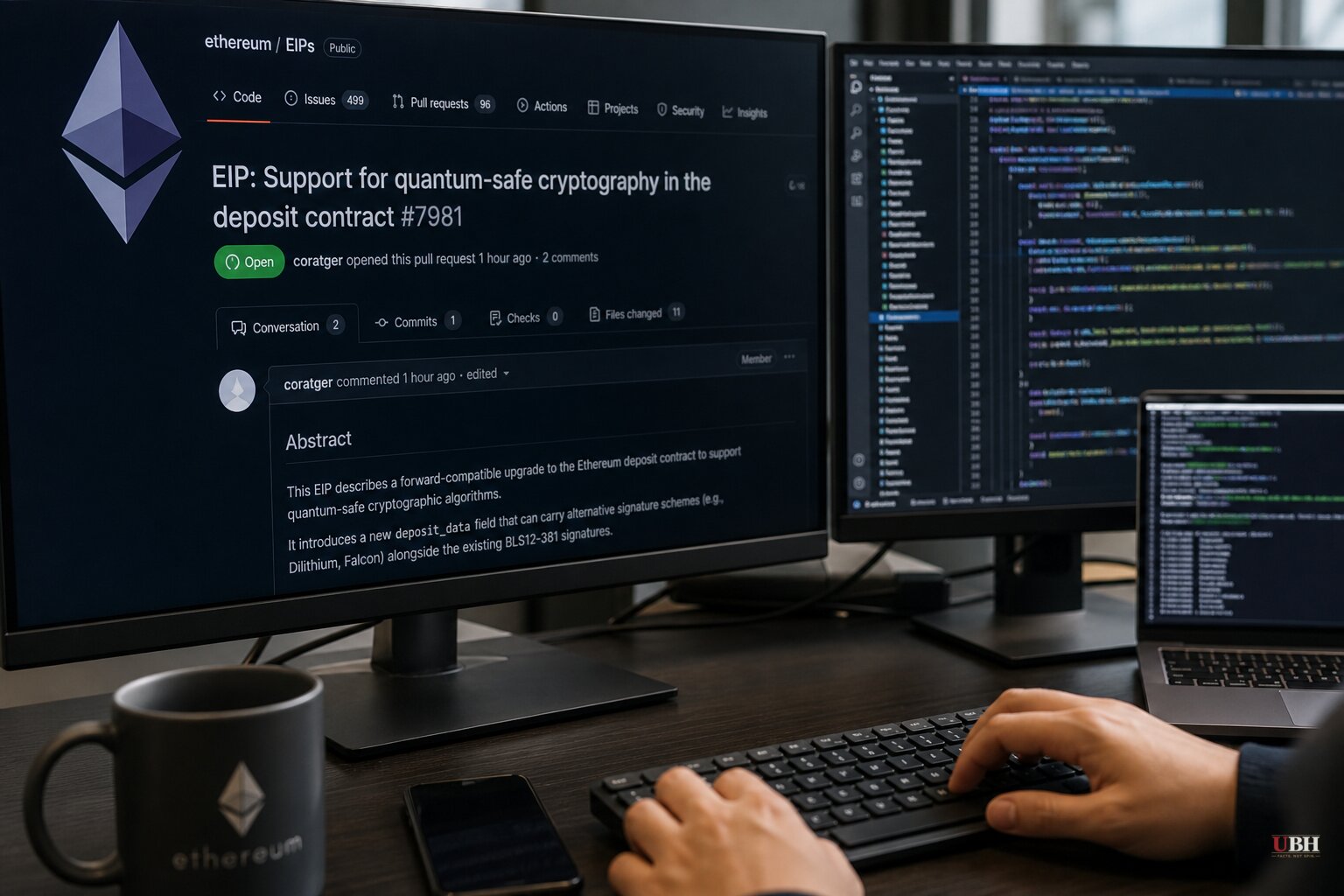
Ethereum developers filed a draft proposal on August 24 to rebuild the validator deposit contract so it can eventually handle post-quantum cryptography. That's the system every staker on the network relies on to lock up ETH and become a validator.
The proposal, assigned EIP number 8394 and titled "Support for Post-Quantum Deposit Contracts," was submitted by developers Kevaundray Wedderburn, Tom Wambsgans and Thomas Coratger through a pull request to Ethereum's EIPs GitHub repository, according to Crypto.news and ABABNews. As of this writing it's an unmerged draft awaiting editor review. Nobody has approved it. Nobody has scheduled it for a network upgrade.
Ethereum validators today use BLS signatures, a cryptographic scheme with fixed-length public keys. BLS works fine against today's computers. It would not survive a sufficiently powerful quantum computer, which could theoretically break the math behind it and forge validator credentials. That threat doesn't exist yet. Nobody has built a quantum computer capable of doing this. But building the fix takes years, and Ethereum developers apparently don't want to be caught scrambling when and if the threat becomes real.
What the contract actually changes
The current deposit contract uses a Merkle-tree structure to record validator deposits. The new design would replace that with what's called log-derived execution requests, built on an existing framework called EIP-7685, according to Crypto Briefing and Cryptonomist. Ethereum already uses this framework for other validator functions: EIP-6110 handles deposits, EIP-7002 handles withdrawals, and EIP-7251 handles validator consolidations. This proposal would extend the same plumbing to accept variable-length public keys and signatures, instead of the fixed-length format BLS requires.
Each deposit would carry a scheme identifier tagging which cryptographic system it uses. Scheme 0 stays reserved for the current BLS format, so nothing breaks immediately, according to KuCoin and Crypto.news. Future scheme numbers could represent post-quantum algorithms. The proposal is explicit that it does not pick a specific post-quantum algorithm. It just builds a contract flexible enough to accept one later.
The design also includes what several outlets describe as an irreversible migration mechanism. New deposits would initially be disabled, then BLS deposits would be turned on at a set timestamp, and at a later timestamp BLS deposits would be permanently shut off with no way to turn them back on, according to KuCoin's account of the proposal text. During the overlap period, execution clients would have to process deposit requests from both the old and new contracts simultaneously.
What this doesn't do
This proposal does not make Ethereum quantum-resistant. Crypto.news was the most careful on this point, noting the contract is "post-quantum-ready" but a separate consensus-layer change would still be needed to define how validators actually verify and process signatures under a new scheme. No algorithm has been selected. Existing validators using BLS keys would not automatically disappear or get migrated when a switch flips. Separate rules would still be needed to handle validator exits, credential changes and the mechanics of moving existing stakers into a post-quantum system.
ABABNews reports the Ethereum Foundation has formed a dedicated post-quantum security team, with a stated goal of comprehensive protection by around 2029. That's a multi-year runway, which underscores how early-stage this specific deposit contract proposal is within that larger effort.
Wedderburn has said the team is waiting on feedback tied to other pending proposals, EIP-7251, EIP-8282 and EIP-7002, before locking in a final plan, and that the subject came up during an All Core Developers call, according to Crypto.news.
Stakes for current validators
If this contract eventually ships, current validators relying on BLS face migration costs and decisions down the line, whenever the permanent BLS retirement mode gets activated in a future fork. That's not happening this year or likely next. It's a draft that hasn't been merged, sitting behind at least three other proposals it's waiting on, headed into a formal EIP review process that can take months or years before anything reaches mainnet.
One thing to separate from the technical story: Pluang's reporting mixed in unrelated market data, including BitMine Immersion Technologies' recent purchase of 32,447 ETH worth about $81 million and options market volatility ahead of an August 30 expiry. None of that has any bearing on this cryptography proposal, and conflating a staking-security draft with short-term ETH price action overstates how close this upgrade is to actually happening. The two are unrelated developments that happened in the same news cycle.
The next concrete milestone to watch is whether EIP 8394 gets formally assigned and merged into the tracked EIP process, and whether Ethereum core developers discuss it on an upcoming All Core Developers call. Until then, it remains exactly what GitHub says it is: a pull request.
Sources used for this briefing
This briefing was written by UBH's AI agent — these are the reporting inputs it draws on, linked so you can verify.


