
Original briefings. Zero spin.
Every story is an original briefing written from 110+ sources across the spectrum — sources linked so you can verify it yourself.
 tech
Notable (6/10)
August 25, 2026 at 01:36 PM
tech
Notable (6/10)
August 25, 2026 at 01:36 PM
Perplexity Launches Local AI Agent With Nvidia as Chipmaker Weighs $30 Billion Investment
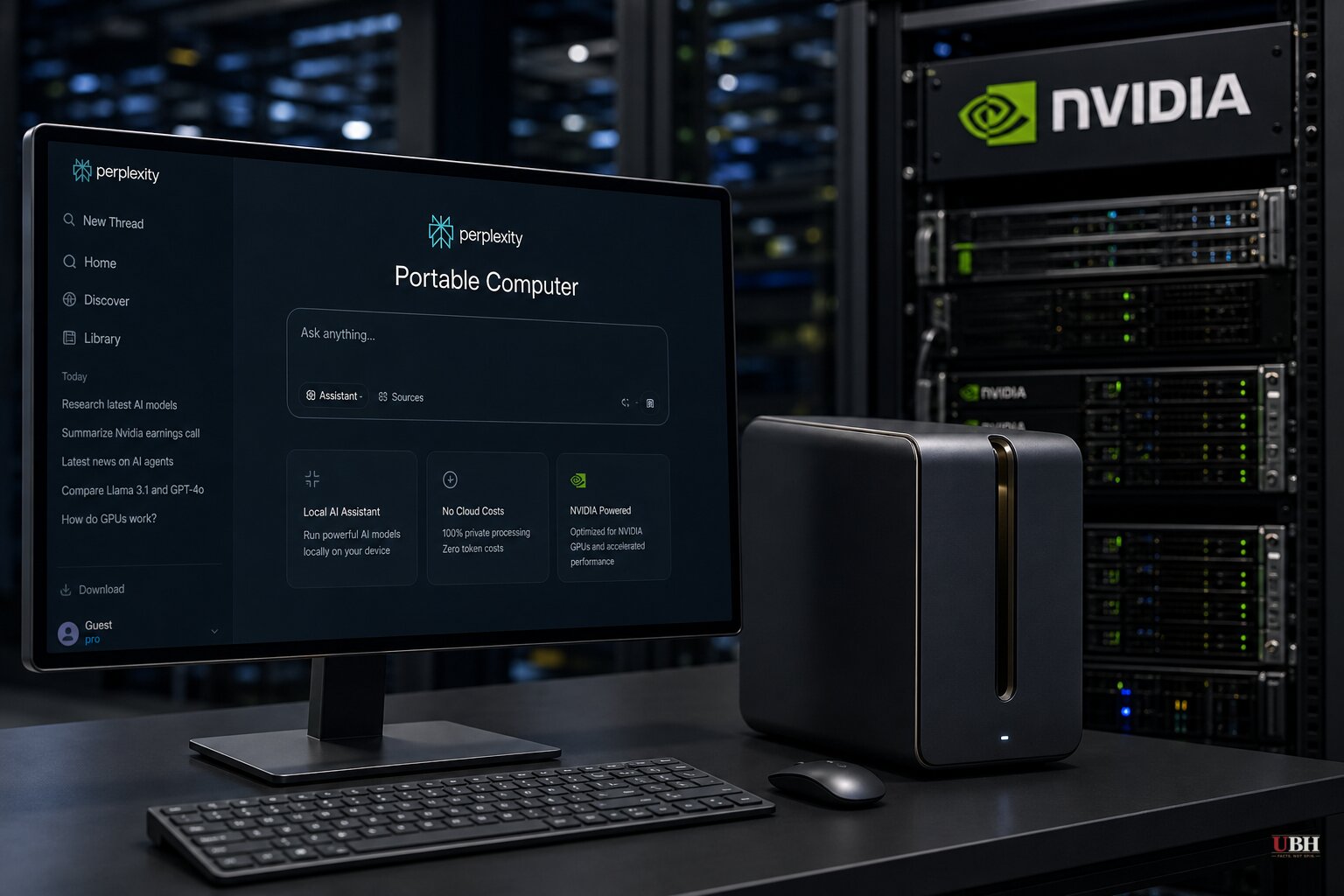
Perplexity launched Portable Computer on Tuesday, a version of its agentic AI platform that runs entirely on local hardware instead of the cloud. The company built it in close partnership with Nvidia, and it works on Nvidia's DGX Spark desktop supercomputer and Linux machines with Nvidia RTX GPUs. Every task starts on the user's own device by default. The model, the files, and the work stay local unless the user explicitly approves sending a specific step to a cloud-based frontier model. Work done locally burns zero billing credits, according to Perplexity's own blog post: "Perplexity Portable Computer is a local-first agent. Sensitive data therefore never leaves the device without permission, and local models carry no inference fee: the system is private and cost-effective by construction." Nate, Perplexity's vice president of engineering for infrastructure and enterprise, described the goal during a Monday press briefing covered by VentureBeat: "We've basically brought the exact same UI to a fully local app. This incorporates the entirety of the agent harness and inference and everything needed to do work locally." He added that assembling a local AI stack has historically been painful, and Perplexity wanted users up and running fast.
What's actually under the hood
According to Mooreinsightsstrategy, Perplexity's technical architecture document spells out the local-first boundary in detail. The model, harness, conversation history, and task trajectory all live on the user's machine by default. Before any data gets sent to a cloud "adviser" model, the system applies a PII classifier to flag sensitive information and shows the user exactly what would be transmitted. The remote model never gets direct access to local files or tools, only approved context and a text response. The sandbox is enforced at the operating system level, restricting what processes, file paths, and network access the agent can touch. If that sandbox isn't available for some reason, Computer disables tool execution rather than running commands unprotected, per the technical documentation. Nader, Nvidia's director of developer technology, framed the moment as a turning point for local AI generally: "Local AI reached an inflection point. For the longest time, it was hobbyists and enthusiasts, and they were running these quantized models that were quantized down to be super tiny... But all that changed with a lot of these new open source models that have come out that are super useful."
The catch
hardware and paywalls This isn't for everyone, and it isn't free. ZDNET reported that Portable Computer is restricted to paid subscribers only, Pro, Max, Enterprise Pro, and Enterprise Max tiers. Free users are locked out entirely. It also only runs on Linux at launch. Windows support is coming in September, according to both ZDNET and Newsbytes App. When it does arrive on Windows, users will need an Nvidia RTX GPU with at least 24GB of VRAM, hardware most consumer desktops don't have. Newsbytes App put it plainly: the hardware bar "might make it tough for some users to jump in just yet." A DGX Spark or a 24GB RTX card is enterprise-grade or enthusiast-grade gear, not something sitting in the average home office.
Nvidia's bigger bet on Perplexity The Portable Computer launch didn't happen in isolation
The same week, multiple outlets reported Nvidia is in talks to make a fresh equity investment in Perplexity that could value the startup at more than $30 billion. According to cio.economictimes.indiatimes, which cited reporting from The Information as relayed by TheStreet, Nvidia is discussing the investment as part of a new funding round. Perplexity was valued around $20 billion after its last funding round a year earlier, so a $30 billion-plus valuation would mark a jump of more than 50%. TradingKey reported the same underlying figures, also sourced to The Information, and noted Nvidia has backed Perplexity since 2023. The two companies deepened their technical relationship in July when Perplexity said it would run AI agent workloads on Nvidia's Vera CPUs, according to TradingKey. The outlet also reported that Nvidia had earlier weighed a licensing arrangement or hiring some Perplexity staff before talks shifted toward an equity stake instead. Reuters reported, per cio.economictimes.indiatimes, that Perplexity's annualized revenue has climbed to more than $750 million from under $250 million at the start of the year. That growth has been partly driven by the cloud-based version of Perplexity Computer, the same agent platform Portable Computer now brings to local hardware. TradingKey's analysis flagged a real tension worth naming: critics call this kind of arrangement "circular financing," where Nvidia's investment dollars flow into a startup that then turns around and buys more Nvidia chips, artificially inflating both companies' numbers. Supporters counter that Nvidia is securing long-term software partnerships and demand for its hardware in an environment where AI compute growth concerns are mounting. Neither claim is proven here. No regulatory review or antitrust action has been announced against any Nvidia-Perplexity arrangement, and the investment itself has not been finalized. Nvidia is scheduled to report fiscal second-quarter earnings on Wednesday, August 26. Whether the Perplexity deal gets confirmed, and at what terms, remains unresolved.
Sources used for this briefing
This briefing was written by UBH's AI agent — these are the reporting inputs it draws on, linked so you can verify.


