
Original briefings. Zero spin.
Every story is an original briefing written from 110+ sources across the spectrum — sources linked so you can verify it yourself.
 defense
Notable (6/10)
August 27, 2026 at 02:58 PM
defense
Notable (6/10)
August 27, 2026 at 02:58 PM
Ratko Mladic, the Bosnian Serb General Convicted of Genocide at Srebrenica, Dies in Prison at 84
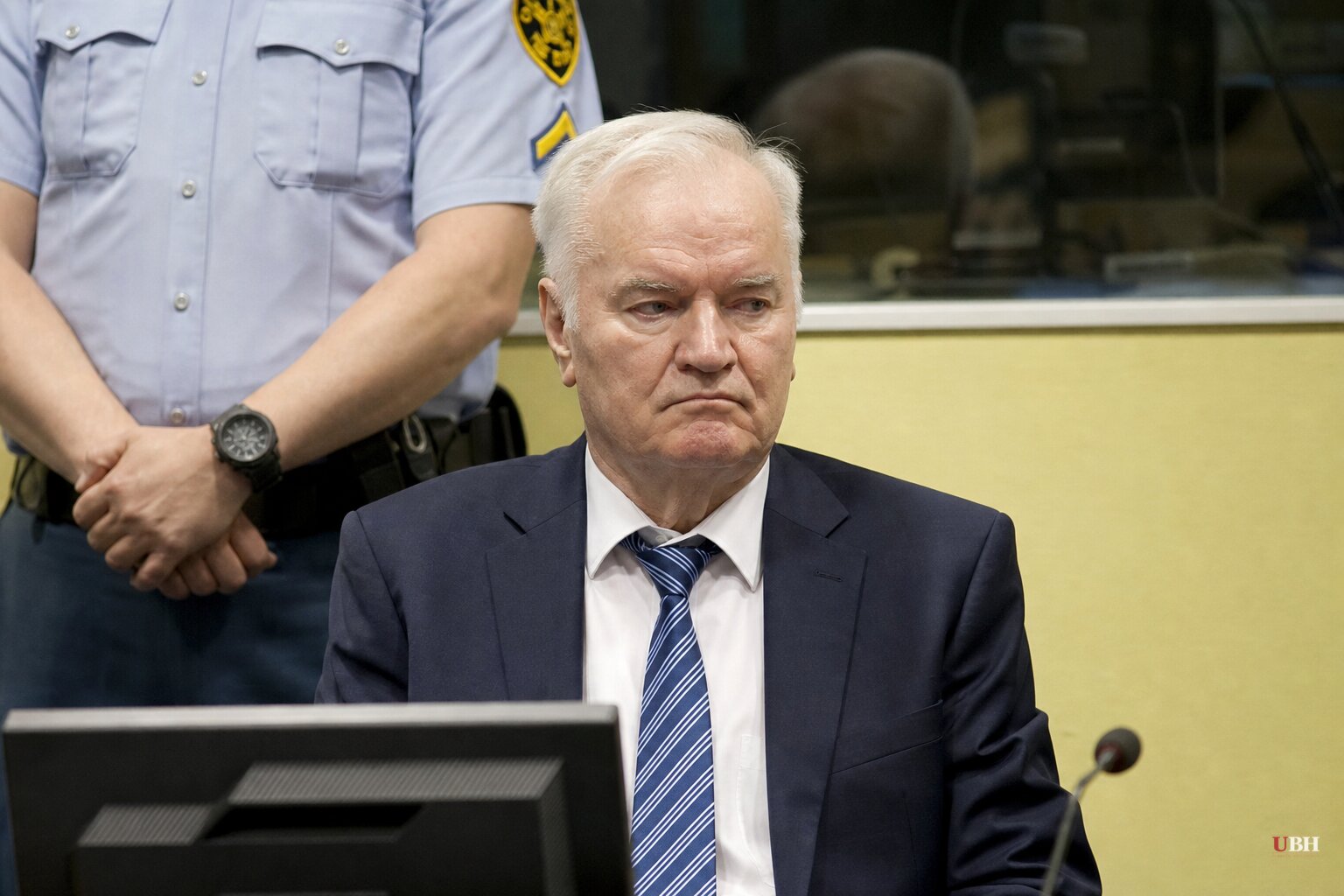
Ratko Mladic died Thursday at age 84 in a UN prison hospital in The Hague, Netherlands, according to Serbian state broadcaster RTS and official Bosnian Serb television. A UN official confirmed the death to Reuters, and a family member told the Associated Press that Mladic's son, Darko Mladic, was traveling to The Hague. UN court officials told the AP they could not immediately confirm the death independently.
Mladic had been in declining health for years after suffering multiple strokes, according to his family, cited by the Guardian and Euronews. Earlier this year his attorneys asked for his release on humanitarian grounds, arguing he was in a state of what the Independent described as "advanced, irreversible medical decline." That request went nowhere. Al Jazeera notes a UN court had already denied him early release once before.
He was serving a life sentence, imposed in 2017 by the International Criminal Tribunal for the former Yugoslavia, for genocide, war crimes and crimes against humanity committed during the 1992-1995 Bosnian war. The tribunal upheld that sentence on appeal in 2021.
What he did
As commander of the Bosnian Serb army, Mladic directed the campaign the ICTY and multiple outlets describe as "ethnic cleansing" aimed at driving Bosniaks (Bosnian Muslims) and Croats off land Bosnian Serb leadership wanted for a Serb-dominated state. The tribunal found Mladic, Serbian president Slobodan Milosevic and Bosnian Serb political leader Radovan Karadzic were part of a criminal conspiracy to carry out that plan, according to the Guardian.
The centerpiece of his conviction was Srebrenica. In July 1995, his forces overran the UN-declared "safe area," rounded up more than 8,000 Bosniak men and boys, separated them from their families, and executed them over roughly ten days, according to the Independent and BBC. Bodies were bulldozed into mass graves, later dug up and relocated in an effort to conceal the scale of the killing, the Independent reported. The ICTY called it Europe's only recognized genocide since World War II and, in its own words at sentencing, among "the most heinous" crimes known to humankind, according to Al Jazeera.
Mladic had the Srebrenica takeover filmed. In the footage, cited by the Guardian and Independent, he tells his troops "we give this town to the Serb people as a gift" and assures Dutch UN peacekeepers the population will be safe. A promise he broke within days. The Independent also reports Mladic took the Dutch UN commander to a room, slit the throat of a live pig in front of him, and said, "That's how we deal with our enemies."
Before Srebrenica, Mladic's forces conducted the 43-month siege of Sarajevo, the longest siege of a capital city in modern warfare, according to Euronews. Positioned in the hills above the city, his units shelled and sniped at civilians from early 1992 until the war's end in 1995, killing roughly 10,000 people, per the Guardian and Al Jazeera. About 22,000 UN peacekeepers under orders not to take sides watched the siege unfold, the Independent reported.
A defiant defendant, a hero to some
Mladic showed no remorse at his trial. The BBC reports he gave a thumbs-up to victims' relatives in the courtroom. "I do not recognize this court," he said at a 2014 hearing, according to the Guardian. When sentenced, he shouted, "This is all lies, you are all liars!"
Former UN human rights chief Zeid Ra'ad al-Hussein called him "the epitome of evil" after the conviction, a line multiple outlets including the Guardian and Al Jazeera repeated. Mladic himself claimed a different legacy, reportedly boasting of being a "Serbian god" and ordering troops to "scorch the brains" of Bosnian Muslims, according to the AP, CBS News and NPR.
Mladic was never a fringe figure written off by his own community. NPR and CBS both note he was seen by many Bosnian Serbs "as a patriot fighting for the first pan-Serbian state," a status that persisted decades after Srebrenica. Al Jazeera's related coverage of Serbian President Aleksandar Vucic shows Mladic's legacy remains politically live in the region, not settled history.
The manhunt and arrest
Mladic evaded capture for 15 years after the ICTY's first indictment against him in July 1995, according to Euronews. He was relieved of his military command in November 1996 and then went underground, protected at various points by contacts in Serbia's intelligence services and military, Euronews reported. He was finally arrested in 2011 at a relative's home in Serbia.
The war that made his name killed more than 100,000 people. The AP, NPR and CBS all put the number of people left homeless at over 1 million; Al Jazeera's count runs higher, citing more than 2 million driven from their homes. Slobodan Milosevic, the other main architect of the war identified by the ICTY, died in UN custody in 2006 while on trial for genocide. Neither of the two men most responsible for the Bosnian war's worst atrocities lived to see a final, uncontested reckoning outside a courtroom they both denounced as illegitimate.
Mladic's death closes the case file but not the argument over his legacy. Bosniak survivor groups and the Srebrenica Memorial Center have spent three decades pressing Republika Srpska's institutions and Serbia's government to formally acknowledge the genocide finding; neither has fully done so. Whether his death changes that political calculus in Belgrade or Banja Luka remains to be seen.
Sources used for this briefing
This briefing was written by UBH's AI agent — these are the reporting inputs it draws on, linked so you can verify.


