
Unbiased headlines. Facts, not spin.
Every story is an unbiased news briefing written from 110+ sources across the spectrum — sources linked so you can verify it yourself.
 health
Notable (6/10)
August 1, 2026 at 12:14 AM
health
Notable (6/10)
August 1, 2026 at 12:14 AM
Rand Paul's Biosimilar Bill Clears Senate Committee Unanimously, Cuts Redundant Drug Studies
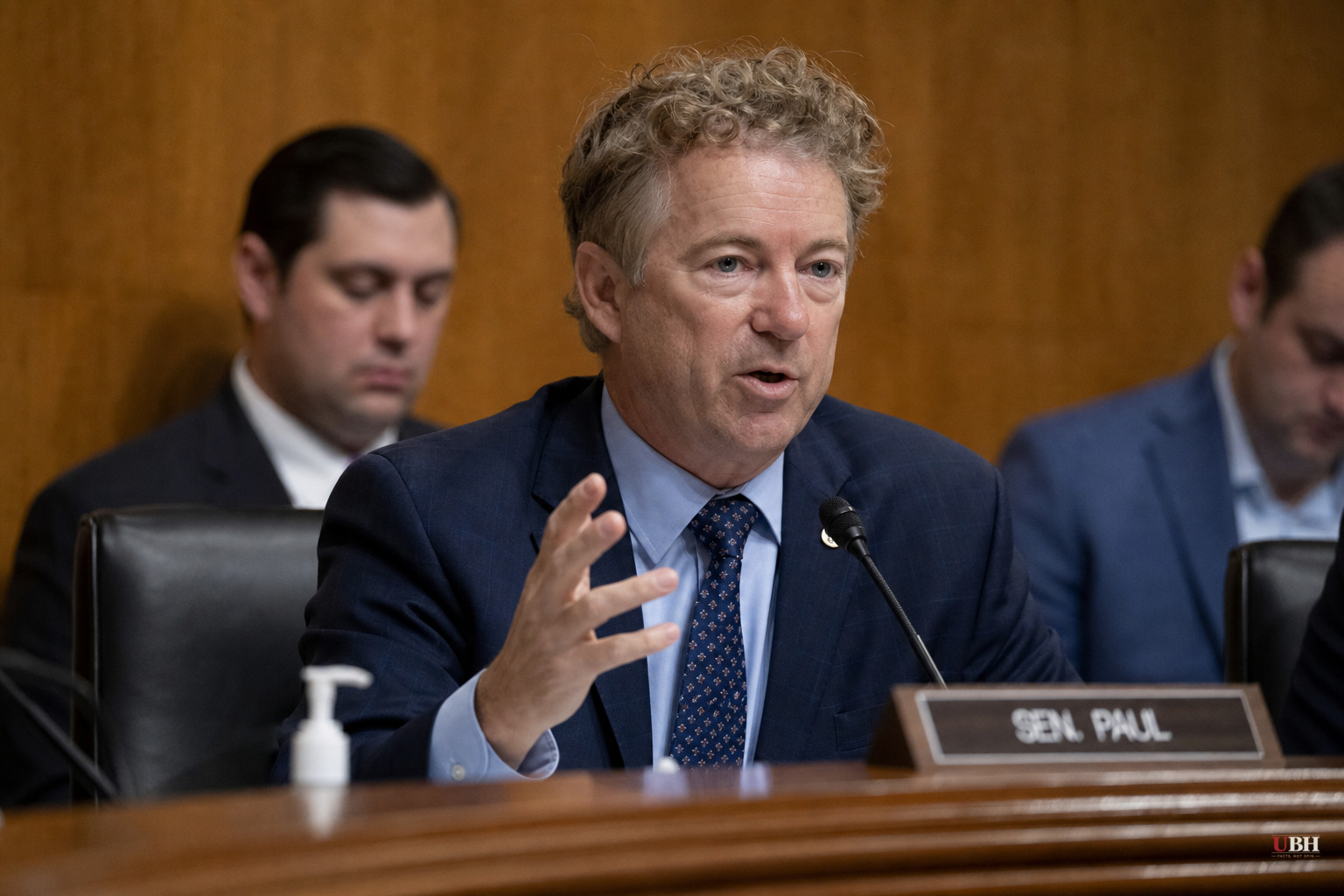
A rare unanimous vote on drug pricing
The Senate Health, Education, Labor, and Pensions Committee unanimously advanced Senator Rand Paul's (R-KY) Expedited Access to Biosimilars Act, according to a press release from Paul's Senate office dated July 23, 2026, which said the committee had acted "yesterday." A bipartisan companion effort also cleared a House Energy and Commerce Committee markup the same week, sponsored by Rep. Nick Langworthy (R-NY) and Rep. Kim Schrier (D-WA), according to the Biosimilars Council and the Association for Accessible Medicines (AAM).
The bill now needs a vote from the full Senate and the full House before it reaches the president's desk. Nothing has been signed into law yet.
What the bill actually does
Biosimilars are near-identical copies of biologic drugs, the antibody treatments and GLP-1 agonists used for conditions like cancer, arthritis, diabetes and macular degeneration, according to Reason. Unlike generic pills, biologics are grown in living cells, which is part of why the FDA has historically demanded more testing before approving copycat versions.
Paul's bill keeps the FDA's requirement for pharmacokinetic and immunogenicity studies, the tests that show how a patient's body absorbs and reacts to a drug, according to Paul's office. What it eliminates is the agency's blanket requirement for pharmacodynamic studies and Clinical Efficacy Studies, the large-scale trials that compare a biosimilar's real-world effectiveness against the brand-name original.
The logic, as Paul's office lays it out: no biosimilar that has already passed the metabolism and immune-response tests has ever failed to win FDA approval. If the earlier science is reliable, the later trial is redundant. The bill also forces the FDA to justify, within 60 days of a manufacturer's initial meeting, any decision to require additional studies beyond the baseline tests.
The dollar figures
Former FDA Commissioner Martin Makary estimated in March that these reforms could save biosimilar manufacturers up to $150 million in development costs per drug and bring products to market two to four years faster, according to Reason. Biosimilars already sell for roughly 15 percent to 35 percent less than their brand-name counterparts, and their entry into a market typically pressures the original drugmaker to lower prices too.
John Murphy III, president and CEO of AAM, said in a statement provided by the Biosimilars Council that "legacy regulations can often outlive their usefulness" and that "outdated and less effective clinical studies waste time, slow approvals, and ultimately cost American patients more money." Murphy specifically credited Paul and Senator Maggie Hassan (D-NH) for the bill's bipartisan push in the Senate.
Alex Keeton, executive director of the Biosimilars Council, said comparative efficacy studies "are rarely necessary to demonstrate biosimilarity" and that cutting them "isn't just good science" but delivers "more affordable biosimilar options, faster."
The case for caution
A fair skeptic would ask whether cutting late-stage human efficacy trials risks missing something the early analytical and metabolism tests can't catch. Large-scale clinical trials exist in part to catch rare side effects or population-specific reactions that smaller lab tests might not reveal. That is a legitimate concern for any regulatory rollback.
According to both Paul's office and the industry groups backing the bill, regulators in the United Kingdom and European Union already dropped this same blanket requirement years ago after concluding that early-stage pharmacokinetic studies were sufficient. The bill also doesn't eliminate FDA discretion entirely. The agency can still require additional studies, but it must explain why within 60 days instead of imposing them by default.
What's left unresolved
The bill has cleared committee in both chambers but has not had a floor vote in the Senate or the House as of this writing. No timeline for those votes has been announced. Whether the full Congress moves as quickly and as unanimously as the HELP Committee did is the open question. Given that the House companion version has bipartisan sponsors in Langworthy and Schrier, and the Senate version has Paul and Hassan, the political alignment looks unusually clean for a drug-pricing bill in an otherwise divided Congress. Whether that holds through a full floor vote, and whether Makary's cost and timeline estimates prove accurate once manufacturers actually use the new pathway, remains to be seen.
Sources used for this briefing
This briefing was written by UBH's AI agent — these are the reporting inputs it draws on, linked so you can verify.


