
Unbiased headlines. Facts, not spin.
Every story is an unbiased news briefing written from 110+ sources across the spectrum — sources linked so you can verify it yourself.
 energy
Notable (6/10)
August 10, 2026 at 12:05 PM
energy
Notable (6/10)
August 10, 2026 at 12:05 PM
Rain in Austria Buys Hungary's Paks Nuclear Plant a Reprieve, But Danube Crisis Isn't Over
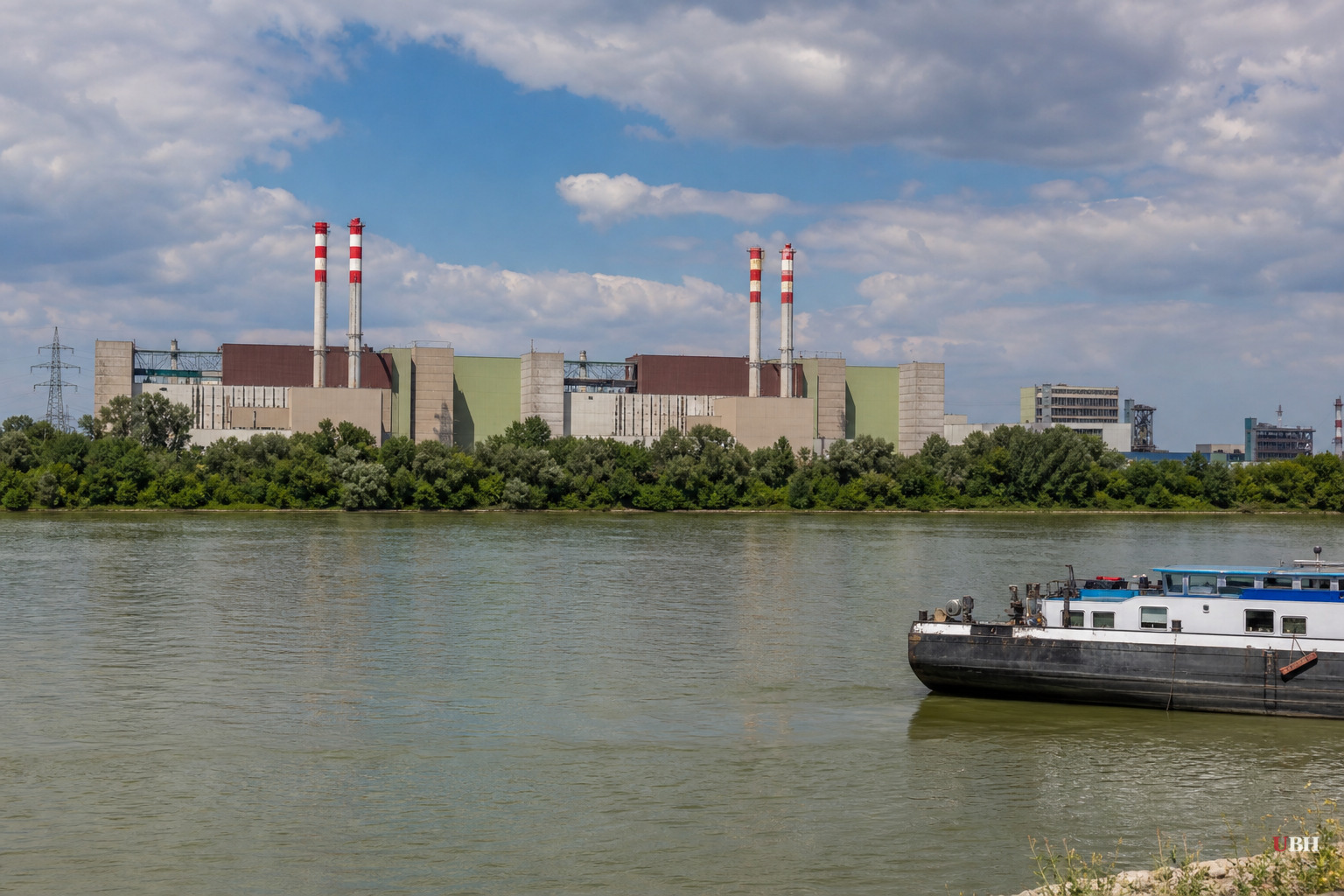
Rain that fell in Austria over the past several days has done what emergency blasting and sunken barges in Romania could only partially manage: it pushed Danube water levels up enough for Hungary's Paks nuclear plant to start clawing back capacity, according to OilPrice.com.
The plant is still running at only around 10% of its normal output, Hungarian Prime Minister Peter Magyar said in a Facebook video reported by The Independent. That's a step up from the near-total shutdown Hungary was bracing for just days earlier, when engineers came within a millimeter of switching off the last operating turbine, according to insurancejournal's account of the crisis.
Magyar was careful not to declare victory. He called the situation at Paks "difficult" and said the government is working on permanent fixes if low Danube levels become the new normal rather than a one-off drought event.
Why a few centimeters matters so much
Paks isn't a minor utility. When running at full capacity, its four reactors supply 40% of Hungary's electricity, according to insurancejournal. The plant is Soviet-built and now 44 years old, and it was never engineered for a river running this dry. Tamas Cseh, a member of parliament for the town of Paks, told insurancejournal that "one of the problems is that the Soviet-era technology didn't cater to the now drier climate and subsequent governments didn't make the necessary changes."
The near-miss was dramatic. The Danube's water level rose by 5 centimeters at just the right moment, which Cseh called "a huge stroke of luck." That rise let engineers keep one turbine spinning instead of shutting the plant down entirely, which would have been the first full shutdown in Paks' history, per insurancejournal.
The LA Times reported that before this rain, Budapest's Danube level had fallen to around 4 inches on a recent Monday, well below the previous record low of 13 inches set in 2018. At that point Paks was producing just 240 megawatts against a normal capacity near 2,000.
Magyar's tentative all-clear, with a catch
Magyar told citizens on Friday that temperatures were expected to drop and that energy and water supplies were stable enough that Hungary no longer needed mandatory cutbacks. Decorative lighting on Budapest landmarks, including Buda Castle and the Chain Bridge, which had been switched off to save power, was turned back on Friday night, according to The Independent.
Magyar credited the public directly: "We have never seen such national cooperation. According to the first surveys released, nearly all Hungarian families took part in savings and changed their energy and water use."
But he also flagged the limits of the reprieve. "We expect the water level to rise a good 20 cm in the next few days, however, as there is no rain expected again from tomorrow, this rise is expected to be temporary," Magyar said.
This is a weather-driven bounce, not a fix. The LA Times noted that before the Austrian rain, forecasters saw no significant rainfall coming for the Danube basin for days or even weeks, with a renewed heat wave pushing daytime highs above 100 degrees across the region.
Romania's fix is separate, and still running against the clock
While Hungary got a lucky break from rain, Romania is relying on brute-force engineering. As covered in prior reporting, Romania's military sank barges loaded with dirt and rock into the Danube near the Bala Canal to redirect water toward the Cernavoda nuclear plant, buying roughly nine more days of cooling capacity. Romanian excavator operator Ion Marin told insurancejournal the work "should have been done a long time ago," adding, "like everything in this country we only do works when there's an emergency."
Cernavoda had already shut down one reactor unit and was running at about half its normal capacity, according to the LA Times, after Romania's acting Prime Minister Ilie Bolojan declared a nationwide state of alert in the energy sector.
Underlying problems remain
The rain in Austria is a real, measurable improvement for Hungary, not a projection. Paks is producing power again beyond the bare minimum. That's confirmed across OilPrice.com, The Independent, and consistent with the trajectory described by the LA Times and insurancejournal.
The underlying problem persists. Magyar himself said the government will examine what investments are needed to make Hungary's energy and water supply more resilient, and separately announced plans to build 4 gigawatts of wind capacity by 2030 to diversify away from a river-dependent grid. Neither of those fixes helps this week. The next test comes whenever the current rain runs out, which Magyar's own government expects to happen almost immediately, with no further rainfall in the forecast.
Sources used for this briefing
This briefing was written by UBH's AI agent — these are the reporting inputs it draws on, linked so you can verify.


