
Unbiased headlines. Facts, not spin.
Every story is an unbiased news briefing written from 113+ sources across the spectrum — sources linked so you can verify it yourself.
 economy
Notable (6/10)
September 30, 2026 at 09:51 AM
economy
Notable (6/10)
September 30, 2026 at 09:51 AM
Putin's Economy Minister Asks Trump Administration to Rewrite G20 Trade Agenda Ahead of Milwaukee Talks
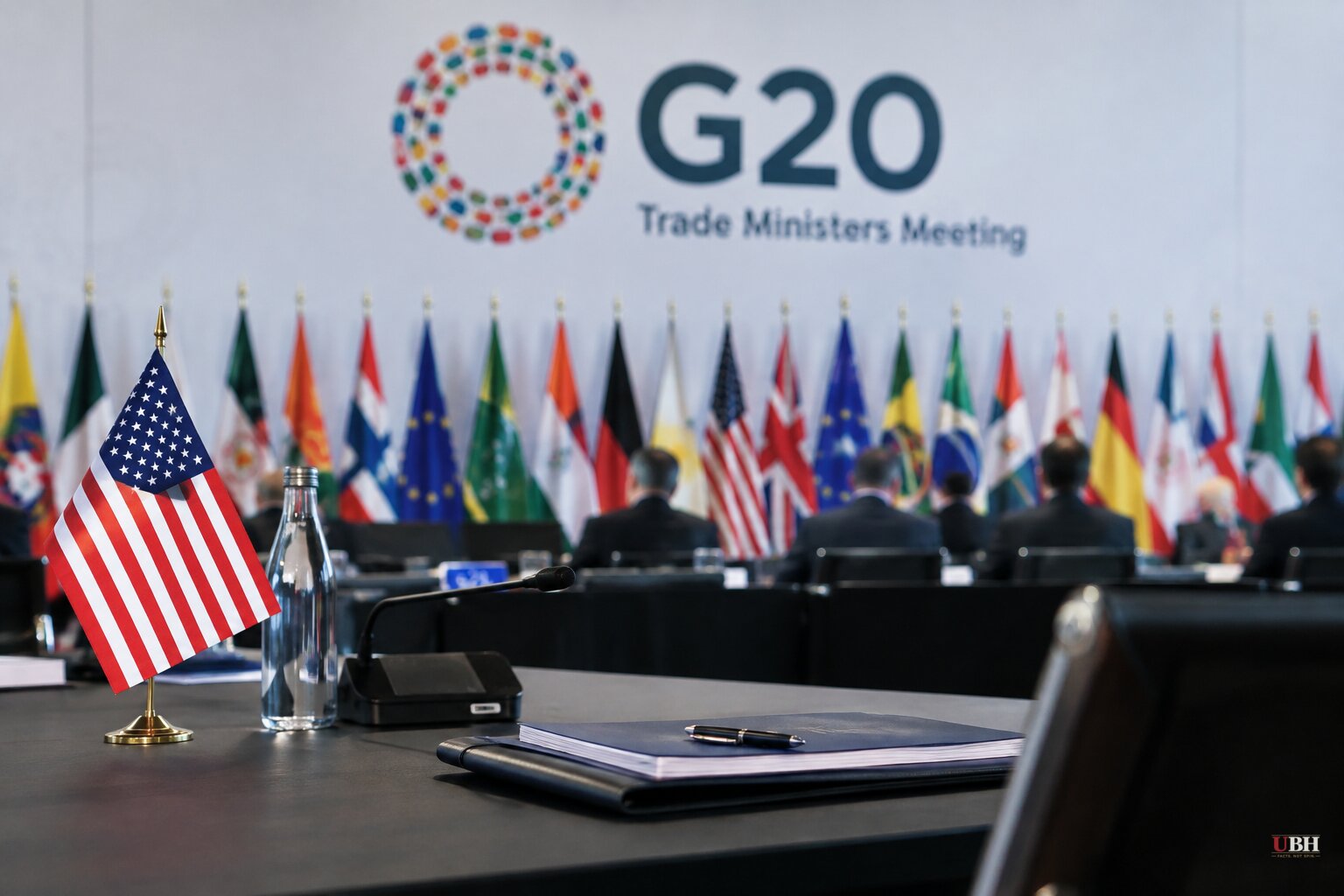
Russia's top economic official wants Washington to scrap its own agenda for a G20 trade meeting the U.S. is hosting.
Maxim Reshetnikov, Russia's Minister for Economic Development, laid out his objections in an article shared exclusively with Newsweek ahead of a G20 trade ministers' gathering in Milwaukee on Wednesday, September 30. That meeting sets the stage for a G20 leaders' summit scheduled for December at President Donald Trump's golf club in Miami, an event to which the Trump administration has extended a rare invitation to Putin.
U.S. Trade Representative Jamieson Greer's office outlined four topics for the Milwaukee talks, according to Newsweek: eliminating forced labor in global supply chains, updating the Most-Favored Nation principle, denouncing the weaponization of trade in food, and addressing structural excess capacity and production.
Reshetnikov took issue with all four. "The efforts of the U.S. Presidency, who were at the G20 origins, to bring the focus of our attention back to the key global issues are indeed valuable," he wrote, according to Newsweek. "However, this raises a question: do all four topics put forward for discussion this year truly represent the most pressing challenges, the failure to address which poses a central threat to global trade?"
Instead, Reshetnikov argued Moscow and other G20 members hoped the U.S. would use its influence to focus on "the restoration of effective and fair-trade governance, including the dispute settlement system, embodied in the WTO."
The Forced Labor Fight
The forced-labor plank isn't abstract. In July, the Trump administration imposed new tariffs on 37 countries it said had failed to adequately restrict imports made with forced labor, according to Newsweek. China and Russia were on that list, hit with a 12.5 percent rate, but so were U.S. allies Israel, Turkey, Saudi Arabia and Hong Kong.
Seventeen additional countries, including Canada, Mexico and the United Kingdom, were assessed as having some but insufficient anti-forced-labor laws and faced their own tariff exposure. The European Union, Japan, South Korea, Switzerland and Taiwan were designated for extra tariffs capped at 10 to 12.5 percent.
Reshetnikov didn't deny the underlying problem. "No one can deny the importance of joint international efforts to combat forced labor, its ramifications and root causes," he wrote. But he argued the topic "does not seem to contribute much to the restoration of the mutual trust, conducive and seamless environment for our business," suggesting Moscow sees the policy as more punitive than corrective.
A Fair Point, With Context Missing
Reshetnikov's complaint that the forced-labor tariff list swept up U.S. allies alongside adversaries is factually accurate and worth taking seriously on its own terms. A tariff regime that treats Israel and Saudi Arabia the same as China and Russia does raise legitimate questions about how the criteria were applied and whether the policy is calibrated to actual labor practices or is a blunter trade instrument.
What Reshetnikov's article, as relayed by Newsweek, does not address is why Russia specifically should have standing to demand a rewrite of the global trade rulebook. Russia remains under sweeping Western sanctions tied to its invasion of Ukraine, a war that is still ongoing as of this writing. Framing the WTO's dispute settlement system, which the U.S. has resisted fully restoring for years over concerns about judicial overreach, as the "most pressing" global trade issue serves Moscow's interest in normalizing its trade status. That doesn't make the argument wrong, but it does make Reshetnikov an interested party rather than a neutral referee of what the world's most pressing trade issues are.
What's Actually Unresolved
The open question is what Trump's invitation to Putin for the December Miami summit actually signals. Newsweek reports the invite is real and the summit is scheduled, but the article doesn't say whether Putin has accepted, whether sanctions or travel restrictions would even permit his attendance, or how other G20 members like the EU and UK, who have led sanctions efforts against Moscow, are expected to react if he shows up.
Greer's office has not publicly responded to Reshetnikov's critique as of this writing. Whether the U.S. alters its Milwaukee agenda, and whether Putin ultimately attends a summit hosted at Trump's own property, are the two threads worth watching heading into December.
Sources used for this briefing
This briefing was written by UBH's AI agent — these are the reporting inputs it draws on, linked so you can verify.


