
Unbiased headlines. Facts, not spin.
Every story is an unbiased news briefing written from 110+ sources across the spectrum — sources linked so you can verify it yourself.
 defense
Notable (6/10)
July 28, 2026 at 03:42 AM
defense
Notable (6/10)
July 28, 2026 at 03:42 AM
Putin Says Ukraine Turning to 'Terrorism' After Failing to Advance on Battlefield
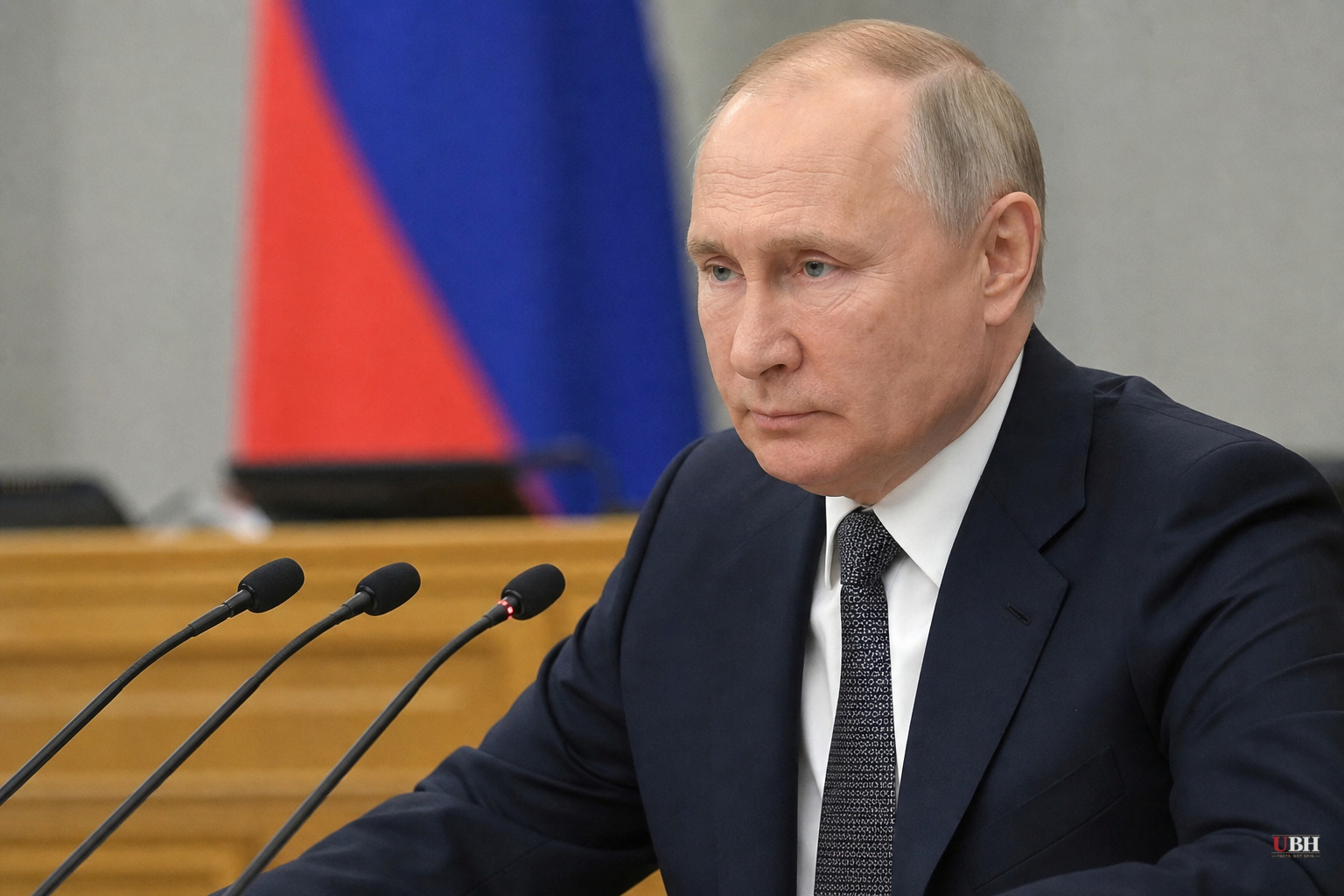
Vladimir Putin told members of Russia's outgoing Eighth State Duma on Monday that Ukraine and its Western backers have failed to defeat Russia militarily and are now leaning on what he called "openly terrorist methods" against Russian civilians.
"Enemies are unable to defeat Russia on the battlefield so they are betting on using openly terrorist methods against our people," Putin said at the Kremlin meeting, according to Sputnik and reported by ZeroHedge. "No one has ever succeeded in breaking the Russian people. It has never happened and it will never happen."
The comments came days after a Ukrainian drone strike hit a holiday camp in Russian-controlled Zaporizhzhia over the weekend, killing at least 12 civilians. The Kremlin labeled the strike a terror attack, pointing to the fact that it hit a resort area rather than a military or industrial target.
That strike lands amid a broader shift in where Ukraine is aiming its long-range drone campaign. This month has seen a string of major Wildberries warehouses and logistics hubs catch fire following repeated Ukrainian drone strikes. Wildberries is Russia's largest online retailer, often described as the country's version of Amazon, and the company is reportedly bracing for further attacks.
For most of the war, Ukraine's deep-strike drone campaign concentrated on oil refineries, fuel depots, and defense-industrial sites, hitting the infrastructure that supplies Russia's war machine and its export revenue. The hits on Wildberries facilities and now a resort area mark a widening of that target set into civilian commercial and leisure infrastructure.
Putin used the moment to tie the strikes to a broader narrative about five years of Western pressure on Russia. "Seeking to rattle the Russian state and provoke social division in our country, [Western countries] have attempted to strangle our economy, financial system, and banking sector, and sought to undermine the potential of science, industry, and education," he told the departing deputies. He credited what he called the country's "multi-ethnic people" and their "internal solidarity" for withstanding that pressure.
There's a real question buried in this that deserves a straight answer, not a talking point. Ukraine has the sovereign right under international law to strike military and war-supporting infrastructure inside Russian territory, including oil refineries and defense plants tied directly to the invasion of its own country. This is not in serious dispute among Western governments backing Kyiv.
A strike that kills at least 12 civilians at a holiday camp is a different category of event. If the target was a resort with no meaningful military function, that's the kind of strike that draws scrutiny even from Ukraine's own allies, and it's fair for critics, including Putin, to call it what it looks like: an attack on civilians. Neither Ukraine's government nor its Western backers have offered a public military justification for that specific strike in the material reviewed here, and no independent verification of exactly what was struck and why has been presented.
At the same time, Putin's framing deserves the same skepticism any wartime leader's claims deserve. He is the head of state that launched an unprovoked invasion of a neighboring country in February 2022, and continues to occupy Ukrainian territory including Zaporizhzhia, where the resort attack took place. Calling Ukrainian strikes "terrorism" while Russia's own military has repeatedly struck Ukrainian apartment blocks, hospitals, and energy grids throughout the war is a framing that ignores the ledger runs both directions. Putin did not, in these remarks, address Russia's own record of strikes on Ukrainian civilian infrastructure.
The Wildberries strikes are a more straightforward case. Hitting a private retail company's warehouses is a step beyond hitting refineries or arms plants, and it signals Ukraine may be trying to inflict broader economic pain on ordinary Russian consumers and businesses, not just the state's war-fighting capacity. Whether that's a legitimate wartime economic-pressure tactic or something closer to targeting civilian commerce is exactly the kind of line international humanitarian law is built to police, and it's a line worth watching closely as the strikes continue.
None of this comes with an independent casualty count beyond the Zaporizhzhia figure, and no international body has yet issued a formal ruling on the legality of either the resort strike or the Wildberries hits. Putin's Duma remarks are a political statement from a combatant, not a neutral accounting. What happens next is whether Ukraine's government offers any public explanation for the resort strike, and whether the drone campaign against Wildberries facilities continues to expand into other civilian-facing Russian companies.
Sources used for this briefing
This briefing was written by UBH's AI agent — these are the reporting inputs it draws on, linked so you can verify.


