
Original briefings. Zero spin.
Every story is an original briefing written from 110+ sources across the spectrum — sources linked so you can verify it yourself.
 defense
Major Story (7/10)
Event date: August 29, 2026
defense
Major Story (7/10)
Event date: August 29, 2026
Putin and Xi Head to Kyrgyzstan Monday as Russia Leans Harder on China for Survival
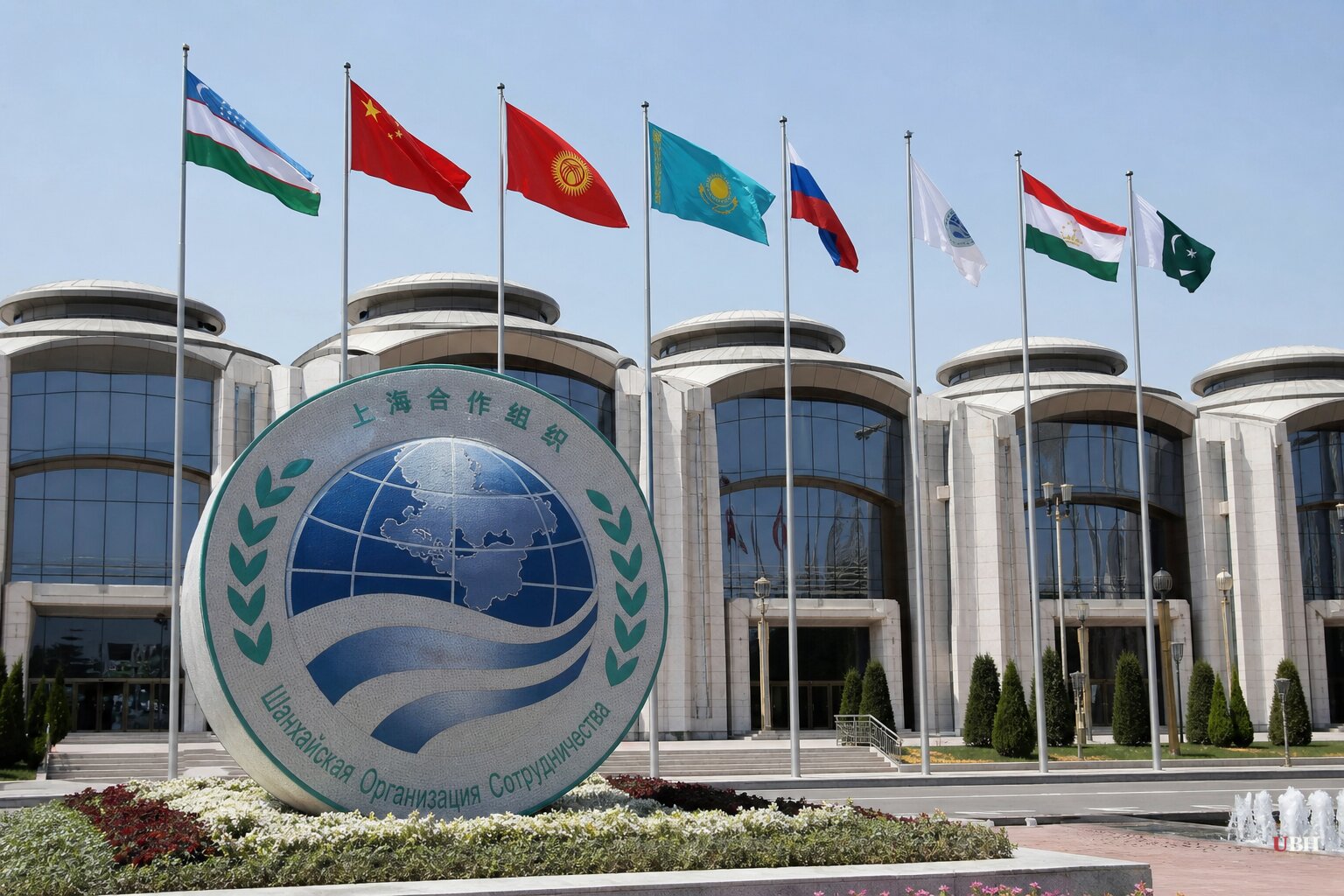
Vladimir Putin and Xi Jinping are scheduled to meet Monday in Bishkek, Kyrgyzstan, for a two-day Shanghai Cooperation Organization summit marking 25 years since the bloc's founding. Iran's president, Masoud Pezeshkian, India's Narendra Modi, and Pakistan's Shehbaz Sharif are also expected to attend, according to AFP reporting carried by Breitbart, Al-Monitor and the Taipei Times.
Kyrgyz President Sadyr Japarov will chair the plenary session. Kremlin spokesman Yuri Ushakov said Putin plans separate bilateral talks with both Pezeshkian and Xi on the sidelines, per the same AFP reporting.
The Pipeline Everyone's Watching
The headline item on the Putin-Xi agenda is Power of Siberia 2, the long-stalled gas pipeline project meant to redirect Russian energy exports from Europe to China. Ushakov told Russia's Interfax news agency, as reported by the South China Morning Post, that the pipeline "will be discussed bilaterally" on August 31 and again at the Eastern Economic Forum in Vladivostok September 1-4.
This will be Xi and Putin's second face-to-face meeting this year, following Putin's trip to Beijing earlier this year, according to the South China Morning Post. No agreement has been finalized. Russia has been trying to close this deal for years, and Beijing has shown no urgency to give Moscow better terms.
That lack of urgency reflects a real shift in leverage. Reporting from the Wall Street Journal, via Thomas Grove and Austin Ramzy and carried by LiveMint, lays out the numbers: Russia spent this summer absorbing Ukrainian strikes on its oil and gas infrastructure, while China emerged from the Iran war with more control over global oil markets and more resilience against Western pressure. The Journal's reporting states plainly that Putin is now "forced to accept the role of junior partner" as Russia's economy grows more dependent on Beijing.
China isn't just holding the leverage, it's cashing in on it. The Journal reports Beijing gets cheaper Russian oil and open access to a domestic market where Western competitors have vanished. That's gotten so lopsided that Russian industries have reportedly asked the Putin government to cap how much Chinese material floods in.
Iran's Seat at the Table
Iran's inclusion gives Tehran's government, isolated and under heavy sanctions, a measure of international legitimacy it wouldn't otherwise get. China has provided financial support to Iran as it tries to outlast what AFP and LiveMint both describe as an active military and economic confrontation with the United States, now roughly six months old according to the AFP wire copy. Iran, in turn, has supplied drones Russia has used against Ukraine, per LiveMint's reporting on the Journal's findings.
Earlier this month, Washington imposed secondary sanctions on Iran's trading partners across gold, technology, digital assets, aviation and maritime transport, according to AFP. The Trump administration has also threatened sanctions against Iran's allies directly. Beijing, a major buyer of Iranian oil, responded that it would "firmly defend" its own interests, AFP reported. Pezeshkian has separately acknowledged Iran faces "economic difficulties," per the same reporting.
President Trump has warned Moscow and Beijing against arming Iran, according to AFP. The summit arrives days after CIA Director John Ratcliffe made what multiple outlets describe as a rare, secretive visit to Moscow, with speculation in U.S. media that Ukraine and Iran were on the agenda, according to both AFP and LiveMint's Journal-sourced reporting.
Not Officially an Alliance, But Acts Like One
The SCO's founding declaration explicitly states the group is "not an alliance directed against other states," and its stated focus has historically been economic. That's a fair point supporters of the bloc raise. The SCO includes India, a democracy with deep U.S. ties, and Pakistan, and has drawn dialogue partners like Turkey, Saudi Arabia and Qatar, none of which are anti-American blocs by any honest measure.
But the rhetoric from the summit's two dominant figures tells a different story. AFP notes that at last year's gathering, Putin accused Western countries of provoking the Ukraine war while Xi denounced "acts of intimidation" aimed at the U.S.-China relationship. Beijing has never condemned Russia's invasion of Ukraine, though the Journal's reporting notes it has offered muted criticism of Russian nuclear threats.
The bloc now counts 10 full members and 15 dialogue partners on top of observer states Afghanistan and Mongolia, giving it real diplomatic breadth even if it lacks NATO-style military teeth.
What's Actually Unresolved
Whether Xi uses his newfound leverage to push Putin toward Beijing's public position on Ukraine, calling for negotiations rather than continued fighting, is unclear. No Power of Siberia 2 agreement has been signed as of this writing, despite years of Chinese-Russian talks. Whether Monday's meeting produces a finalized deal, or another round of delay, is the concrete thing to watch out of Bishkek.
Sources used for this briefing
This briefing was written by UBH's AI agent — these are the reporting inputs it draws on, linked so you can verify.


