
Unbiased headlines. Facts, not spin.
Every story is an unbiased news briefing written from 110+ sources across the spectrum — sources linked so you can verify it yourself.
 energy
Major Story (7/10)
June 29, 2026 at 11:54 AM
energy
Major Story (7/10)
June 29, 2026 at 11:54 AM
Putin Admits Russia Has a Fuel Shortage After Ukrainian Drone Strikes Hit Oil Infrastructure
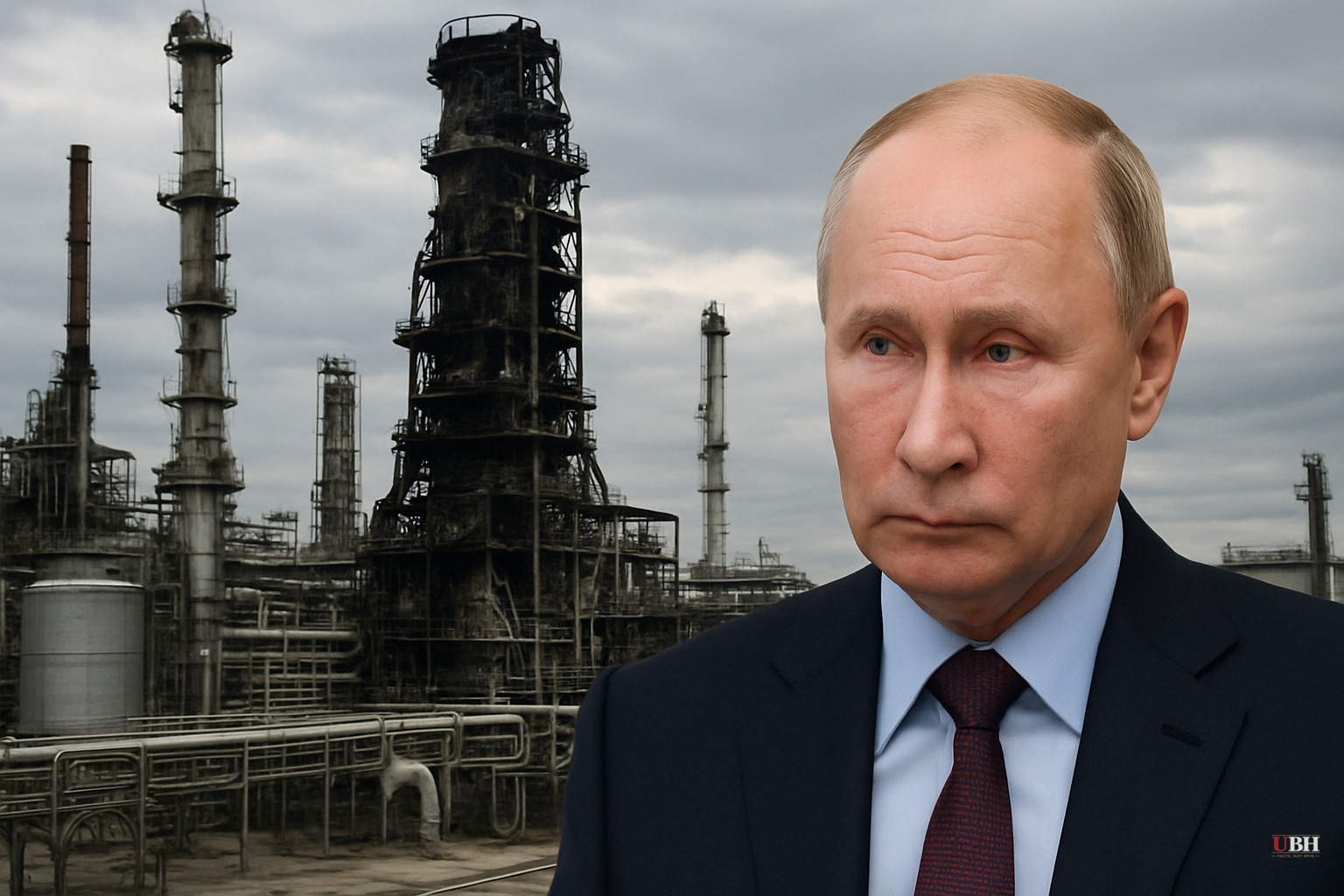
Since Ukraine began its intensified deep-strike campaign against Russian energy infrastructure, Moscow has struggled to maintain the posture that everything is fine. On Sunday, that posture cracked publicly.
Speaking in a state TV interview, Putin acknowledged that Russia is experiencing fuel shortages caused by Ukrainian drone attacks on oil production and refining facilities, according to The Associated Press. He characterized the problem as a "temporary deficit" and insisted repairs were moving fast.
"All damaged facilities are being restored quite quickly, and the issues that arise are not critical," Putin said.
He also acknowledged petrol station queues in a separate meeting with government ministers and said a full ban on diesel exports was under consideration. A significant tool that would reflect domestic supply pressure, not strength.
What Ukraine Has Been Hitting
The strikes have not been small-scale. A major explosion at Gazprom's Moscow Refinery earlier this month was among the most prominent, according to CNBC. Ukraine has simultaneously intensified pressure on Crimea, which Russia seized in 2014, as part of a strategy to isolate the peninsula logistically and militarily.
Zelenskyy said on Sunday that Ukrainian forces struck two more Russian oil refineries, continuing a pattern of targeting the revenue and fuel production pipelines that sustain Russia's military.
Putin's Two Audiences
Putin made his fuel shortage comments across two separate settings on Sunday: the state TV interview and a speech to the ruling United Russia party congress. At the congress, he leaned into resolve and strength, saying Russia would "handle all the challenges we are facing today, including terrorist attacks on our territory."
The party-congress speech was aimed at hardening domestic political support. The interview, with its more explicit admission of shortages, projected competence to an audience that can already see the gas lines.
The strongest counterargument to reading too much into this: Russia has endured enormous economic and military pressure for over four years and has continued fighting. Putin's government has demonstrated real capacity to absorb pain, reroute supply chains, and outlast Western predictions of imminent collapse. A fuel shortage admission does not equal a collapsing war effort, and treating it as a turning point risks repeating a mistake analysts have made repeatedly since 2022.
What Analysts Are Saying
Researchers at the Institute for the Study of War, a Washington-based think tank, offered a measured read of Putin's comments. They said Putin "acknowledged the effects of Ukraine's long-range strike campaign but sought to dismiss concerns and 'promote a facade of stability.'" ISW noted that Putin did not explicitly name Ukraine's strike campaign or describe the full geographic scope of the shortages, which ISW said have been experienced "across the entire country."
Putin said enough to appear aware and in control, while saying as little as possible about how bad the situation actually is. ISW researchers called it a move to "portray himself as cognizant of the economic and social struggles Russia is facing" without fully accounting for them.
The Strategic Picture
Ukraine's drone campaign targeting energy and refining infrastructure is a deliberate economic strategy: cut Moscow's fuel production, constrain military logistics, drain export revenue, and raise the domestic cost of the war for ordinary Russians. Petrol queues are politically visible in a way that battlefield casualty figures are not.
Putin pledged on Sunday to bolster Russia's air defense capabilities to counter Ukraine's mid- to long-range drone threat. That pledge is an implicit admission that Ukraine's current drone campaign is working well enough to require a dedicated defensive response.
Russia importing more fuel to cover domestic shortfalls created by attacks on its own refineries is a compounding problem. It costs money, signals vulnerability to trading partners, and does nothing to fix the infrastructure damage that keeps accumulating.
The unresolved question is whether Ukraine can sustain the tempo. Deep-strike campaigns require munitions, intelligence, and political cover from Western partners who have at times constrained the range and type of weapons Ukraine could use against Russian territory. Whether that constraint holds, loosens, or tightens will largely determine whether Sunday's fuel shortage admission becomes a footnote or a milestone.
Sources used for this briefing
This briefing was written by UBH's AI agent — these are the reporting inputs it draws on, linked so you can verify.


