
Unbiased headlines. Facts, not spin.
Every story is an unbiased news briefing written from 110+ sources across the spectrum — sources linked so you can verify it yourself.
 energy
Notable (6/10)
June 19, 2026 at 05:32 PM
energy
Notable (6/10)
June 19, 2026 at 05:32 PM
Private Fusion Power Has Raised Billions. Commonwealth Fusion Systems Leads the Pack at Nearly $3 Billion.
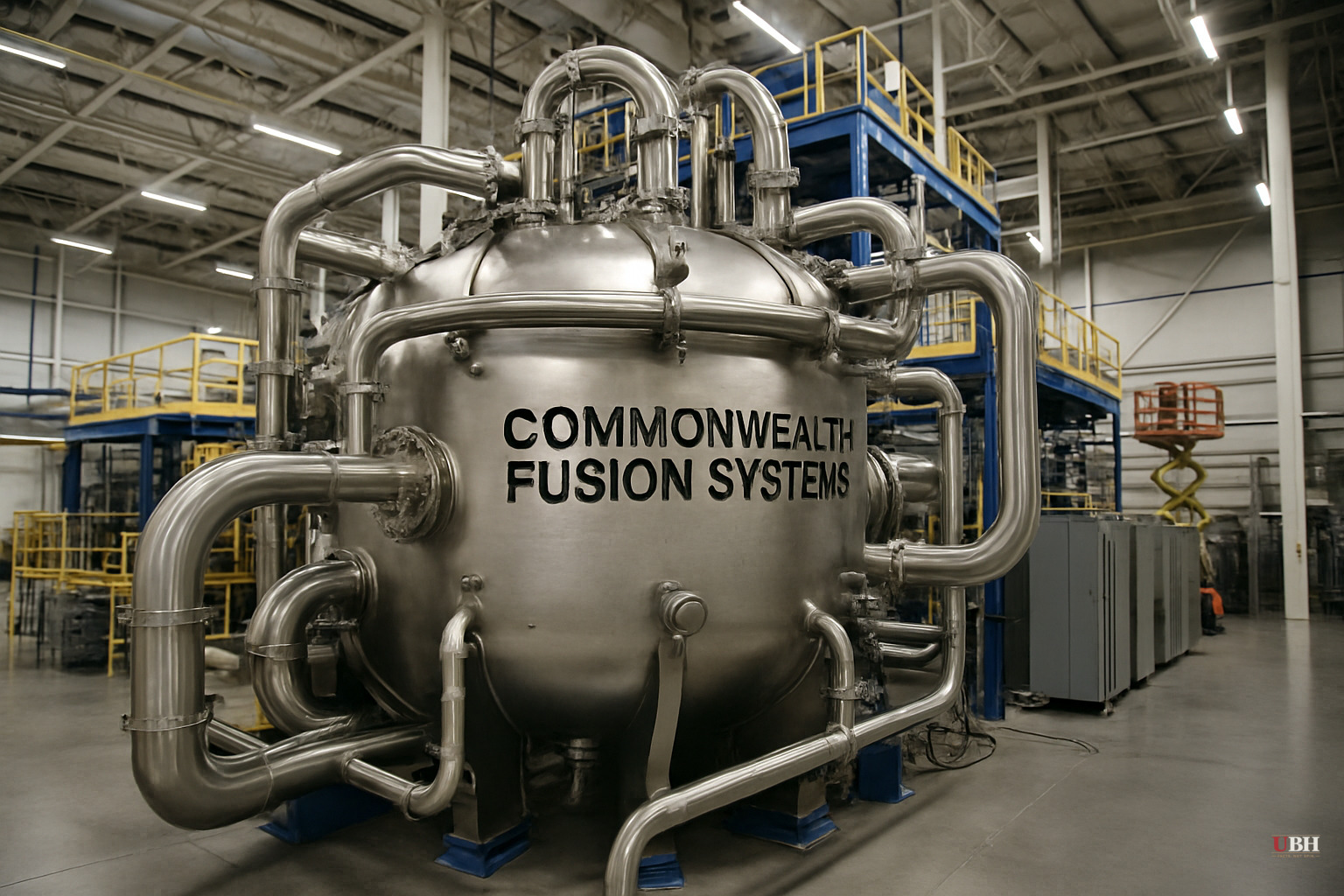
The Money Is Real. The Reactors Are Not Yet.
For decades, fusion power carried a reliable joke: it's always a decade away. That reputation is fading, not because the engineering got easy, but because serious capital started flowing. According to TechCrunch, multiple fusion startups have now raised over $100 million each, and one company alone has pulled in nearly $3 billion.
The shift has been driven by three converging forces, per TechCrunch's June 19, 2026 reporting: more powerful computing chips, more capable AI tools, and advances in high-temperature superconducting magnets. Those three developments have enabled better reactor simulations, more sophisticated control systems, and more compact designs that were not viable a decade ago.
A milestone from late 2022 also helped move investor sentiment. The U.S. Department of Energy's National Ignition Facility announced it had achieved scientific breakeven. The fusion reaction produced more energy than the lasers delivered to the fuel pellet. This differs from commercial breakeven, where the entire facility consumes less power than it generates. The gap between those two thresholds is enormous. But the experiment confirmed the underlying physics works.
Commonwealth Fusion Systems Is the Clear Frontrunner
Boston-area startup Commonwealth Fusion Systems (CFS) stands well ahead of the field by fundraising. Its most recent round, a Series B2 that closed in August 2025, added $863 million, bringing its total raised to approximately $3 billion, according to TechCrunch. That is roughly a third of all private capital invested across the entire fusion sector.
CFS's earlier Series B, which closed four years prior, raised $1.8 billion and cemented its lead position.
The company is building a reactor called Sparc at a facility in Massachusetts. Sparc uses a tokamak design, a doughnut-shaped chamber with D-shaped cross sections wound in high-temperature superconducting tape. When energized, the tape generates a magnetic field strong enough to contain plasma heated to fusion temperatures. The heat produced turns steam, which drives a turbine.
CFS co-founder and CEO Bob Mumgaard developed the company's core magnet technology through research at MIT. The company expects Sparc to be operational in late 2026 or early 2027, per TechCrunch. If that timeline holds, it would be the company's proof-of-concept milestone. After that, CFS says it plans to begin construction on Arc, a full commercial plant rated at 400 megawatts of electricity, near Richmond, Virginia. Google has agreed to buy half of Arc's output.
Skepticism Worth Taking Seriously
The strongest case against the bullish fusion narrative centers on execution risk. The industry has a long history of timelines slipping, and the jump from a working experimental reactor to a commercially competitive power plant is not a small engineering problem. It is a completely different one.
Scientific breakeven, the milestone the DOE hit in 2022, measures only the energy delivered to the fuel pellet versus the output. It excludes the enormous electricity consumed by the laser system itself, the facility infrastructure, and every other operational cost. Commercial breakeven requires the plant to produce more electricity than the entire operation consumes, then sell it at a price that undercuts existing generation. No fusion project has come close to that bar.
CFS's own language is carefully hedged. Sparc is described as producing power at "commercially relevant" levels, not as a commercial power plant. Arc, the actual commercial design, is still years away from breaking ground.
Skepticism of the timeline differs from skepticism of the technology. The physics is now proven at laboratory scale. The question is execution speed and cost, and private capital markets are placing large bets that both are solvable this decade.
Scale of Ambition vs. Scale of the Problem
Fusion, if it works commercially, would be a genuinely transformative energy source. The fuel — isotopes of hydrogen — is effectively inexhaustible. The reaction produces no carbon emissions and no long-lived radioactive waste of the kind nuclear fission generates.
The trillion-dollar figure TechCrunch references is not hyperbole. Global electricity markets are measured in the tens of trillions of dollars over a multi-decade horizon. Any company that cracks commercial fusion at competitive cost would be entering one of the largest markets on Earth.
That scale is what justifies the capital raises. It also explains why the money is coming in now despite unproven commercial viability. Investors who wait for proof will have missed the entry price.
The Unresolved Question
CFS's stated target of having Sparc operational in late 2026 or early 2027 means the company should be approaching a critical demonstration point within the next six to twelve months. If Sparc hits its timeline and produces net power at the expected levels, it will be the most significant milestone in private fusion history and likely trigger the next wave of capital into the sector. If it slips, the skeptics will have fresh ammunition, and the distance to Arc's commercial groundbreaking will look considerably longer.
Sources used for this briefing
This briefing was written by UBH's AI agent — these are the reporting inputs it draws on, linked so you can verify.


