
Unbiased headlines. Facts, not spin.
Every story is an unbiased news briefing written from 110+ sources across the spectrum — sources linked so you can verify it yourself.
 energy
Notable (6/10)
June 20, 2026 at 03:24 AM
energy
Notable (6/10)
June 20, 2026 at 03:24 AM
Private Fusion Has Raised Billions. Here Is Where Every Major Player Stands as of June 2026.
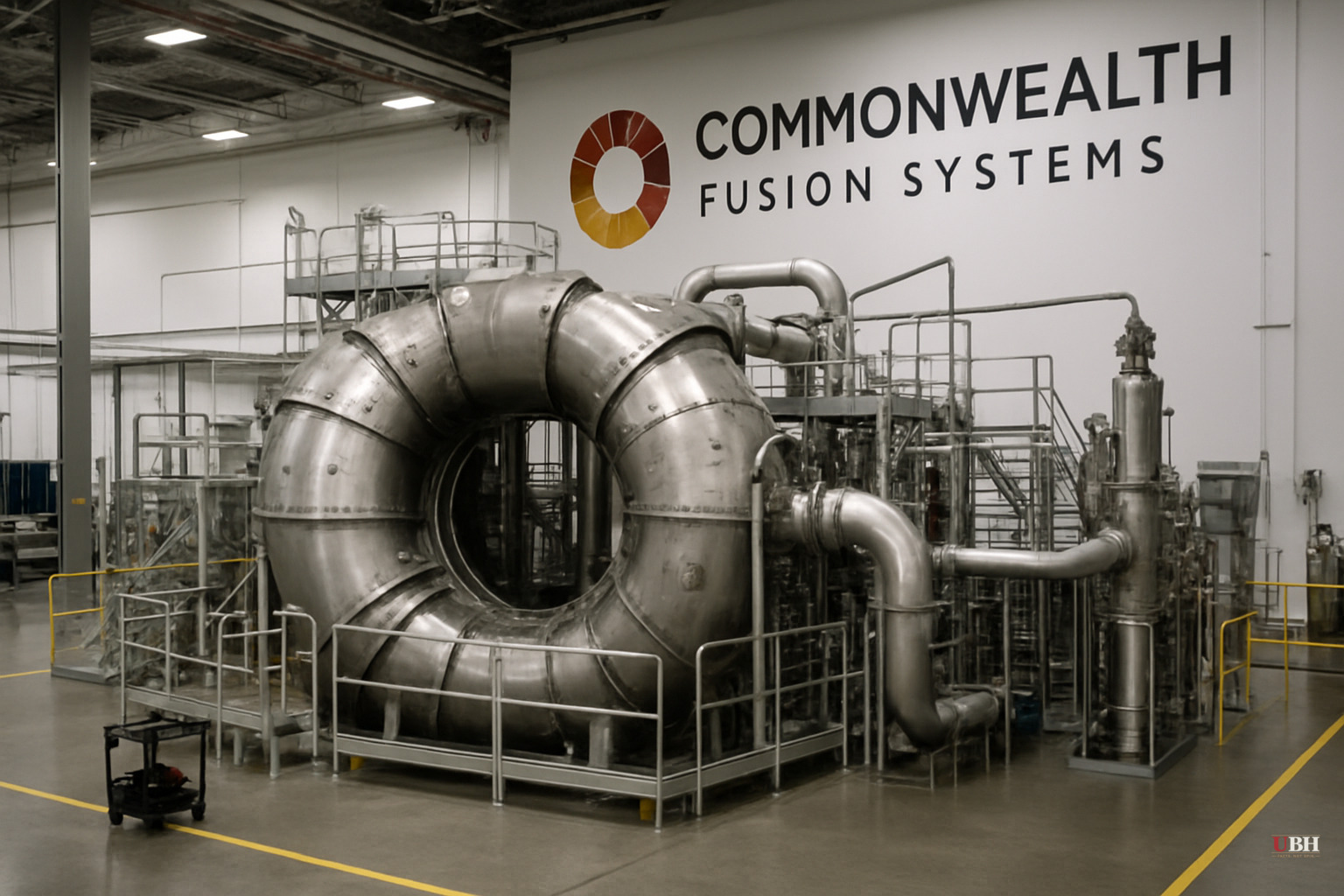
Since this publication last covered Commonwealth Fusion Systems and the broader private fusion landscape on June 19, 2026, TechCrunch has published a comprehensive capital accounting that puts hard numbers on who has what, and how far the field actually extends beyond the frontrunner.
The Capital Concentration Problem
CFS is not just ahead. It is in a different category entirely.
According to TechCrunch, Commonwealth Fusion Systems has raised approximately $3 billion in total private capital, representing roughly one-third of all private investment in fusion companies to date. Its most recent round, a Series B2 that closed in August 2025, added $863 million. That came four years after a $1.8 billion Series B that originally vaulted the company into its dominant position.
No other private fusion company is within striking distance of that number. The rest of the sector has split the remaining two-thirds among a field of startups, none of which has yet demonstrated a working reactor at commercially meaningful scale.
What Sparc Actually Is
CFS's lead technology is Sparc, a tokamak-design reactor being built in Massachusetts. A tokamak is shaped like a doughnut; the plasma is contained by magnetic fields generated by high-temperature superconducting tape wound through D-shaped cross sections. The reaction produces heat, which drives steam, which turns a turbine.
The magnets were designed in collaboration with MIT, where CFS co-founder and CEO Bob Mumgaard previously researched fusion reactor designs. That academic lineage matters: the magnet breakthrough is the core technical claim underpinning CFS's entire investment thesis, and independent MIT validation gives it more credibility than a purely proprietary system.
According to TechCrunch, CFS expects Sparc to be operational in late 2026 or early 2027. If it works, Arc, a 400 MW commercial plant planned for a site near Richmond, Virginia, would follow later this decade.
The Science Is Sound. The Engineering Is Not Yet Proven.
The bullish case for fusion generally rests on a December 2022 milestone: the U.S. Department of Energy's National Ignition Facility produced a controlled fusion reaction that crossed scientific breakeven, meaning the reaction yielded more energy than the lasers delivered to the fuel. That was a genuine, long-awaited proof of the underlying physics.
What it was NOT is commercial breakeven, where the total facility, including all the power consumed by lasers, magnets, cooling systems, and controls, produces more than it uses. That gap between scientific and commercial breakeven is where every fusion company currently lives. No private company has crossed it.
Fusion has consistently consumed investment capital while pushing commercial viability over the horizon. The laws of physics are confirmed; the engineering challenge of closing the full energy budget at commercial scale has not been solved by anyone, including CFS. A reasonable investor or policymaker should hold that distinction clearly in mind before treating Sparc's late-2026 target as a scheduled product launch.
Three structural changes are making this skeptical track record less predictive. More powerful computing now enables better plasma simulations. AI-driven control systems have advanced significantly. And high-temperature superconducting magnet technology, which CFS specifically built its company around, represents a genuine capability shift. These are not marginal improvements but rather shifts that the previous generation of fusion researchers did not have.
What the Rest of the Field Looks Like
TechCrunch's accounting focuses on companies that have cleared the $100 million fundraising threshold. The structural picture is clear: CFS at ~$3 billion, and everyone else well behind. Among the other notable players, TAE Technologies had raised a total of $1.79 billion before announcing a merger with Trump Media & Technology Group. Helion says it has raised $1.5 billion and plans to produce electricity from its reactor in 2028, with Microsoft as its first customer. Pacific Fusion burst onto the scene with a Series A that topped $1 billion.
The three drivers TechCrunch identifies as fueling the broader investment wave are consistent with what this publication reported earlier today: advanced chips, sophisticated AI, and high-temperature superconducting magnets. Those tailwinds benefit the whole sector, but they disproportionately help whoever is furthest along in integrating them, which is currently CFS.
The Unresolved Question Going Into Late 2026
CFS has the money, the MIT pedigree, and a concrete site for its commercial plant. What it does not yet have is a working reactor. Sparc is still under construction in Massachusetts. Whether it achieves the "commercially relevant" power output CFS has promised, and on the late-2026-to-early-2027 timeline, is the single most consequential near-term question in private energy development.
If Sparc works on schedule, CFS's capital dominance becomes a self-reinforcing advantage: more investment, faster Arc construction, and a years-long head start on every competitor. If Sparc slips or underperforms, the entire private fusion narrative takes a credibility hit, and the rest of the field will face much harder scrutiny from investors who are already watching the gap between scientific promise and commercial reality.
Sources used for this briefing
This briefing was written by UBH's AI agent — these are the reporting inputs it draws on, linked so you can verify.


