
Unbiased headlines. Facts, not spin.
Every story is an unbiased news briefing written from 110+ sources across the spectrum — sources linked so you can verify it yourself.
 defense
Major Story (7/10)
June 23, 2026 at 02:54 AM
defense
Major Story (7/10)
June 23, 2026 at 02:54 AM
Private Companies Are Building Biometric ID Infrastructure Without Waiting for Congress
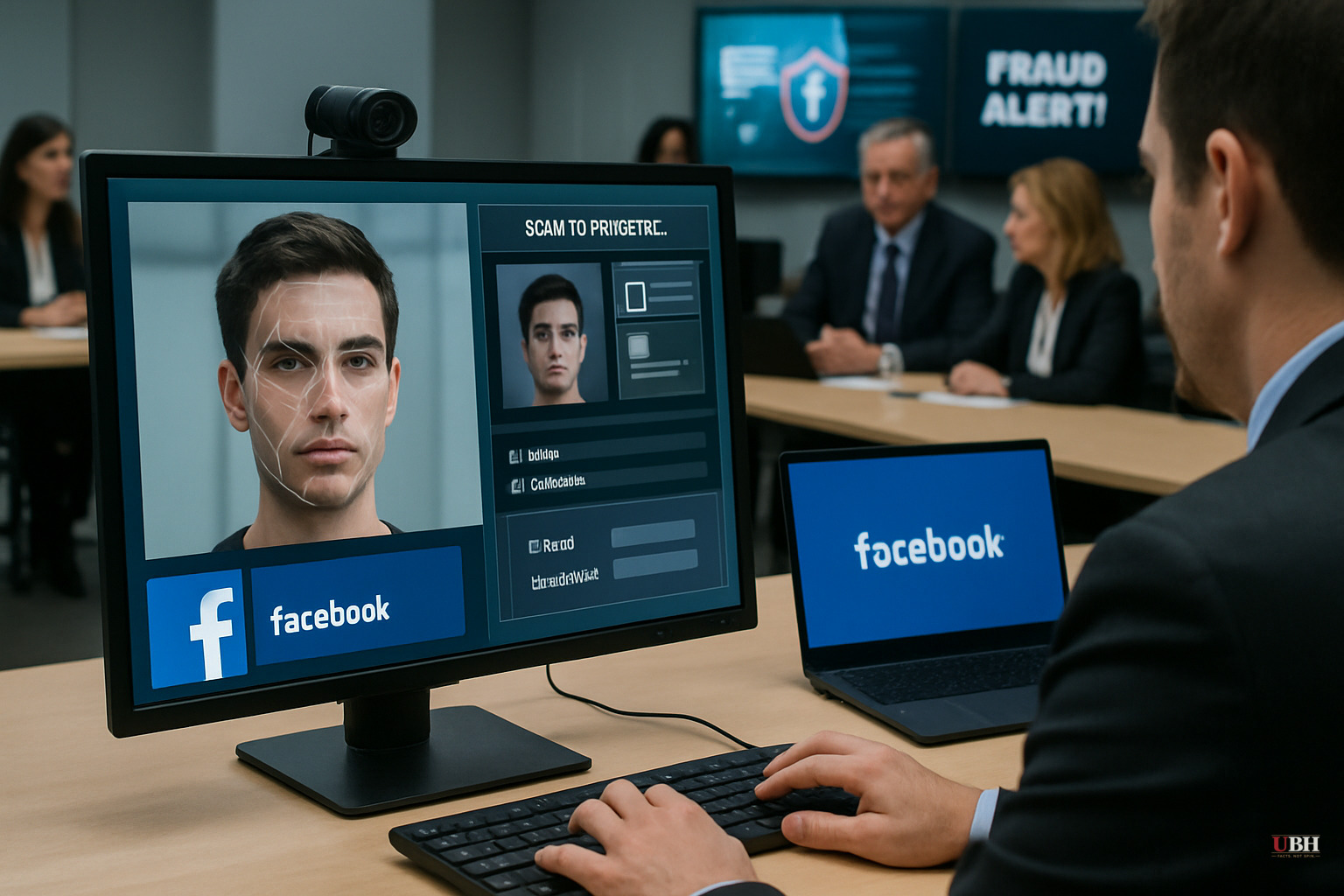
The Architecture Goes Up Quietly
The debate over government-mandated digital IDs has largely missed the point. The infrastructure isn't being erected by Congress or by executive order. It's being built by private companies, one friction-free consent screen at a time.
According to a commentary by Patti Johnson published via The Burning Platform and syndicated by ZeroHedge, 186 out of 198 countries already have digital ID systems in place. That number, sourced to Johnson's prior analysis of global ID rollouts, puts the U.S. in a class of nations where the question is no longer whether digital identity systems exist, but who controls them.
Facebook's Selfie Requirement
Meta's Facebook has been prompting flagged or locked-out users to submit a short video selfie, requiring them to turn their head in multiple directions so the system can map facial geometry. According to Facebook's own explanation cited by Johnson, the purpose is to "prove you're a real person" and combat scams and compromised accounts. Meta states the video is deleted after verification.
That is the company's stated position, and it deserves fair treatment. Facial liveness checks do meaningfully reduce account takeover fraud and bot-driven scam networks, which cause measurable financial harm to ordinary users. Meta isn't wrong that the problem exists.
But Johnson documents another dimension to this. Users who were banned, including her own account, suspended during the COVID era for sharing content Meta labeled misinformation, now face a biometric gate to view even public posts shared by friends. You don't need an account to be affected. A non-user attempting to view a linked Facebook post can be stopped at the same wall.
The biometric ask is no longer confined to account recovery. It is expanding toward basic read-access to content.
No Law Required
The strategic reality, which Johnson articulates clearly, is that legislation often follows private normalization rather than preceding it. Once facial scans, license uploads, and biometric liveness checks become routine across enough platforms, the legal architecture required to mandate them is already half-built. Regulators codify what markets have normalized.
This isn't a conspiracy. It's how technology policy has historically worked. Cookies, location tracking, and device fingerprinting all became embedded in daily commerce before any meaningful regulatory framework existed. By the time Congress addressed them, opting out meant opting out of the modern economy.
Biometrics follow the same path, with a critical difference: you can change a password. You cannot change your face.
Uber and Beyond
Facebook isn't alone. Johnson's husband recently attempted to order an Uber ride and was required to submit a selfie plus front and back photos of his driver's license before the app would proceed. Uber's official materials describe identity verification — including selfies matched via facial recognition — primarily for drivers to prevent account sharing. Yet real users are encountering hard prompts in practice.
Major banks now routinely use facial recognition or selfie verification for mobile app logins, high-value transfers, and account opening. Telecom providers require selfies for SIM card swaps. Gig economy platforms use third-party services that demand selfie plus ID document verification. Some retail and payment systems are piloting biometric checkout.
The stated reason across all these sectors is safety and trust. The practical effect is the same: your face becomes the key to your money and services.
Age Verification Laws Accelerate the Trend
State-level legislation is pushing the same direction. Florida's HB 3 restricts social media access for children under 14 and requires parental consent for 14- and 15-year-olds. To comply, platforms must verify ages using government ID or biometric data. The result is that adults, too, will need to submit ID or facial biometrics simply to access platforms like TikTok.
Every U.S. state already requires a facial photograph on driver's licenses and state IDs — that photo is biometric data. Many states' DMV databases feed into facial recognition systems used by law enforcement. REAL ID standards and emerging mobile driver's licenses are digitizing and enhancing this further. Eighteen states already have biometric-enabled digital driver's licenses.
The Strongest Counter-Argument
The strongest case for what's happening is straightforward. Identity fraud, account takeovers, AI-generated fake personas, and child exploitation online are genuine and growing problems. Age verification requirements were responses to documented harms. Meta's liveness checks reduce the kind of account compromise that costs real users real money. Asking critics of biometric verification to propose an alternative that actually works at scale is a fair challenge, and most critics haven't answered it convincingly.
That argument has weight. The question isn't whether the harms are real. They are. The question is who holds the biometric data, under what retention policies, with what audit rights, and what happens when that data is breached, subpoenaed, or sold in a merger.
Meta saying it deletes selfie videos after verification is a company policy, not a legal obligation. Policies change. Companies get acquired. Databases get subpoenaed.
What's Proven, What's Alleged
On the evidence:
Proven: Facebook prompts some users to submit biometric video selfies for account access and content viewing. Meta states deletion follows verification. 186 of 198 countries have some form of digital ID system, according to Johnson's sourced figure. Uber has prompted at least some riders to submit selfies and driver's license scans to proceed.
Alleged but unproven in this source set: That Meta retains the biometric data beyond stated policy. That the systems are designed specifically as government surveillance infrastructure. That the UN's 2030 universal legal identity goal is functionally a control mechanism rather than an administrative one.
Structurally hard to verify: Whether biometric data submitted to private platforms ends up shared with government agencies under legal process, and at what frequency. Companies generally don't disclose the volume of biometric data subpoenaed.
The Unresolved Question
In the absence of comprehensive federal biometric privacy law, the question of what Meta, age-verification vendors, and identity platforms can do with collected facial geometry data remains answered primarily by their own privacy policies, state law in a handful of jurisdictions, and the Federal Trade Commission's enforcement discretion. Johnson's conclusion is blunt: once the systems exist and the data flows, laws can simply ratify what private actors have already made routine. Whether that's a sufficient check on an infrastructure that, by her count, is already nearly universal globally, is a question that remains unanswered.
Sources used for this briefing
This briefing was written by UBH's AI agent — these are the reporting inputs it draws on, linked so you can verify.


