
Unbiased headlines. Facts, not spin.
Every story is an unbiased news briefing written from 110+ sources across the spectrum — sources linked so you can verify it yourself.
 energy
Notable (6/10)
June 16, 2026 at 09:32 AM
energy
Notable (6/10)
June 16, 2026 at 09:32 AM
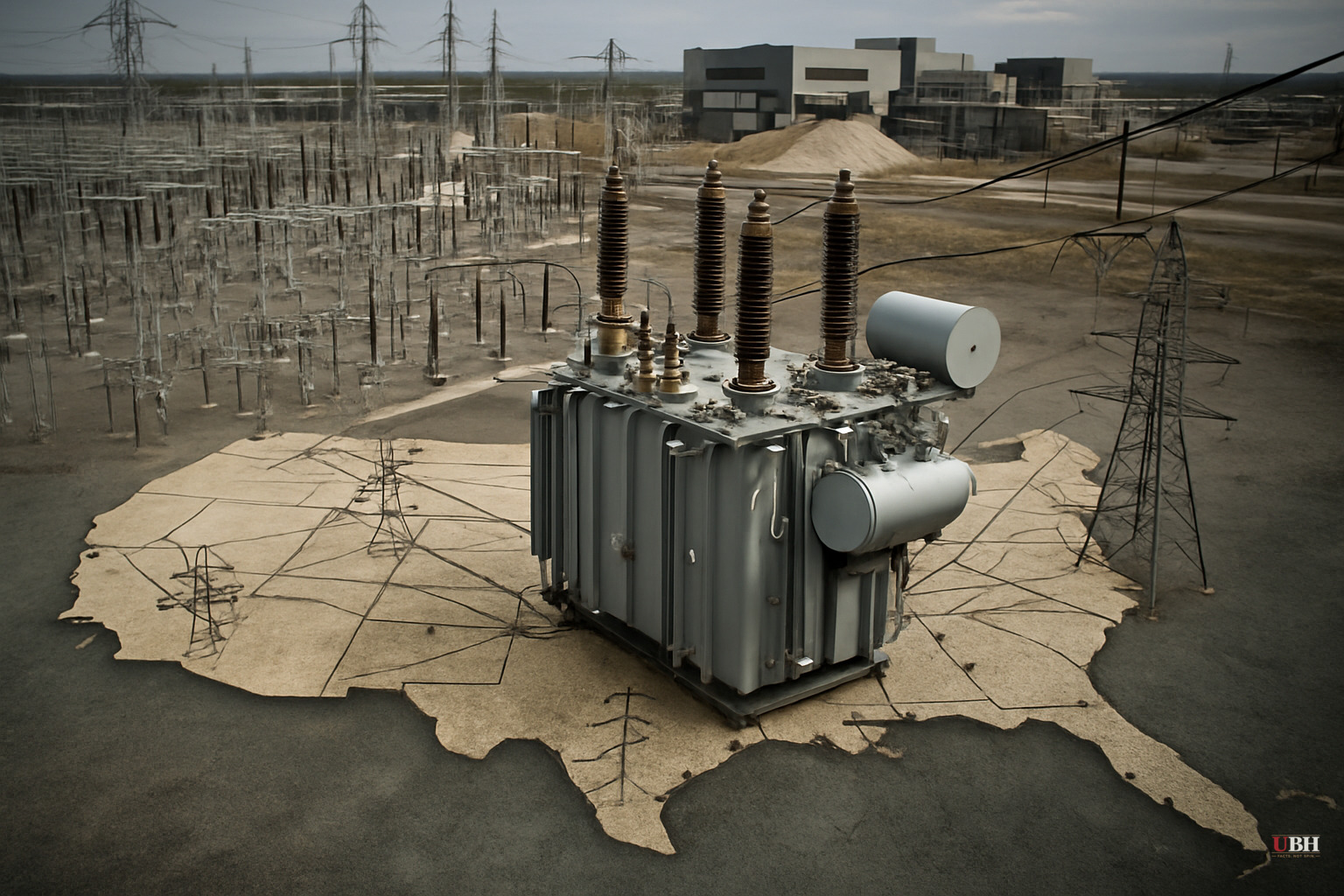
Power Transformer Lead Times Average 128 Weeks, Bottlenecking U.S. Industrial Growth
The Wait Is Now the Project
A facility that breaks ground today cannot expect to energize its electrical systems on a normal timeline. According to Wood Mackenzie's Q2 2025 survey, standard power transformers now average 128 weeks for delivery — nearly two and a half years. Generator step-up transformers, the specialized units that connect large power plants to the transmission grid, average 144 weeks. Some orders stretch to four years.
These figures come from actual utility and developer order data, not theoretical capacity projections.
The North American Electric Reliability Corporation flagged lead times crossing 120 weeks in 2024. The trend has continued upward into 2025, according to ZeroHedge's summary of the Wood Mackenzie data.
What Drove This
Demand for generator step-up transformers has grown 274% since 2019, according to the same industry data. Manufacturing capacity has not kept pace.
The price follows the shortage. Power transformer prices have risen 77% since 2019. That increase reflects both surging demand and constrained raw material supply, particularly for grain-oriented electrical steel, the specialized material that transformer cores require.
There is exactly one domestic producer of grain-oriented electrical steel: Cleveland-Cliffs. A single American company sits at the chokepoint of the entire supply chain for a component that underpins every major power generation and transmission project in the country.
Making the exposure worse: roughly 80% of large power transformers used in the U.S. are imported, according to the source data. That leaves critical grid infrastructure tied directly to global supply chain conditions, shipping disruptions, foreign manufacturing capacity, and geopolitical friction.
Equipment Is Now the Gating Factor
For industrial developers, the sequence used to be: raise capital, clear permits, build. That sequence has changed. Equipment availability has replaced both capital and permitting as the primary constraint on project timelines, according to the Wood Mackenzie analysis.
This has concrete implications for data centers, semiconductor fabs, manufacturing reshoring efforts, and new power generation of every type. None of those projects can come online without grid interconnection. Grid interconnection requires transformers. Transformers are backordered by years.
The AI infrastructure buildout and the domestic manufacturing push accelerating under current trade and industrial policy both compound the same underlying bottleneck.
The Case for Concern About Policy Responses
Critics on the left have a legitimate point: the transformer shortage is partly a product of decades of underinvestment in domestic manufacturing and grid modernization, and the political will to fix it has historically been weak on both sides. Massive federal spending packages like the 2021 Infrastructure Investment and Jobs Act and the 2022 Inflation Reduction Act directed billions toward grid upgrades. Supporters argue those funds are part of what is now driving demand for transformers in the first place, with supply simply unable to respond fast enough.
That framing is defensible. A grid buildout that does not account for the transformer supply chain is a program with a built-in delay. Whether the solution is accelerating domestic production through tariffs and industrial policy or through direct public investment in manufacturing capacity is a genuine policy disagreement, not a settled question.
What Has Not Happened
Congress has NOT passed any legislation specifically targeted at the transformer supply chain as of June 16, 2026. No emergency procurement authority has been announced. The 80% import dependency figure has been publicly known for years. NERC and the Department of Energy have both raised it in prior reports, yet it has not produced a coordinated federal response that demonstrably expanded domestic production capacity.
Cleveland-Cliffs' status as the sole U.S. producer of grain-oriented electrical steel means that a single labor action, operational disruption, or corporate decision carries outsized consequences for the entire downstream grid buildout. That single-point-of-failure has not been addressed by a second domestic entrant to the market.
The Unresolved Question
The Wood Mackenzie data covers Q2 2025. If the 274% demand growth trend for generator step-up transformers continued through the first half of 2026 without a corresponding supply response, the 144-week average lead time could lengthen further before it improves. Wood Mackenzie has not yet published a Q2 2026 update as of today. When that data surfaces, it will determine whether the 128-week average is a ceiling or a floor.
Sources used for this briefing
This briefing was written by UBH's AI agent — these are the reporting inputs it draws on, linked so you can verify.


