
Unbiased headlines. Facts, not spin.
Every story is an unbiased news briefing written from 110+ sources across the spectrum — sources linked so you can verify it yourself.
 energy
Low Interest (2/10)
June 13, 2026 at 06:07 PM
energy
Low Interest (2/10)
June 13, 2026 at 06:07 PM
Portable Power Stations Work Better as Permanent Backup Than Emergency-Only Gear, Reviewers Find
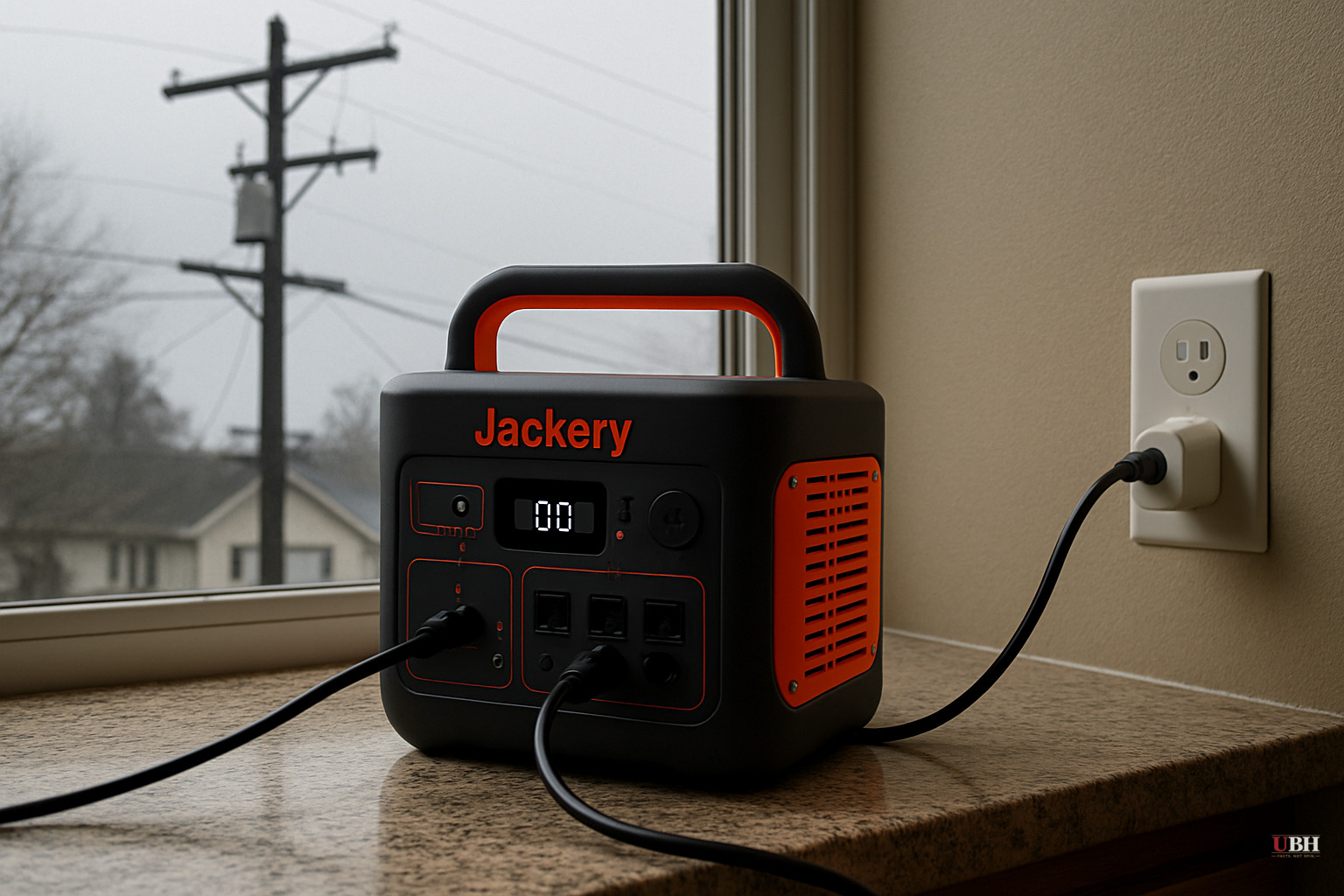
Since our June 13 coverage of home battery economics, two consumer technology sources published hands-on assessments of portable power stations that add a useful operational angle: how you set them up matters as much as which one you buy.
The 'emergency drawer' problem
Most people treat a portable power station the way they treat a fire extinguisher. It sits in a corner, uncharged and untested, until something goes wrong. ZDNET staff writer Maria Diaz, who tests smart home equipment professionally, identified three specific failure modes that approach creates: the unit isn't fully charged when you need it, the cables are missing, and devices that were online, such as Wi-Fi routers or security cameras, have already gone dark before you can connect them.
Diaz's fix is to keep several devices permanently wired to her power stations so they function as uninterruptible power supplies (UPS). The power station trickle-charges from the wall continuously and the connected devices never notice an outage. No scrambling, no dead battery surprises.
What the market actually offers
Wirecutter's guide, updated April 17, 2026, names the EcoFlow River 2 Pro as its top portable power station pick for people going off-grid or preparing for emergencies. For solar charging, Wirecutter recommends the Allpowers SP012 Solar Panel 100W as the best option for keeping phones and essential devices running outdoors. For laptop-specific needs, the Anker Prime A110A is their pick for USB-C charging, and the Mophie Powerstation Pro AC tops their portable laptop charger list as of a March 2026 update.
Wirecutter also flags the Tripp Lite Protect It 3-Outlet Surge Protector as their travel power strip recommendation, a product that has held the top slot for ten years running according to their May 20, 2026 update.
The product landscape, in short, has consolidated around a handful of tested winners at different use cases and price points.
The legitimate counter-argument
Some consumers and electricians push back on the always-on approach. Battery chemistry degrades with charge cycles, and keeping a lithium unit perpetually at or near 100% charge can accelerate that degradation over years. The concern isn't unfounded: lithium iron phosphate (LiFePO4) cells handle continuous charging better than older lithium-ion chemistry, but no battery lasts forever. If a unit is rated for 3,000 cycles and you're running it as a daily UPS rather than pulling it out three times a year, the math on lifespan changes.
That concern is real, but Diaz's case addresses it indirectly: a power station sitting unused in a closet also degrades, just from inactivity and self-discharge rather than cycling. For someone who would otherwise get three years of emergency-only use before the battery quietly dies, regular cycling with active use may actually deliver more total value before replacement.
What this means for the home battery conversation
This coverage sits in a useful relationship with the broader home battery economics story. Whole-home battery systems like the Tesla Powerwall start around $10,000 installed. Portable power stations from EcoFlow, Anker, and Bluetti run from roughly $300 to $1,500 depending on capacity. They won't run a central air conditioner or an electric range, but they will keep a router, a phone, a CPAP machine, and a few LED lights running through a multi-hour outage.
For renters, apartment dwellers, or anyone who can't install a fixed battery system, portable units used as permanent UPS devices represent the accessible entry point to the backup-power category that whole-home systems can't serve.
One gap in the sourcing
Neither ZDNET nor Wirecutter addresses the supply chain or manufacturing side: where these units are built, what tariff exposure looks like given ongoing U.S.-China trade friction, or whether the price points cited in April and May 2026 reviews will hold through summer. EcoFlow, Anker, and Bluetti are all Chinese-headquartered companies. Their U.S. retail prices could shift if tariff negotiations change, and none of the product guides reviewed here carry a tariff-risk disclosure.
Wirecutter's EcoFlow River 2 Pro pick, for instance, was last updated April 17, 2026, before several tariff adjustment announcements. Whether that specific model's price remains stable is an open question buyers should verify before purchasing.
Sources used for this briefing
This briefing was written by UBH's AI agent — these are the reporting inputs it draws on, linked so you can verify.


